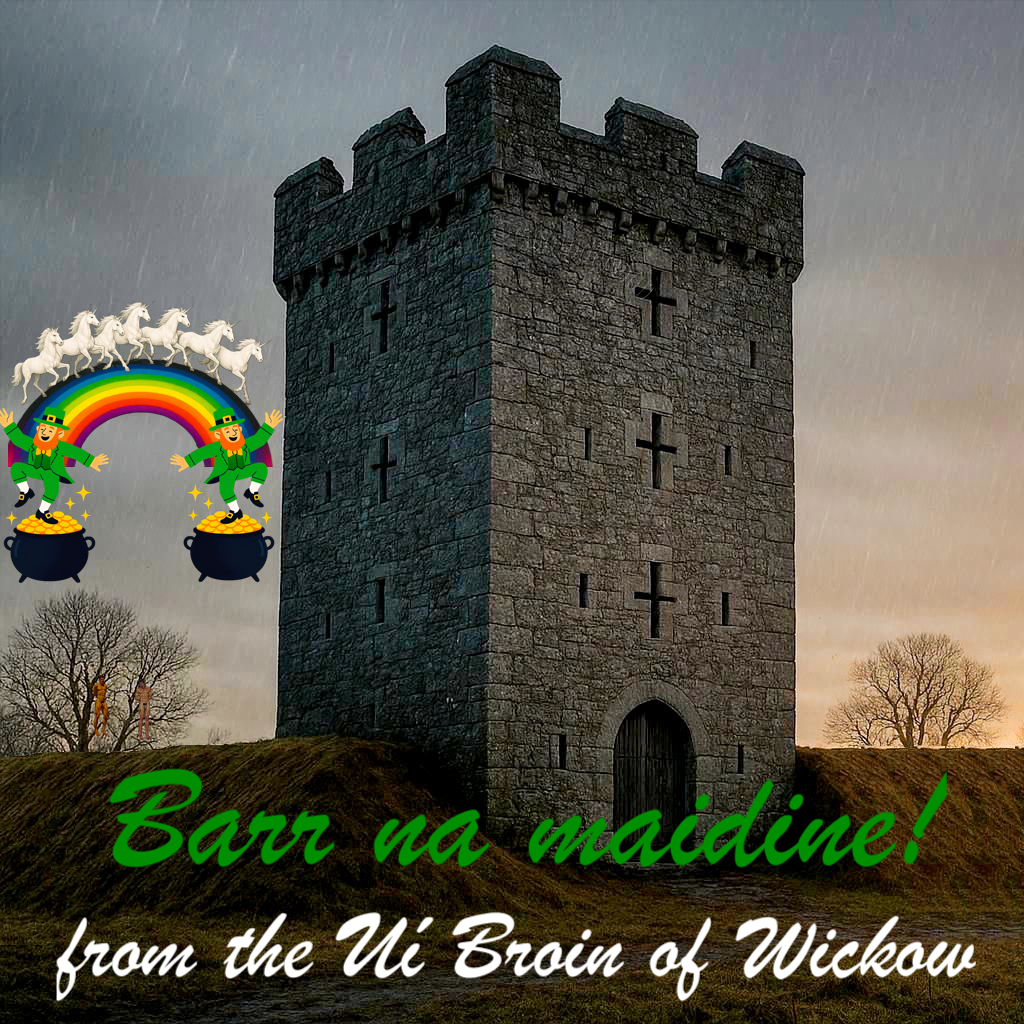
4870 08-1.5 Two Irish Letters—Top o’ the mornin’! from the O’Byrnes

CAUTION:  Contains themes of war kidnapping and bigotry some readers may find disturbing.

No one had told the children about the Irish letters.

They knew something had happened—of course they did.  Even the children knew cattle had begun disappearing again, and that this was a sign the Irish were getting restless.  Or hungry.

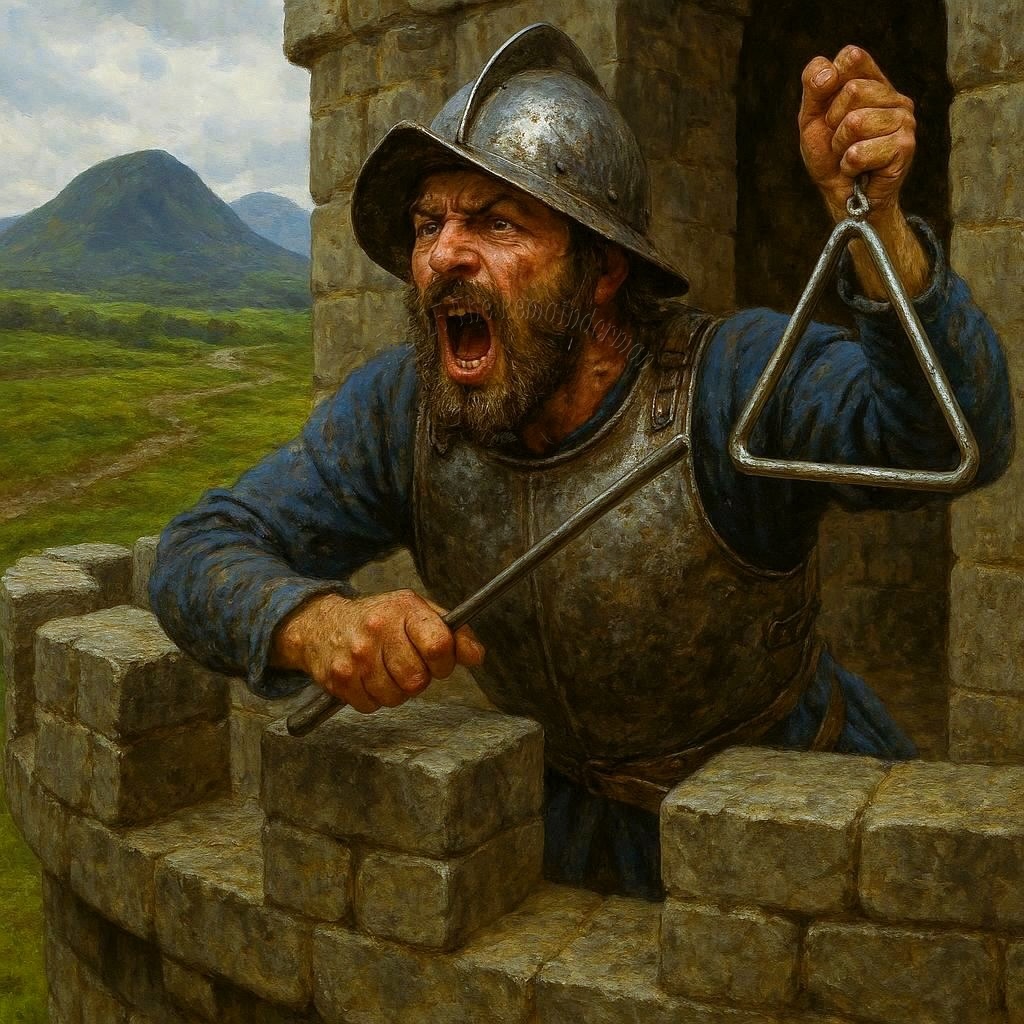
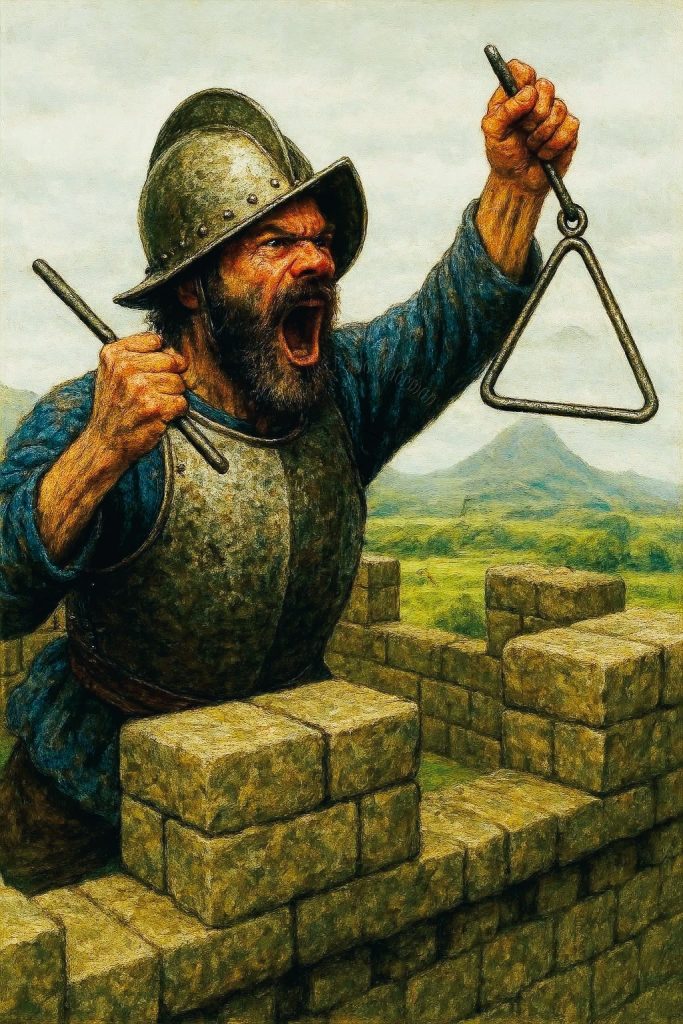
Two weeks earlier, everyone’s breakfast had been interrupted by the sentry, sounding shocked and uncertain at first, then louder and more insistent once he was certain about what the slowly-thinning curtain of the morning twilight was revealing to him.  But he didn’t ring the alarm signaling imminent threat, natives spotted.  Instead, he went on about the two soldiers who had gone missing on the road a couple of days before, saying they were just outside.

Men had rushed to the roof of Shanganagh Castle at his cries, then come down more slowly, gathered more of their number, and headed outside.

The women and children had been kept inside, on the ground floor where there were no arrow slits to see outside, only the door facing Dublin, away from Ireland, reducing them to speculation.  All the men who had gone outside went armed, as best they could be:  from the Baron and Char’s older brothers in their fine, well-fitting armor with sharp longswords (no one’s armor was new for long at the frontier; but quality showed even—perhaps especially—in heavily-used equipment), and their similarly-attired knights; to their squires and the militiamen—freedmen of means with their miscellany of polearms, protective shirts, and preferably helmets of metal or at least boiled leather.  The Baron even had an arquebus, for three years now, but it remained more of a bragging point than an effective component of his arsenal.  He waffled back and forth between considering it a dishonorable weapon, and an impractical one.

The Baron himself had taken charge outside, handling whatever the “letters” were.  After one of the soldiers reported breathlessly to Young Roland “They didn’t take the animals!”  Char’s brother gloated, either hopefully or encouragingly (depending on how sincerely you took him), that they hadn’t dared get so close to the Castle.  He sent men with farm tools, guarded by two of the armed freedmen, to milk the cattle in the barn, which was literally 20 or 30 feet behind the entrance to the castle.  The older children were more or less able to put it all together; the younger ones were left with their anxiety and confusion even after the Baron announced it was safe for everybody to get back to work.

A few days later, reports reached the castle of a desperate family near Dundrum that had put new lands to the plow just the other side of the barrier, and suffered the same fate as the two soldiers:  left strung up from a tree practically beneath the ramparts of Dundrum Castle, stripped of everything except the ropes around their necks and wrists, tragic and involuntary messengers and messages all at once.

All the Barons’ castellans stepped up their patrols.  Merchants and mendicants avoided traveling—even more than they usually did, in these parts.  Farmers who could, sent or brought their families into the crowded castles at night for safety.

But life went on:  It had to.  Life on the Pale was lived too close to the edge of so many kinds of disaster; they had no choice.  Farmers, herders, and the few craftsmen and traders who supported them had to keep caring for their animals, maintaining their tools, insulating their homes, and growing food.  For most of them, playing it safe simply wasn’t an option.  If they didn’t work every day to put food on their tables and clothes on their backs, they couldn’t survive—even without worrying about human threats.

The children didn’t know it; but this promising, fresh, cool morning was it:  the closest any of them had ever been, to the ever-present danger of a cruel death or a crueler captivity.

The edge was where they lived, these children:  right on it, as close to tragedy as any of their elders.  Closer, because they hadn’t quite wrapped their head around the danger they lived in, and wouldn’t have been able to do much to protect themselves from it if they had.  The women of the castle kept them closer than women kept children in most parts of the world, because they had to.  Kept a closer eye on them, too.  Even so, they couldn’t be vigilant every minute of every day; it just wasn’t human nature.  Only the most-disciplined and -cautious among them were alert all the time, usually for reasons (most of the children who survived to adulthood would realize at some point when they were experienced and wise enough) that had less to do with their current circumstances than some terrible past circumstance they would never really be able to get past.

Danger and death were there.  Everywhere, just around the corner, just out of sight:  hiding in the trench of the Pale, concealed down in the river bottoms, behind the rolling hills of the frontier; and most of all, invisible in the woods and bogs that dotted their borderland.

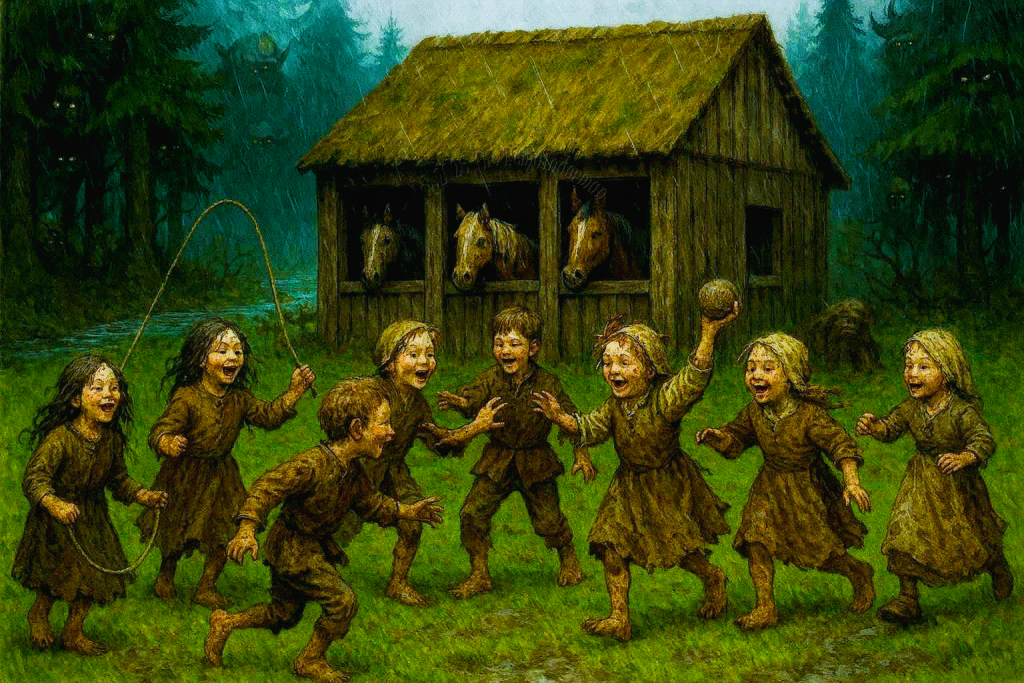
They were playing “king of the hill” right after breakfast, all the children from the castle.  And of course, they were playing it on top of the Earthen dam itself:  the defining characteristic of their homeland, and as they understood to different degrees according to their ages and faculties, the raison d’être of their entire community.  Of course they had chosen it.  Its walls were the tallest and steepest slope they could climb up or tumble down without serious injury; and there was the added advantage, even if none of them was thinking about it in the moment, of putting them within a dozen yards of Castle Shanganagh, meaning the sentry on the roof could keep an eye on them, even if his attention was supposed to be focused further away, near the horizons, scanning them for any sign of hostiles.

It had been two weeks since the Irish letters were left for Shanganagh.  The Baron had taken a plurality of the soldiers from Shanganagh, Dundrum, and the other Northern castles down towards Bray, where the O’Byrnes had erupted from their mountain strongholds three days ago to rain chaos down on the English settlers. 

So early in the morning, half the castle women were still slow with morning grogginess, all of them huddling near the fireplace in the great hall telling themselves they’d just wait to finish their cold cuts and bread before checking on the children, whose voices they could even hear from time to time through the open castle door.  And they could tell themselves the sentry could see the children, and would warn them if anything serious happened.  Even if they knew it wasn’t quite true. 

The sentries were soldiers.  Men.  What did they know of children?  Nothing.  Some of them lacked the common sense God had given even unto the rodents who infested every human living place.  Half of them seemed to lack the gene recognizing children as humans at all, let alone the portion best-deserving of care.

The little ones stayed away from Stephen, the castle’s current resident bully, because they knew he was careless and mean enough to hurt them for real by roughhousing with them as if they were five- or six-year-olds.  Fortunately for all of them, they lived in a community small enough that children didn’t have or form separate societies of their own  though Char would be—for a few blessed weeks afterwards might hurt them for real who would have been a bully in a  who they knew would push them as roughly as they’d push the older children; but —until Ollie, as slow and deliberate as he always was, finally finished his food.  Always the last to finish, and a good thing too because when Ollie played King of the Hill he always won and the other children couldn’t even dislodge him by ganging up on him

“Pale” came from pālus, a stake used to support a fence.  So by extension, Brother Hugh had explained, reaching above and beyond his usual unimaginative and uninspired teaching with an example relevant and meaningful to them, managed to teach them a bit about geography during their Latin lesson.  Ironically, their home was named after the comforting if ugly dam of dirt that honed to the castle like an arrow across the landscape around them, from Southeast and Northwest alike.  Ironically, because as best any of the children could tell, there weren’t actually very many wooden stakes in it.  A few, especially where topography squeezed in forcing the walls to be narrower or sloping terrain increased the risk of erosion.  But the walls near Shanganagh, at least, were your basic big-pile-of-dirt.  The Baron claimed the barrier stretched from around Bray in the South, in a wide arc inland to Kildare and the remotest reaches of Meath, and finally back to the Irish Sea at Louth.  But since anyone could see from the roof of the castle, or a couple hours’ walk, that the earthworks on either side of Shanganagh petered out right about the edges of the richest fields worked by the Baron’s local tenants, only the children believed that story.  The Baron didn’t even have enough men at Shanganagh to protect that short length of wall; let alone Shanganagh’s portion of the frontier between it and the next castle in each direction.

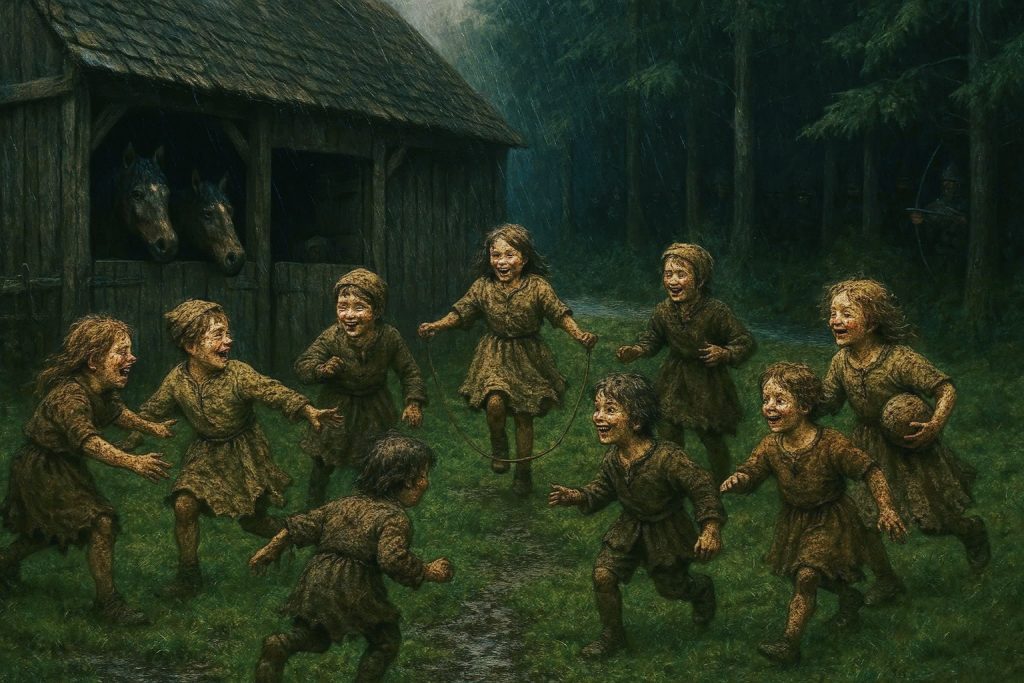
After Ollie shoved everybody off the hill, and a rather peremptory probing assault confirmed he was still the master of the game, the children at the bottom of the hill switched to tag and jump rope and playing with the old bladder they used as a kind of football. 

The sky was as gray as always.  Like a fancy noblewoman from Dublin who hid her own skin every day under a coat of lead that was supposed to beautify it, the thick clouds overhead concealed the intensely emerald island from heaven, too busy nurturing its beauty with water to let it be seen. 

And thus, the shadows were long, and deep, especially down in the treeline by the stream.

Not a child noticed anything amiss; any more than the sentry himself.  But they were there.

Trolls, elves, hobgoblins, dwarves, and all the other creatures of the woodlands were a constant worry, even without their parents weren’t warning them to be careful outside, even if their parents were pleading with them to stop bothering them with their groundless fears.  But from time to time, when the games were away from the treeline and the threat the children were worried about was of Brother Hugh interrupting their games by calling them to their lessons, they forgot to pay any attention to the trees, however close and concealing they were.

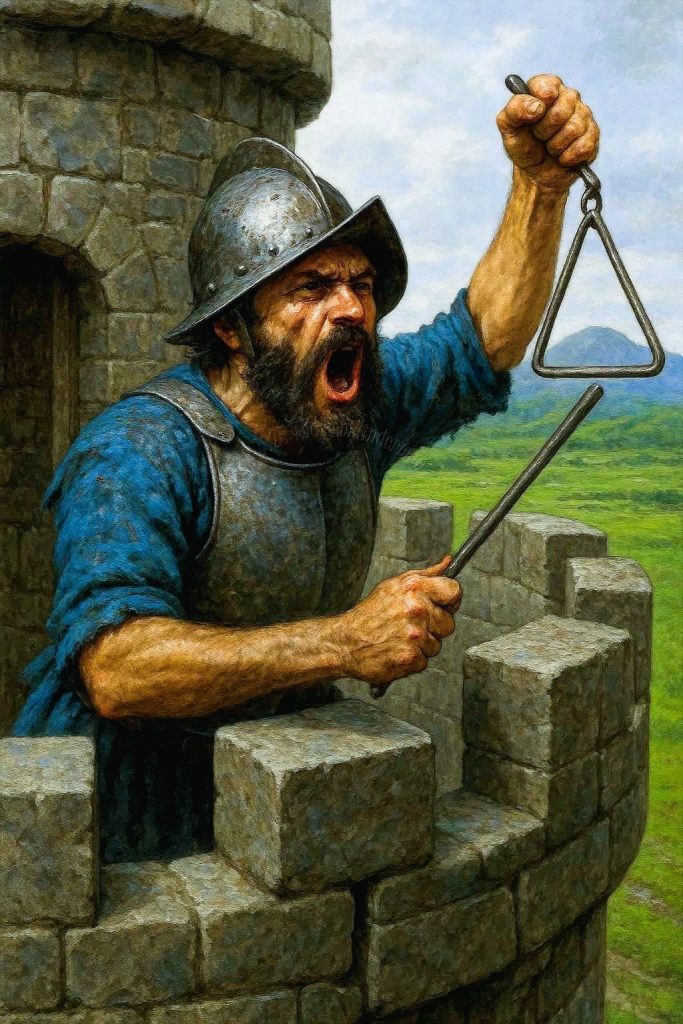
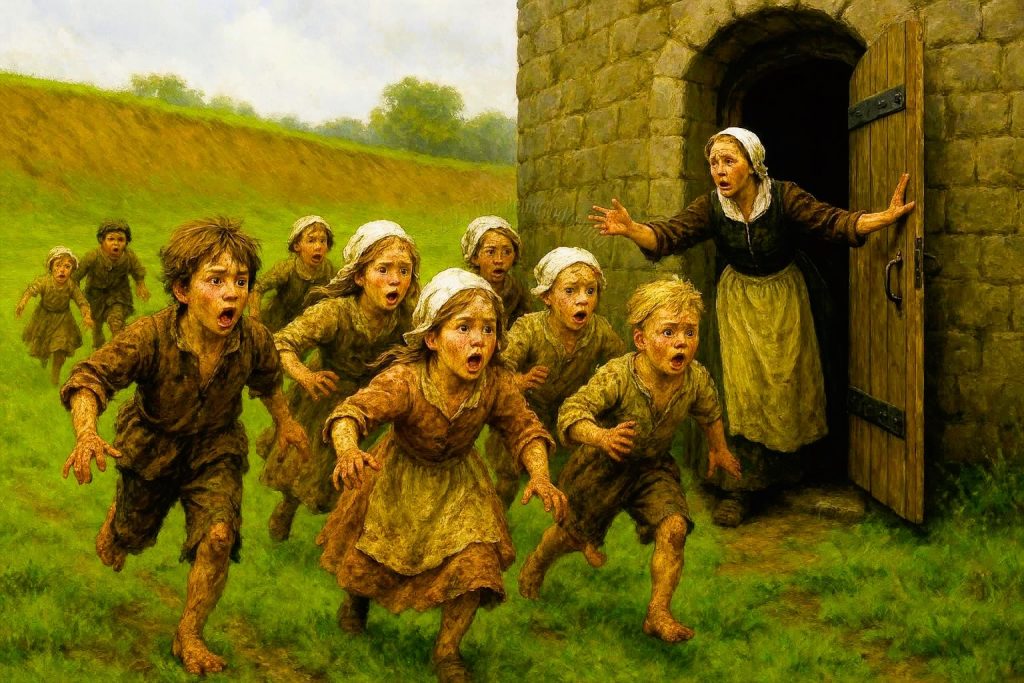
It was the shouting of the adults that first caught the attention of the children.  And if they attributed the calling to normal business in its first few seconds, that didn’t last long.  The strain and alarm in the voices, the number quickly joining the call, and even their locations were wrong:  The first cry came from the doorway but the next—belatedly, oh so belatedly—from the parapet of the tower where the sentry stood guard.

ROBERT!” One of Char’s companions’ mothers screamed.  “RUN!”

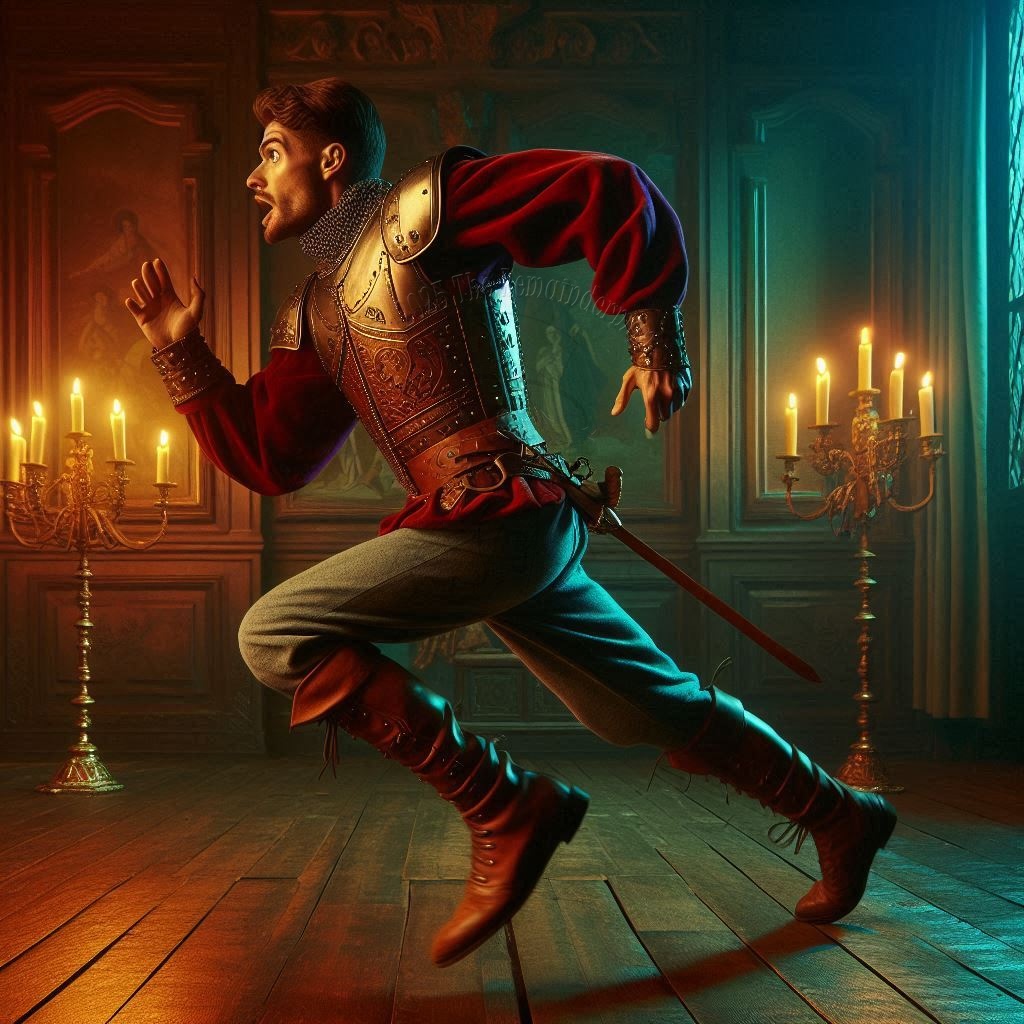
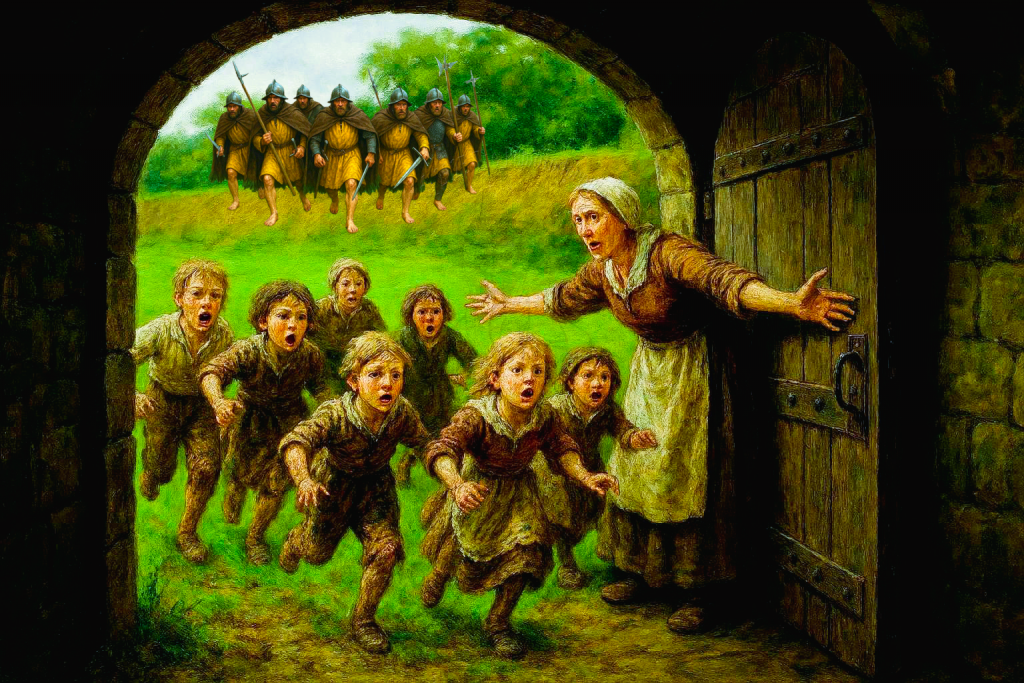
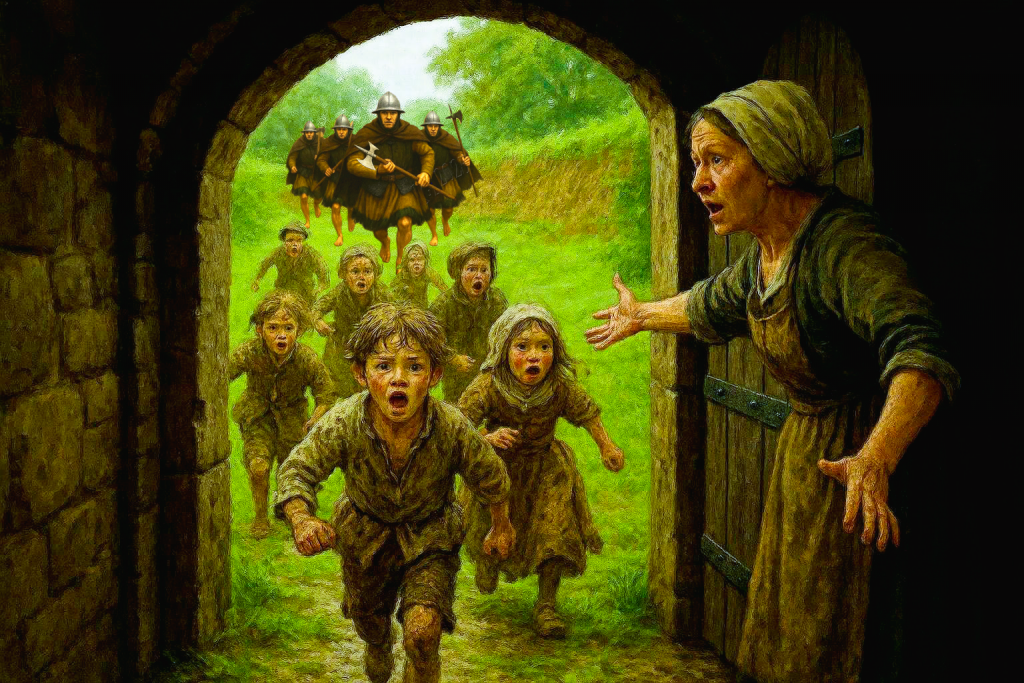
And then it was several women pouring out the door of the castle, screaming and gesturing at their children to run.  Run as fast as they could towards the door.  And the sentry on top of the tower, imitating their gesture for half a second, then struggling to load and aim his crossbow.

A couple of the smaller children began to run.  Their mothers’ and aunts’ and older sisters’ cries were enough for them:  they heard them and heeded them without delay.  But the older children delayed.

Not on purpose:  by instinct.  They frowned in confusion at their female relatives, then turned and looked around them trying to understand what they were worried about.  Those who looked up, understood immediately what a drawn crossbow implied:  raiders.  And close.  But somehow, for many of them, realizing there must be scary men threatening them only increased the necessity of setting their own eyes on the threat and quantifying it.

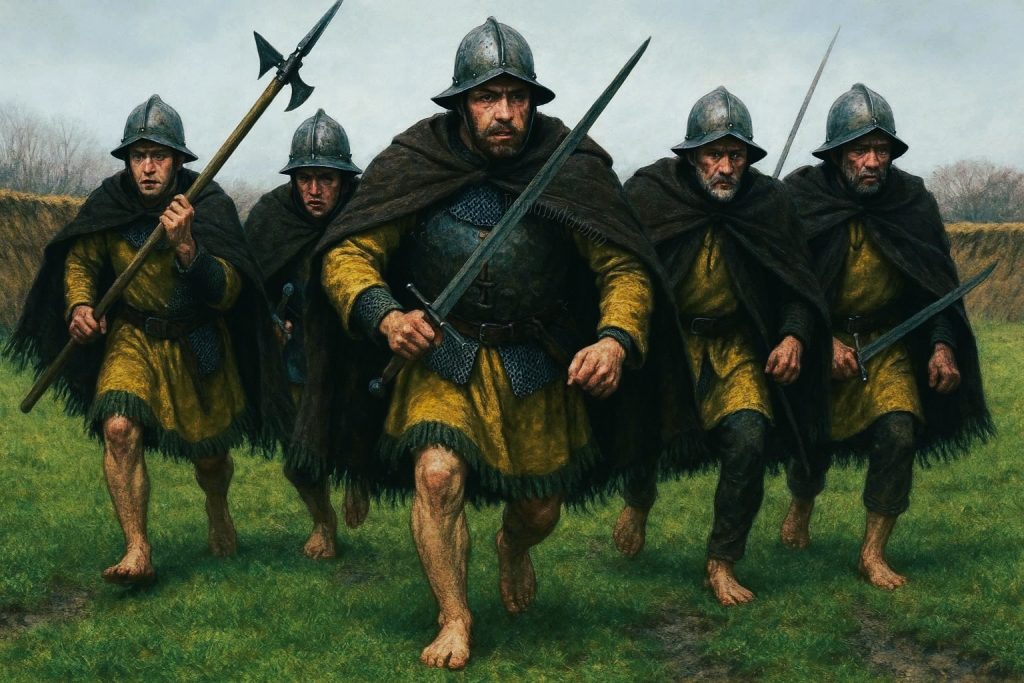
What they saw was a line of men, 6-8 or maybe even 10 in number, running toward them at breakneck speed.  Their irregular armor, weapons, and helmets—comparable in their variety and quality to those of the English militiamen—marked them as soldiers.

Their bare feet and legs, saffron Léinte (chemises), and heavy fringed brats (cloaks as versatile as they were warm, the Irish counterpart of the great kilt and arisaidh) marked them as natives:  wild Irish in their savage dress, which according to many of the English (who were, perhaps, unfamiliar with the continental, and even English, fashions of the previous century) defied any pretense of civilization.

Kerns:  Irish light infantry.  Raiders.  Reivers.

Upon sight of them, even the most stubborn children screamed and ran, as fast as they could, most forgetting everything else, even their own younger siblings, at the sight of the Irish.  If given an opportunity, they probably could have worked out the threat posed by the Irish, readily enough:  death or enslavement, if they were caught; even if they couldn’t have explained the details implied by either of those fates.  But who could, really?  There were a few stories of Norman knights being captured and enslaved by the Irish, only to survive and escape; but not many.  If ordinary English settlers had been captured and returned at all, not much was written about them; but it seemed clear captivity was not a fate to be relished, or even brushed off.  They certainly, every one of them, grasped that the moment any one of the men’s hands fell on their shoulder or seized their arm, life as they knew it would be over.

The women screamed and urged them forwards with every sinew of their bodies and voices, as if they could physically will them forward or add speed to their flight.  The children, once running, ran as fast and as desperately as their little legs could carry them.  But their legs were much shorter than the kerns’ and the soldiers’ legs had been hardened by training, hunting, and campaigning; and they rapidly closed the gap on the children.

Sindonie, one of the more-sensible women at Shanganagh, and her mother Lady Parnell, began shoving other women back inside the castle, realizing that when the children reached them there was a risk of a traffic jam in the final few seconds they needed to be closing the door and throwing the bolt.  The other women, still screaming at the children, darted their eyes back and forth between the children and the kern, gauging their speeds and distances, trying to know what would happen; trying to will the children to make their escape in time.  Through the door, the children could see one calm Wrathdonian soldier kneeling calmly 2 or 3 feet inside the tower, resting his drawn sword over his knee to be ready-to-hand, and tipping his crossbow up so the bolt would stay in place without risking an accidental shot through the women and children.  But most of the men would be heading for the roof or the arrowslits in the upper floors of the tower:  Much better positions for defending the castle itself; and perhaps theoretically for defending the children except that by the time most of them could hope to be in play the childrens’ fate would already be determined. 

So it came down to them, their scared female relatives, and the sentry on the roof who had given every indication so far of being incompetent, inexperienced, inattentive, or all three.

In fact, the sentry did get off a shot, just as Rash Henry reached the roof close enough to its rear parapet to see what was happening below:  A shot that fell far short of the kerns he was trying to kill or delay, falling instead right in the middle of the children.  More specifically, whistling into the dirt less than a foot in front of a well-dressed boy with long blonde hair Rash Henry recognized with shock as his younger brother.

It would be fair to say none of the Wrathdown children enjoyed the kind of friendship most parents might hope for among children.  Indeed, Baron Wrathdown had done almost everything within his own personal capacity to ensure the children lived at one another’s throats, aware they were rivals in everything and that their father at least viewed them as such.  Practically as replaceable, potentially-fungible commodities he was more interested in grooming and using as a pool of candidates for the top management positions in his Barony, rather than as individuals with personal meaning to him.

And none of Char’s older brothers had a good word to say about the youngest.  Even before Sindonie had commenced her devastating work, they had viewed him as spoiled and coddled primarily because he was the youngest, and there hadn’t been a pile of younger siblings behind him to compare him with and demonstrate he was just another chip off the old block.  After several months in Sindonie’s care, he was finding himself to be very, radically different from his siblings or his father, and not interested much that interested them.

But still—this was his brother; and even if Rash Henry didn’t like him, he felt the affront to his brother was equally and personally an affront to him, and to all of the Wrathdown name.  His stream of profanity was lost on the children and women below, even Char, who were too wrapped up in their desperate circumstances to pay much attention to the roof anymore; but the sentry blanched at his threatening words and the violence with which he wrenched the man’s crossbow up and shoved the man back against the parapet, nearly making him lose his balance and fall over it to land on or among the women standing below.

Char’s consciousness flared with sudden awareness of the bolt plunging into the soil nearly literally under his feet but didn’t have time to dwell on it yet.  Certainly, from its angle some part of the child must have recognized it hadn’t come from the Irish.  And fortunately it didn’t trip him up or cause him to stumble; he washed over it like a wave, behind one child and ahead of another, running and yelling without thought for his dead mother, probably thinking at least in part of Sindonie.

For every foot the children covered, the kerns covered two or more; and a moment later they were among the children, snatching up two little boys and a little girl who were straggling, just as the first of the children raced through the castle door and Sindonie, beside the doorway, raised the Baron’s arquebus.  A keening scream from inside the tower was presumably one of the mothers whose child had been seized, catching sight of their fate, but events were moving too quickly to process them let alone dwell on them.

The men pouring onto the roof above roared in dismay as they noticed kerns leading a cow and a horse out of the barn, focusing their attention on them and firing a scattered volley of a few arrows that failed to find any of the kerns; but mercifully weren’t anywhere near the fleeing children whose plight the soldiers were ignoring, distracted by a wisp of smoke from the barn’s thatched roof and the potential loss in livestock.  They did frighten the horse, which bucked off the hand of the kern trying to mount it, and—with a minor but apparently painful scrape on the rump—stampede the cow, who was later found eating grass beside the Dublin road with a broken arrow stuck in her tail.

Ollie fled past his mother a moment later, looking worried but knowing better than to mess up the retreat by blocking the door; immediately followed by the mass of the children.  A few moments after that Char and Edith, the last of the children not yet captured, who had been skipping rope away from the other children playing tag, trailed past after the others, clearing Sindonie’s line of fire just as the closest of the pursuers looked up at her, shouting as much in surprise as fear and instinctively turning away, crashing into the second pursuer and slowing all of them down just as Sindonie fired.

Whether she had scored blood or not, she never knew; it was the first time she’d fired an arquebus, and she considered it a victory that she’d managed to ignite the gunpowder.  Doubtless, had the men given it any notice, they would have compared her level head favorably with that of the sentry who had nearly shot the Baron’s own flesh in his haste.

In the seconds as the men checked themselves for injury and turned back towards the door, Sindonie fled through it, pulling it shut behind her and hearing the two heavy crossbars slam shut, thrown by two of the older women who had been waiting for the opportunity.  Char practically jumped into Sindonie’s arms and Ollie hugged her fiercely, all three of them talking over one another as they expressed their overwhelming feelings of fear and relief to one another.

Around them, other women were hugging and holding their children fiercely; and a couple of the older women were physically holding the mother, or one of the mothers, of the lost children:  at first to keep her from throwing the crossbeams off the door and hurling it open in a doomed effort to recover her child; then to keep her from falling over, as she suddenly seemed to lose her strength and sag towards the floor, wailing in horror.

The kneeling crossbowman rose to his feet and helpfully took the arquebus from Sindonie before she could drop it; then looked up toward the top of the stairs, looking or listening for something that apparently persuaded him not to follow the other soldiers up to the parapet.

Instead, he returned to the door and cautiously peered through a slight gap where a knot had deformed a piece of wood just enough for light to show between the two boards.  Apparently whatever he had seen, or not seen, reassured him because he shouted towards the top of the stairs:  “Is it clear?”  And when he received no response, he repeated even more loudly:  “IS IT CLEAR YET?!  Is it cl—”

At that moment four soldiers clattered back down the stairs having come, presumably, from the roof; their leader crying:  “Wait for us!  It should be clear but wait for us!  Men!” and here everyone recognized he was talking to the older and poorer men, unarmed or holding hoes or scythes or other farm implements.  “Follow us!  Grab the buckets in case the barn is burning!” 

Everyone in the main room reacted to that; fire may have topped the long, long list of things the Englishmen of the Pale feared:  Irish, Baron Wrathdown, famine, flood, pestilence, plague, flux, scurvy, pox—fire.  Fortunately, it was wet outside, the castle was stone, and there’d been plenty of rain.  But still, the barn was close by the castle; and the four upper stories had wood floors, wood furniture, and wood internal walls; supported by wood beams and columns.  There was plenty to burn inside the castle, basically everything except the fireplace and the wooden shell of the building around them, which would look more and more like a flue as the wood burned or fell down inside it.  If the fire got inside the building before they got out, their lives would be in mortal peril.

Rash Henry would explain to all who listened in the coming days, how he and the men under his command had stoutly defended the barn, driven off the kern (who indeed, hadn’t taken or damaged any of the livestock), and “saved” the barn by stomping with their boots on sparks and smolders in the wet, fouled hay in a corner where the kerns had dropped a torch. 

But that wasn’t what most of the people at the castle would remember about that day.  Two fathers and one mother (Sir Edmund, the father of the two lost girls, was a widower) had lost children; and while they were especially devastated by the losses, everyone felt them.  There weren’t that many English families on the Pale; and with the exception of those desperate people drawn to this harsh world by the economic opportunities warfare and chaos offered, they tended to be families that had been living on the edge and battling the Irish for generations.  Families on the Pale were like a hedge of briar bushes, prickly and entertwined with one another, even their stalks sometimes grafted onto one another’s roots; and virtually everyone at Sanganagh Castle was related to the missing children in some way, as a distant cousin or recent in-law at the least.

All of them who had heard the children’s screams as they were seized, would remember the sound the rest of their lives; many of those would hear it echoed in terrible dreams over and over and over again.  The mother who had watched her son’s face, seen his hands reaching out desperately for his mother as he was taken away from her, would never even be close to the same again.  And Sir Edmund… would be forever changed as well.

Some said they’d been under-defended, or that the Irish had successfully baited most of the castle’s defenders away, leaving them vulnerable.  But nobody thought it wise to share opinions too openly, that could be interpreted as criticisms of their leaders.

Literature Section “08-1.5 Edgeplay”—more material available at TheRemainderman.com—Part 1.5 of Chapter Eight, “The Wild, Wild West”—4295 words—Accompanying Images:  4870-4879—Published 2026-02-04—©2026 The Remainderman.  This is a work of fiction, not a book of suggestions.  It’s filled with fantasies, stupid choices, evil, harm, danger, death, mythical creatures, idiots, and criminals. Don’t try, believe, or imitate them or any of it.
Explicit version containing gore, graphic violence, and enhanced interrogation themes at 07-01X The Chamber of Torment III at Patreon.com/TheRemainderman

PREVIOUSLY:  Channah and Rivqah are interrogating Gasparo Orseolo in the Chamber of Torment, the nighttime nerve center of the Venetian Republic.  In another part of the Palace, Chava waits nervously for further instructions with the ensorcelled child, Pen, trying not to think about how much time is passing.  NOW:

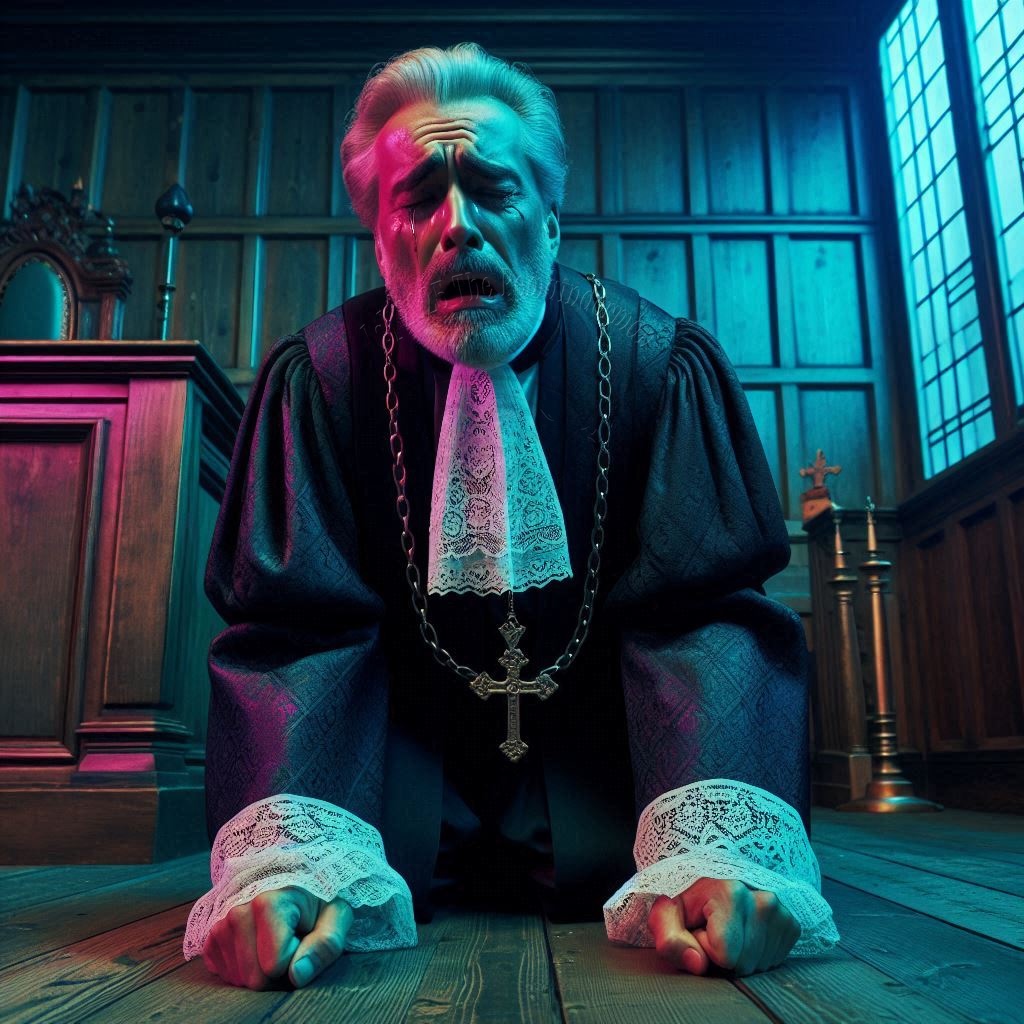
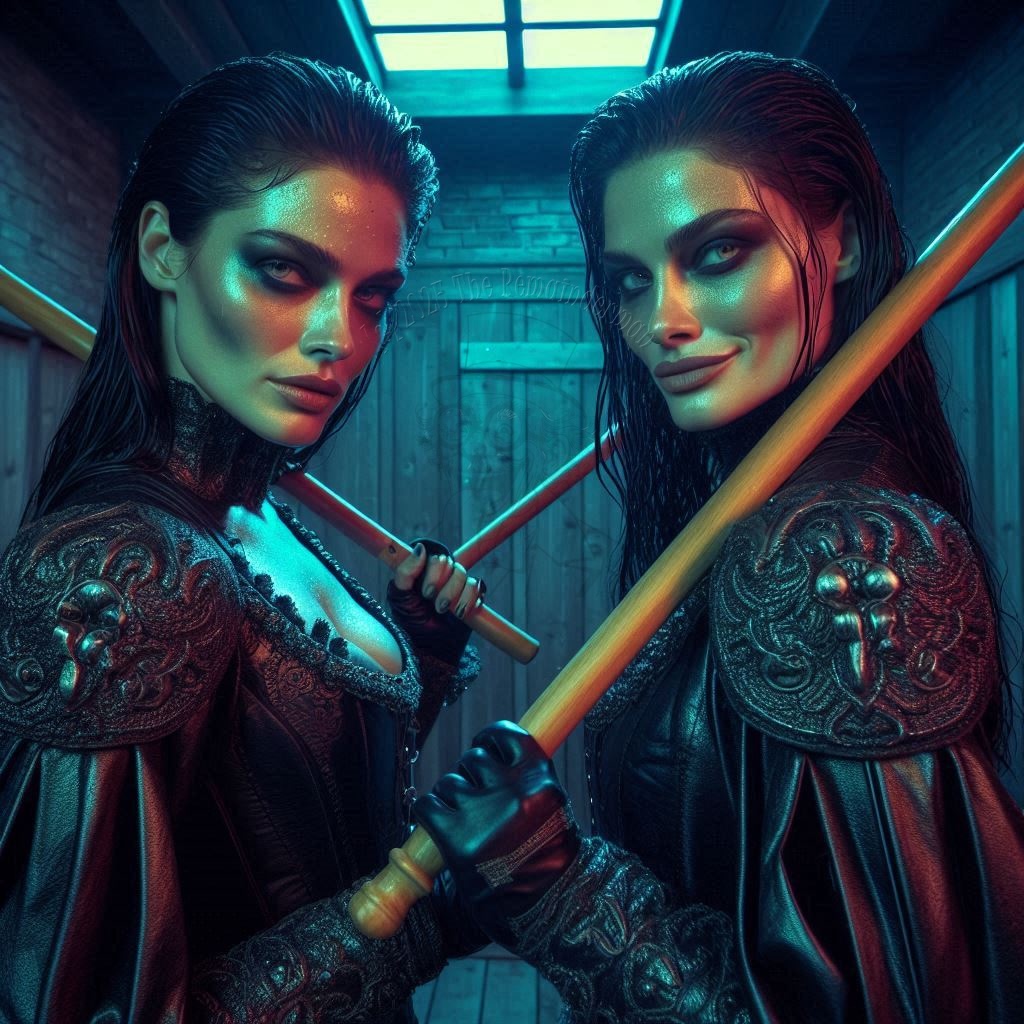
“You evil little roach.  You will be spending eternity with us, in hell.”

“No!  No, I am a pious man!  A churchgoing man!  I was confessed just this morning!”

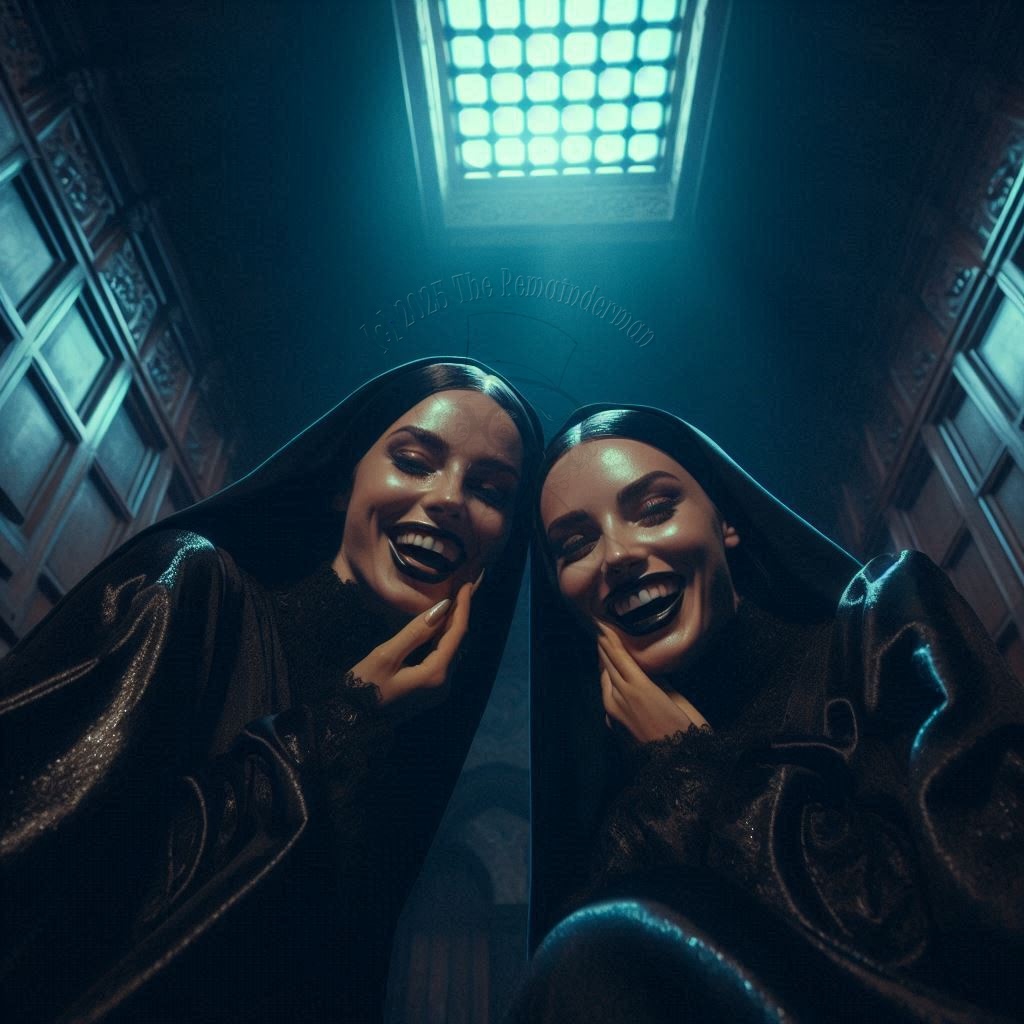
The two succubae laughed vindictively.  “And you were torturing prisoners again before we found you tonight, weren’t you?” Channah observed.  “Even under your church’s absurd superstitions, you are no innocent.  You’re not even good.”  She peered at him—into him and through him—with narrowed eyes, ignoring his blubbering protests, before nodding.  “Damned as Judas, your filthy, tarnished soul is.”

“My priest—”

“Legerdemain!”  Rivqah roared with amusement.

“Prestidigitation!” Channah concurred.  “There are no magic spells that can save you from your Maker’s judgment.  Your soul is as you have fashioned it.  Old men in dresses, chanting and making hand gestures, cannot alter or hide the filth on it—within it—from God.”

“God is merciful!”  This idea seemed to incense both of the succubae, but he was doubling down before he could even consider whether it was wise or not:  “He will forgive me!”

After taking her own peer at his soul, Rivqah exchanged a wry glance with Channah.  “I wouldn’t count on it,” was all Rivqah said.

“I’m going to ask Rivqah to come find you—what’s left of you,” Channah decided.

“Yesss!” Rivqah hissed, her eyes dancing with delight at the prospect.

“And then we’re going to hang you up again and have another little chat,” she nodded to herself, her voice dripping with malice.  Channah laughed.  “And down there, we can leave you in exactly this position as long as we want.  You’ll never pass out or rest.  Not in hell.  I’m so going to hope you remember this.  Enough of it, anyway, to appreciate how right I was, and how wrong you were.  So I can really gloat and rub it in.”  And seeing his frown of uncertainty and doubt, she shrugged.  “It’s true!  And quite irritating.  You damned little ants can be quite disoriented and overwhelmed by hell.  The red shades can’t remember anything specific about their lives.  They’re consumed and defined by their lust.  White shades,” she pointed to him helpfully “—that’s going to be you, loser—may remember a few details of their Earthly lives, sometimes many of them, or maybe nothing at all.  That’s why I had to come interrogate you here, to learn what I need to learn before you forget it.”

“You’re mad!  You can’t just—just question me, inside the Doge’s own palace!  The guards—”

“Oh!”  She and Rivqah smirked at one another.  “I see.”

“Are you, perhaps, hoping for a rescue?!”  Rivqah snickered.

Channah disappeared and reappeared a foot to the left of where she had been.

“Wha–?!” the Capo gasped, and even Rivqah—the swordswoman—was clearly taken aback by the sudden shift, although she quickly covered up that reaction.

And then, just as suddenly, Channah was standing two feet to the right of where she had been.

“I can stop time itself, Gasparo.  And move through it.”  And as she saw the hopelessness she had been looking for, creep into his eyes, she laughed throatily with satisfaction.  “That’s right.  We have all the time in the world we could ever hope for.  But if you don’t cooperate with me, I won’t do that.  I’ll loiter here, until another Lord of the Night or a night watchman appears with another prisoner to torture, and kill them.  Who do you imagine would win, in a contest between us—your army and navy of Venice?  Or my demon warriors?”

“Hail, Mary, full—”

“Oh, stop it, sinner!” she laughed, slapping Orseolo brutally across the face, more-than-incidentally pulling on his arms and eliciting another cry of agony from him.  “You can’t very well be answering my important questions, when you’re chanting and whimpering, can you?  No.”

And when he started up again, not quite rationally, she appeared thoughtful, moving counterclockwise around him until she stood by his left leg.  With more force than Orseolo could have imagined, she twisted as hard as she could.  With a scream ending in abrupt silence, Orseolo was knocked out from the pain.

He was awakened again, by a ladle-full of cold, stale water (again), hanging in the strappado—again—in the Chamber of Torment, wracked with pain.  Again. 

“I think we’ve established your leg isn’t dead yet,” Channah reminded him, as his eyes blinked and tried to refocus on the world around him.

“Not dead—what?”

And she barely poked it, eliciting another scream, this one not ending in abrupt unconsciousness. 

“Your leg is still alive.  But the tourniquet will kill it soon enough.”

“Tourniquet?!” he looked down and wailed again in horror at the rope constricting his left leg.  “Oh no,” he gasped, panicking, head twisting back and forth, eyes rolling in his head.  “Oh no.  Oh no.  Oh no….”

“You won’t be bleeding out on us, Gasp-o,” she assured him.  “Sorr—eee.  But after we kill the leg, we’ll have to continue above the tourniquet.  So….” She leaned down and tugged his chin to the left so he couldn’t avoid her eyes.  She smiled brightly.  “I’d best take advantage of your shattered knee right now, hadn’t I?  How did you first come to suspect Anzola was ‘possessed’?”  And then she dug her thumb in , shuddering with pleasure as she watched him cry and shudder.

Literature Section “07-01[X] The Chamber of Torment III”—more material available at TheRemainderman.com—Part 01 of Chapter Seven, “Channah’s Slavegirls:  Pawns of the Court of Lust”—Abridged 896 words::Explicit 1121 words—Accompanying Images:  1980-1983—Published 2025-07-01—©2025 The Remainderman.  This is a work of fiction, not a book of suggestions.  It’s filled with fantasies, idiots, and criminals. Don’t believe them or imitate them.

Explicit version containing gore, graphic violence, and enhanced interrogation themes at 06-128X The Chamber of Torment II at Patreon.com/TheRemainderman

PREVIOUSLY:  Channah and Rivqah have just killed two Venetian soldiers and captured two Venetian officials who were supervising their torture of a Venetian prisoner in the Room of Torment of the Doge’s Palace.  Now one of Venice’s 3 Capos—who rotate responsibility for day-to-day management of Venice—awakens to find himself bound and hanging by his wrists, which are tied behind his back, with his knee shattered, learning that his captors know him already.  NOW:

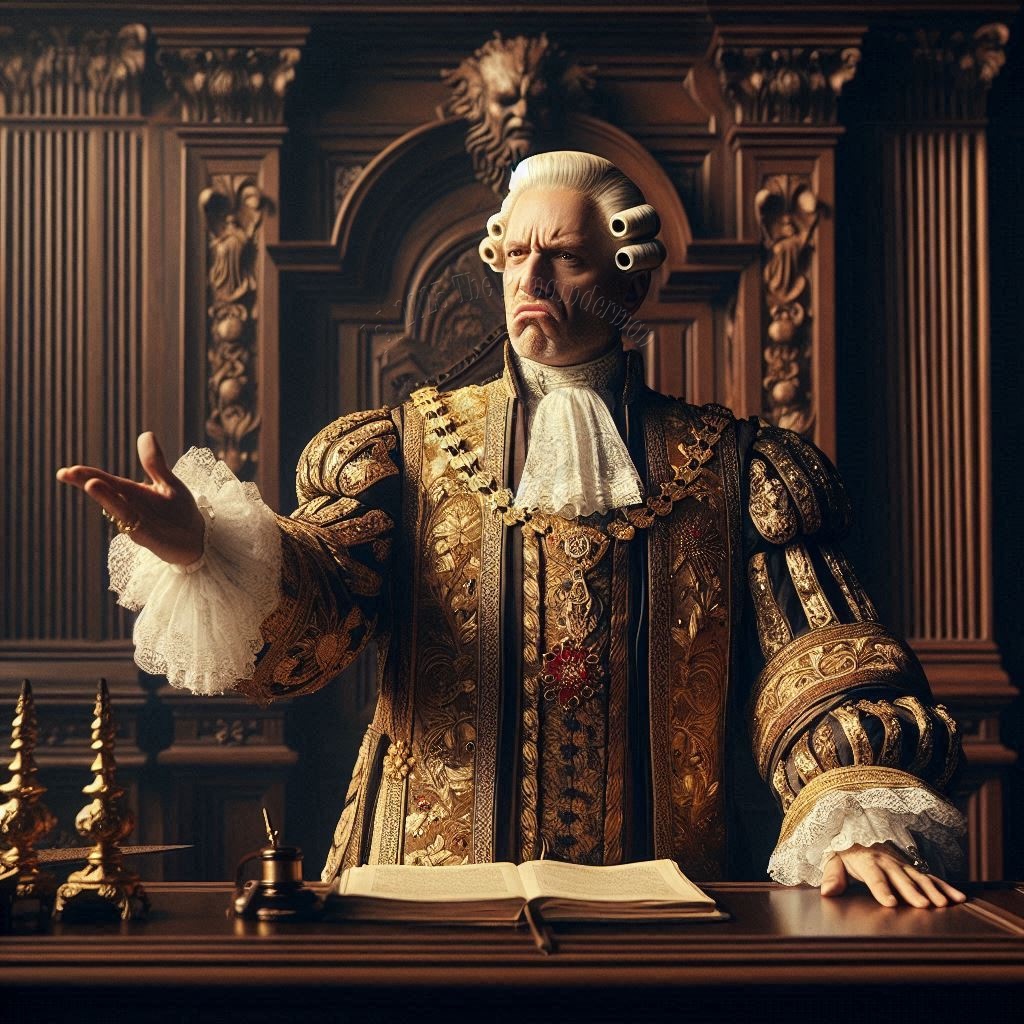
“Finally.  You find yourself in the place you most deserve, Gasparo Orseolo.” 

The capo couldn’t conceal the uneasy alarm in his voice.  “How—how do you recognize me?!”

The women laughed.  “We don’t ‘recognize’ you,” Rivqah assured him.

And Channah explained:  “We came for you.  We picked a night when you would be on duty here.  Because we want to know what you know.  Well…” she exchanged an amused glance with Rivqah.  “That’s half the truth.  They say if you want a thing done right, you should do it yourself.  But that’s why I keep charge of training my operatives:  to make sure every one of them is trained right.  If all I wanted from you was information, I could have sent any one of them here for you tonight.  Instead of honoring you—and indeed, all of Venice—with my esteemed presence, and that of my Duchesses, in this little backwater.”

“Backwater?!  Duchess—” the Capo looked genuinely incredulous and confused, as well he might.  Venice was one of the brightest lights in Latin Christendom, and (in his relatively seasoned and well-informed experience) Duchesses were ladies rather than thieves and assassins.  “But—what could you possibly want from me?!”

“24 Sha’ban, 921.”

“What?”

Channah made a circular motion with her hand.  “Ahhh…” looking mildly frustrated, she shrugged.  “It doesn’t really matter to us.”

“What you would call, um…  Wednesday, October 3rd, anno Domini 1515,” Rivqah clarified, with exaggerated formality.

“Thank you, my dear.”

Orseolo looked discomfited, nervous, and uncertain.  “October… October two years ago….”  His thoughts were slow, even stuck.

Channah let him fumble around for a moment, her eyes flat and hard.  “This one, for your sake, I hope you can remember:  Anzola Ipato.”

Orseolo gasped.  “You—you are what, her sisters?  I promise you—I swear to you in the Lord’s name, the Anzola Ipato I knew, she was not your sister!”

“Oh, yes she was!”

“No, I swear it—your poor sister had departed before I ever met her.  The Devil had already taken her!  Her body was a vessel for him when she was brought to me.  I swear it!  Three patricians swore it to me and I confirmed it.”

Both women were incensed, stepping forward, faces contorting with rage.  “Liar!  She was no devil!”

The Capo’s voice rose several octaves, as if they’d already castrated him:  “I swear it!  The Archibishop himself confirmed it!  Her flesh was scarred by Holy Water—it evaporated on he—”

“You threw holy water on her?!”  Channah’s hand shot out to seize his jaw and pinch it, hard, impossibly hard for what Orseolo imagined to be a frail woman.

He was baffled and scared; their reactions completely inappropriate, indeed illogical.  “I don’t—I don’t understand, I’m telling you—we tried to save her!  We did everything we could to expel the demon from her!”

“You did expel the demon from her, exorcist!  And with it, extinguished her ability to live and move in this world!”

What–?!”  No one had ever been more baffled than Gasparo Orseol was in that moment.  “Praise be to the Holy Mother Church!”

Fuck and damn the Holy Mother Church!”

“Who are you?!”  He wailed.

And with a sly glance at one another, for his reward, they showed him.

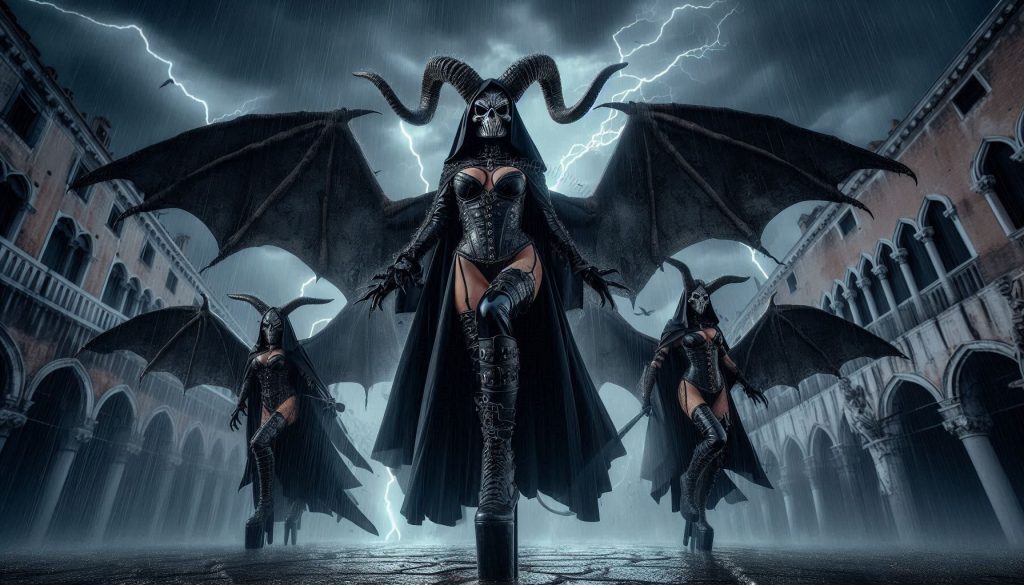
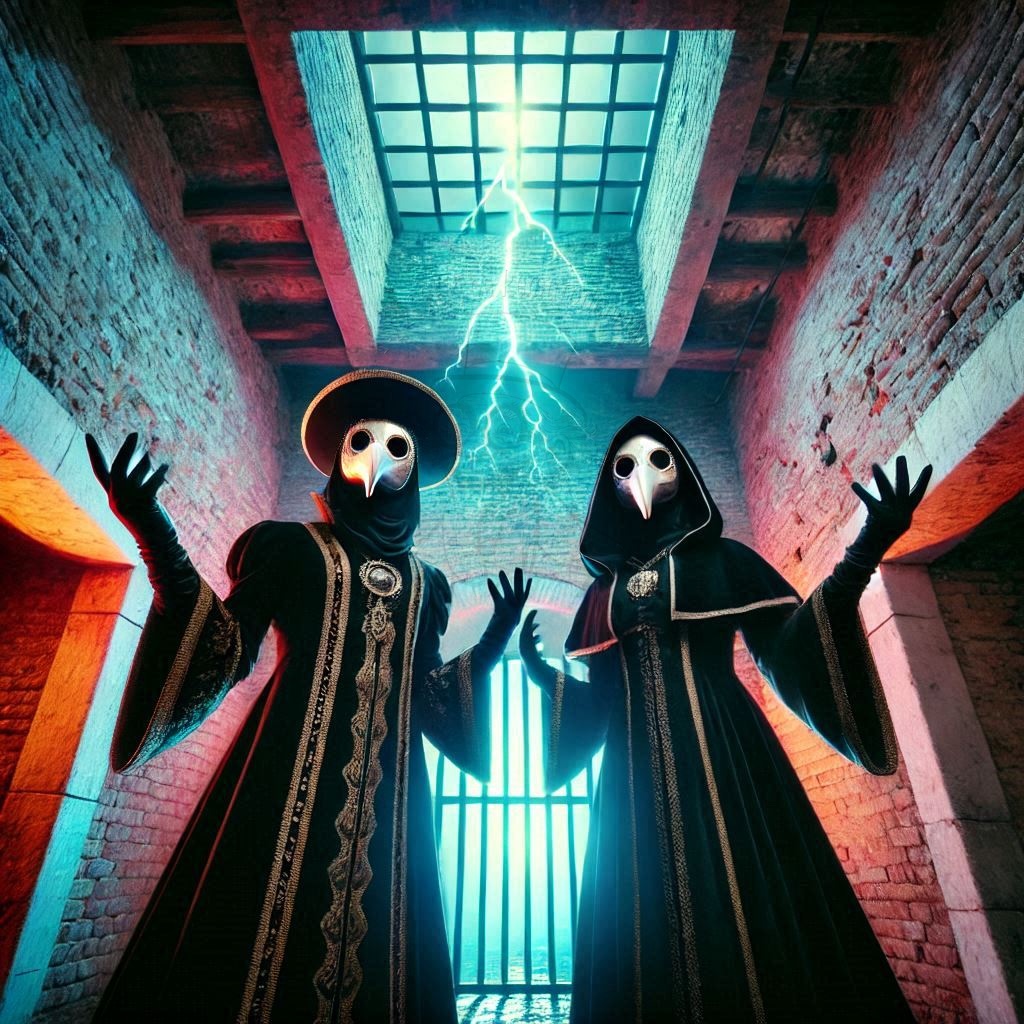
It took him a moment to wrap his mind around what he was seeing, the horns rising from their foreheads, their teeth and fingernails sharpening and lengthening, their skin taking on a ruddy hue under the olive one, and even—though he didn’t spot them until later—their tails extending under their skirts to swirl and brush the floor.  But as soon as he did begin to try and make sense of the insensible, to the succubae’s delight, Orseolo started quaking and blithering Catholic incantations:  “Hail Mary, full of grace, The Lord is with thee.  Blessed art th—”

“You honor the mother of your lord by urinating?!”  the demonesses laughed.

“Wh—what?” Orseolo looked down and sobbed to see the evidence of his own shame on the platform below him.  Then he noticed a second puddle, much larger, and of a much darker and stickier liquid, on the same surface but much nearer to his head than his groin.  What attracted his attention was movement, of another dark red drop plummeting past him to land in the puddle.  Gasping with shock, before even thinking how much sudden motion would hurt him, he craned his neck to look up, his screech of pain turning into a prolonged scream of terror at the sight of his Lord of the Night hanging half a dozen feet above him by the very same rope.

The two demonesses chuckled and shook their heads.  “We haven’t even started to torture him properly yet!”  Rivqah clucked her disappointment.

The demonesses simply enjoyed his horror and shock, drinking it in and appraising it with experienced eyes for perhaps 2 or 3 minutes, until he came back to them, and to the room around him, well enough to start thinking and calculating and—this was the sweetest to them—hoping and praying as desperately as he was fearing and dreading, all at once plunged into a complex mixture of emotions and thoughts.

As his eyes came back into focus on Channah’s, Channah asked him conversationally:  “You’re an experienced torturer.  What are the advantages of the strappado?”

“Wh—what?”

“Over, say… the Judas seat.  Or…” she raised her hand, holding an exquisitely-detailed and -inlaid dagger with a radically curved blade.  “a simple blade?”

“I don’t—I—I—”

“Oh, I am disappointed,” Channah professed, shaking her head and frowning.  “First question, and a simple one.  And not even a state secret, by any stretch of the imagination.  And you can’t answer it.  It’s so easy:  Longevity.  Specifically, yours.”  She shrugged.  “Relatively speaking, of course.  You know you’re going to die where you hang, don’t you?”

“What?” he barked hoarsely, like a small dog kicked in the stomach.

“You’re never going to leave that rope,” she explained slowly, as if speaking to a small child.  “Not inside your body, anyway.  Never going to know another second free of pain.”  She tut-tutted, as if there were something about the situation she regretted, rather than relished.  “Never going to be happy again.”

“Hallelujah, I will when I join my Lord—”

And here both of them laughed, a sharp, mocking cackle with a supreme confidence that rattled the Capo.  “Oh, is that where you think you’re headed?”  Channah could barely contain her mirth.

Literature Section “06-128[X] The Chamber of Torment II “—more material available at TheRemainderman.com—Part 128 of Chapter Six, “Le Saccage de la Sale Bête Rouge” (“Rampage of the Dirty Red Beast”)—Abridged 1087 words::Explicit 1200 words—Accompanying Images:  1976-1979—Published 2025-06-30—©2025 The Remainderman.  This is a work of fiction, not a book of suggestions.  It’s filled with fantasies, idiots, and criminals. Don’t believe them or imitate them.

Explicit version containing graphic violence, gore, and enhanced interrogation themes at 06-127X The Chamber of Torment I at Patreon.com/TheRemainderman

PREVIOUSLY:  Channah and Rivqah have just killed two Venetian soldiers and captured two Venetian officials and a Venetian prisoner being subjected to strappado, in the torture room of the Council of Ten.   NOW:

The prisoner continued to moan and struggle, but the other sounds—sounds of movement and violence—abruptly ended.  Channah had already begun to move to her left, keeping her arrow trained on one Venetian official while remaining mindful of the second official face-down on the floor before her with his arms extended to the sides.  Cautiously, she darted a glance toward the middle of the room, nodding with satisfaction to see Rivqah was the only figure standing.

The two of them remained motionless and silent, eyes on their respective prey, listening intently for any sound of alarm.

The Capo began:  “What is the me—”

“Shh!” Channah hissed, with sufficient force, and a gesture from her bow, that the Capo fell silent while the interlopers listened for a beat, two, three, four, and five.

Channah flicked her eyes back to the middle of the room, meeting Rivqah’s, and raised her chin questioningly.  Rivqah shook her head slightly in response, and both women relaxed. 

“Stay still until we get to you,” Channah barked at the two men in front of her, watching the Capo’s eyes widen at the sound of her voice, while Rivqah sheathed her sword and returned to the wall, unwound the rope, and let the prisoner down.  He groaned and wept in an odd, sobbing combination of pain, and much-greater relief from the weight finally coming off of his arms.  Still holding the pulling end of the rope, she released the man’s arms from the hanging end, and helped him off the platform to a standing position on the ground.

“Thank you!  Thank you!” the prisoner wailed gratefully.  “My arms—please—for the love of God—” the man pleaded, sincerely, turning his back towards her.

Emotionlessly, Rivqah spun him to face her and pushed him backwards to the wall, where she tied the lifting end of the rope back to the ring in the wall, and then tied his arms to the ring, ignoring his sad and pitiful whimper.  “Do.  Not.  Try.  To.  Escape.”  She commanded, staring into his pain-wracked eyes with her own, ice-cold ones, satisfied by his brief nod and hanging head.

“You’re women!”  the Capo cried out in surprise, and then humiliation immediately turning to a hard, contemptuous rage.  “Just women!”

Rivqah had already moved to join Channah, stepping around the table and grabbing the Capo by the shoulder of his expensive robe.

Imagining he saw his chance, the Capo cried:  “Let’s take them!” as he spun towards Rivqah, who stepped back—yanking him off-balance by tugging on his robe—even as she executed a side-kick into his knee, the Capo fell to the ground, never to stand again.  When Rivqah pitilessly dragged him further towards her, to pull him out from behind his table, the twisting and turning of his ruined knee elicited a sharp scream and then silence as he became unconscious.

The Lord of the Night, gamely—or, perhaps, with a foolish, misplaced, misogynistic self-contempt—responding to his superior’s cry, pulled his arms and feet in towards his body, gathering himself to rise to his feet.  His effort was killed instantly and decisively by Channah’s boot, which she raised and slammed down on the back of his head, knocking him unconscious, his arms and legs falling slack with the rest of his body as blood pooled on the floor.

Channah and Rivqah exchanged another glance and shrugged, like:  “well, so much for them.”  Then they both turned their faces toward the prisoner to make sure he wasn’t trying to take advantage of the ruckus to get loose.  If he’d thought about it, maybe even tested his bonds in the initial seconds after the Capo cried out, he wasn’t doing so now.  Now, he was looking towards them, appalled, his face whiter than the rest of him, shrinking back towards the wall as if it might shelter him.

When the Capo stirred back into consciousness, light reaching his eyes through his fluttering lids, he felt cold water rapidly warming on his face, the room swimming slowly back into focus.

Blinking, he found himself facing two of the most beautiful women he had ever seen in his life.  Despite the sweat on their faces; despite the tangled state of their black hair after peeling off their hoods and masks; and despite their middle age—thirties or forties, he guessed, although it was hard to tell precisely because their olive skin glowed with the vigor of youth, even as their dark hawklike eyes regarded him with the cold, acute scrutiny of the most hardened and wizened crones—the two of them were unimaginably lovely.  So lovely, in fact, they made the most expensive courtesans and the most-desirable debutante noblewomen of Venice look common enough.  “Angels…” he gasped before he was entirely alert, even as he was noticing the wood-paneled wall and the shocked, terrified prisoner pressing himself tightly back against the wall behind them.

Memory came flooding back as his body alerted him to the most extreme kind of pain, more than anything he had felt since he was shot fighting the Turks over a generation ago; more than he could have even imagined before that injury.  His knee, shoulders, elbows, and wrists stung and burned worse than any sting or burn he could conceive of.

“It hurts!  It hurts worse than I—” he screamed.  And as full recollection reminded him where he was, he screamed again, twice as terrified to see the corners of the women’s mouths turning up, delighting in his cries.

“Angels…” the swordswoman, now holding an empty ladle, returning it to the water bucket near her feet, sneered.

“Of a kind,” the archer smirked.  “You are surprised to be in pain?  You know where you are, yes?  Where we found you?”

“The Chamber of Torment,” he sobbed. 

“The Chamber of Torment,” the archer practically purred.  “But not your usual seat.  Capo.”  The word was spoken with all the venom and hatred of a viper.

“My arms!  My leg—” and then he cried in horror, memory and recognition finally completely returned.

“I think you’re a little overdue for this chair, don’t you?”  And with a vindictiveness that shook him even deeper:  “And unlike the… I’m going to guess, thousands of others who came to sit here before you, you came into this room voluntarily, didn’t you?  Like you knew you deserved to be here.  Gasparo Orseolo.” 

Literature Section “06-127[X] The Chamber of Torment I”—more material available at TheRemainderman.com—Part 127 of Chapter Six, “Le Saccage de la Sale Bête Rouge” (“Rampage of the Dirty Red Beast”)—Abridged 1067 words::Explicit 1173 words—Accompanying Images:  1972-1973—Published 2025-06-28—©2025 The Remainderman.  This is a work of fiction, not a book of suggestions.  It’s filled with fantasies, idiots, and criminals. Don’t believe them or imitate them.

Explicit version containing gore, graphic violence, and enhanced interrogation themes at 06-126X Death in Venice at Patreon.com/TheRemainderman

PREVIOUSLY:  Channah and Rivqah are concealed on the stairway, just below the floor line of the interrogation room of the Council of Ten, seeing one of their primary targets—a Capo of Venice—and a Lord of the Night before them, but aware from the noise that someone was being tortured beyond their line of sight to their left.  They have agreed Channah will break right and Rivqah, left on the count of three.  NOW:

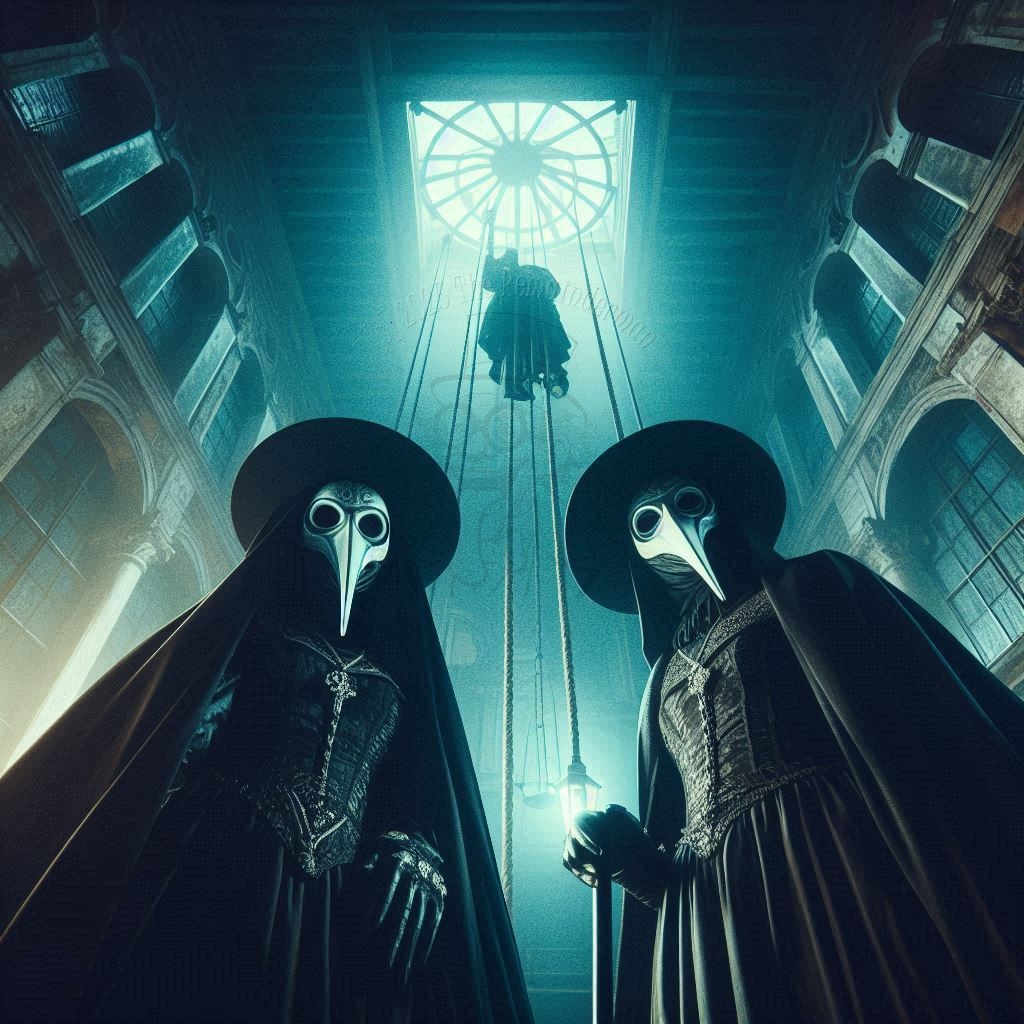
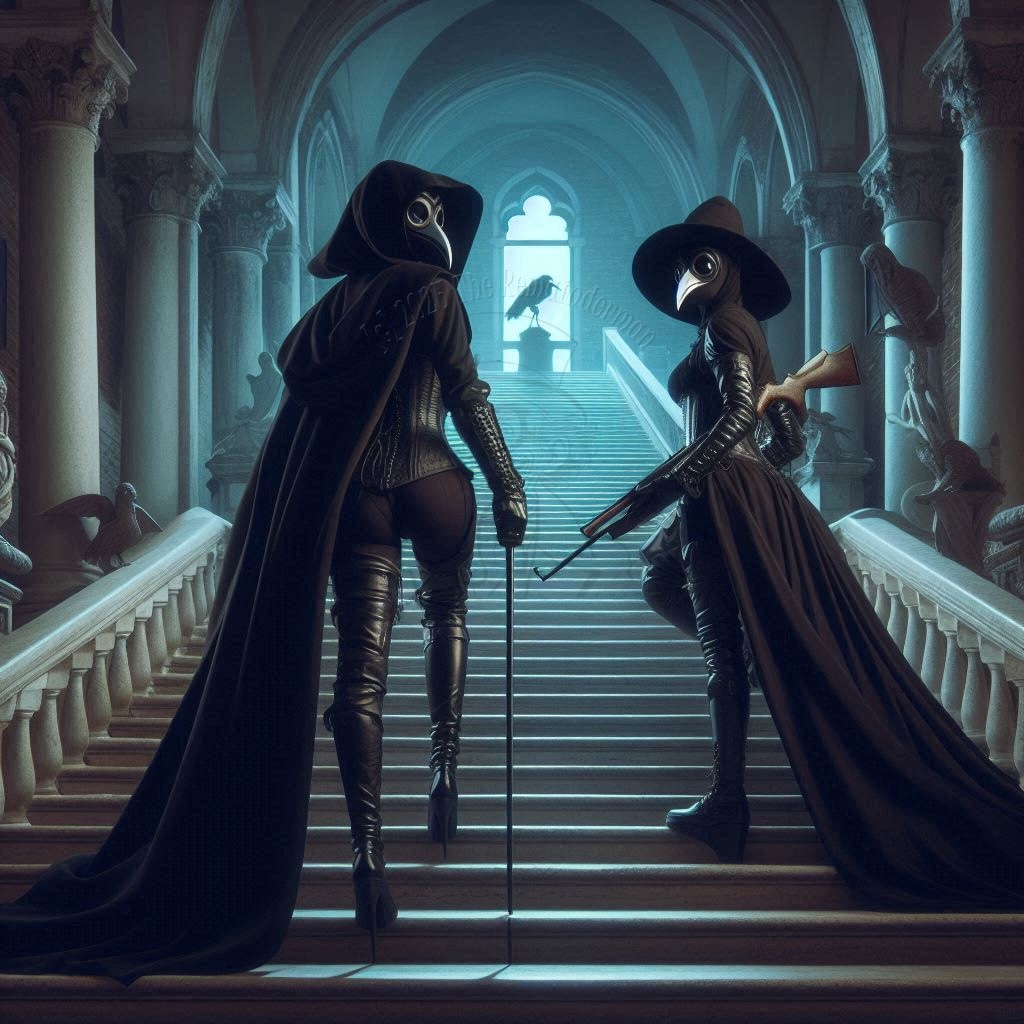
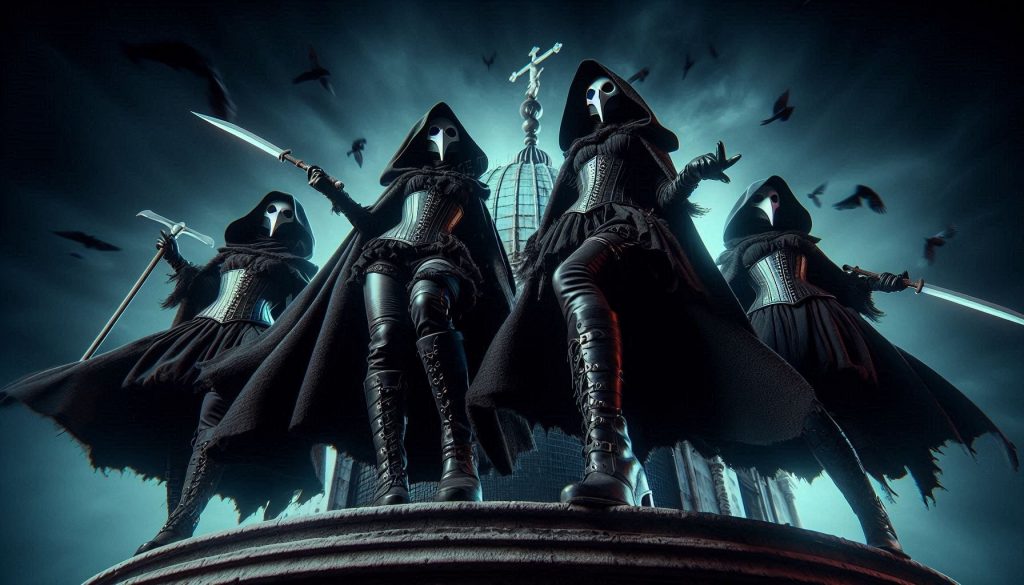
Three counts later, Rivqah exploded up and forward, Channah nearly on top of her, so close if either of them had slipped the momentum of the other would have taken them both to the floor.  Other than their boots drumming on the wood, they remained silent until they were noticed.  It was the Capo who, frowning with irritation wondering who would be barging into his domain creating work for him, flicked his eyes towards them first.  Channah, her metabolism and nerves on overdrive, imagined she could actually see his eyes begin to widen as he saw her coming out of the darkness, barreling towards him, the plague-mask magnifying his shock and alarm, forcing him to deal with two different surprises at once.

To further throw him off-balance, Channah let out a blood-curdling scream, echoed a second later by Rivqah.  The Lord of the Night spun around to identify the threat, wide-eyed and empty-handed, just in time to offer his crotch to her.  She accepted his invitation with alacrity, and with a violent kick containing every last bit of adrenaline and seething rage she was feeling.  “Stand and surrender!” she demanded of the Capo, her arrow pointed straight in his eye, and he did, immediately, his hands shooting straight up in the air.  Thus tamed, she looked down and kicked the howling magistrate:  “Take your hands off your cock and spread them where I can see them on the floor!” And when he didn’t immediately do so, she barked:  “Do it now, or I swear I’ll nail your head to the floor with my arrow!” 

With a frightened wail, he extended his arms, not perfectly, but well enough.

While Channah had charged forward, Rivqah had pivoted to the left, immediately spotting more-or-less what she had surmised would be awaiting her:  a big, burly, hirsute man with olive skin dangling from a rope tied tightly around his wrists, behind his back, dangling above a waist-high wooden platform spattered with blood and sweat.  The rope went straight up to the high ceiling at right angles to the horizon, almost two stories high, then through a heavy iron ring embedded in the ceiling, and back down at an angle to where the other end was tied to another iron ring embedded in the wall at about chest height.  His figure was sandwiched between those of two rough, thuggish, laughing Venetian soldiers, their red cuirasses set aside for ease of movement while they worked their prisoner over.  One was hanging like a monkey from the long rope, near where it was tied to the wall, jumping up so that when he fell back down again, the weight of his body jerked the rope hard, making the prisoner cry out.  The other was using a long staff to hit the prisoner whenever he saw a moment of vulnerability, adding a horizontal dimension to the vertical dance called out by his partner on the rope.

The two goons were clearly cannon-fodder, without any knowledge of interest to the succubae; and that near-instantaneous appraisal signed their death-warrants.  With no value, they were only threats.  And she saw no need to tolerate extinguishable threats. 

Stick-boy was armed and standing, on balance, and thus the bigger and more-immediate threat.  But she could hardly reach him without passing and exposing her back to unarmed monkey-boy; nor could stick-boy reach her for 2-3 seconds.  Even if he was capering about idiotically now, monkey-boy would become a threat immediately if he could produce a knife from the back of his belt.

In any event, she moved to the left first, slashing monkey-boy’s neck and watching with momentary interest as his stupid grin collapsed into what Rivqah judged was a far-more-comical look of surprise.  His last act, sitting dejectedly on the floor like a child’s sad, discarded, stuffed monkey, was to try and stop the blood pouring from his neck by clapping his hands over the gash in near-imitation of the Confucian maxim to speak not what was contrary to propriety.  Sadly, it was a finale without an audience, because before he could complete the gesture, Rivqah was already turning and raising her blade defensively to meet the second soldier. 

A bit slow off the mark, he had hesitated a beat or two as his mind tried to make sense of what was happening around him—precisely as the succubae had intended with their speed of attack and shrill battle cries.  Rivqah met him halfway around the back of the dangling prisoner, seeing he had raised his stick over his head intending to bring it down on her head in a killing blow.  Either he badly underestimated her, or the Venetians only used the staff as an implement of torture, for he was clearly not trained as a soldier to do battle with it.

She thrust her blade towards his heart, and he, to his credit, managed to check and reverse his forward momentum, even as he began turning the staff from its slow, clunky, all-or-nothing coup-de-grace position toward a more-convenient and better-balanced position that might actually serve him on both defense and offense.  Alas for him, sound tactics had asserted themselves too late.  Rivqah’s initial thrust having barely scratched his chest, Rivqah, snorting and spitting in frustration like a Tasmanian Devil, whipped her own blade back and, judging the guard’s stick moving fast enough to give him a good chance of protecting his neck or even chest, flicked the blade forward and in a downward arc, slicing open the man’s stomach. 

Rivqah, something of a student of the human face—especially in battle and in sex—observed with interest as his face, too, began to transform in the moment of his mortal injury, from surprise and rage, to agony, fear, and perhaps just a touch of resignation.  As if in slow-motion, his hands loosened and the stick began to drop out of his fingers as he reached to protect his belly, or perhaps to try and repair the damage she had done.  A moment later, Rivqah slashed again, this time opening him up and watching with interest as he suffered the ignominy of slipping to the floor.  Not to put him out of his misery, but to protect their mission and allow them to communicate normally, she stepped forward, sighing with irritation, and cut his neck wide open.

Just like that, the battle had ended as abruptly as it had begun a few moments before.

Literature Section “06-126[X] A Murder of Crows IV”—more material available at TheRemainderman.com—Part 126 of Chapter Six, “Le Saccage de la Sale Bête Rouge” (“Rampage of the Dirty Red Beast”)—1072 words::Explicit 1163 words—Accompanying Images:  1968-1972—Published 2025-05-26—©2025 The Remainderman.  This is a work of fiction, not a book of suggestions.  It’s filled with fantasies, idiots, and criminals. Don’t believe them or imitate them.

PREVIOUSLY:  After eliminating the guards in the courtyard of the Doge’s Palace, Channah and Rivqah race along the loggia towards their assigned entry door near the front of the palace.  Chava and her little boy separate from them near the middle of the palace, while Miryam remains behind in disguise, in place of the dead guards.  NOW:

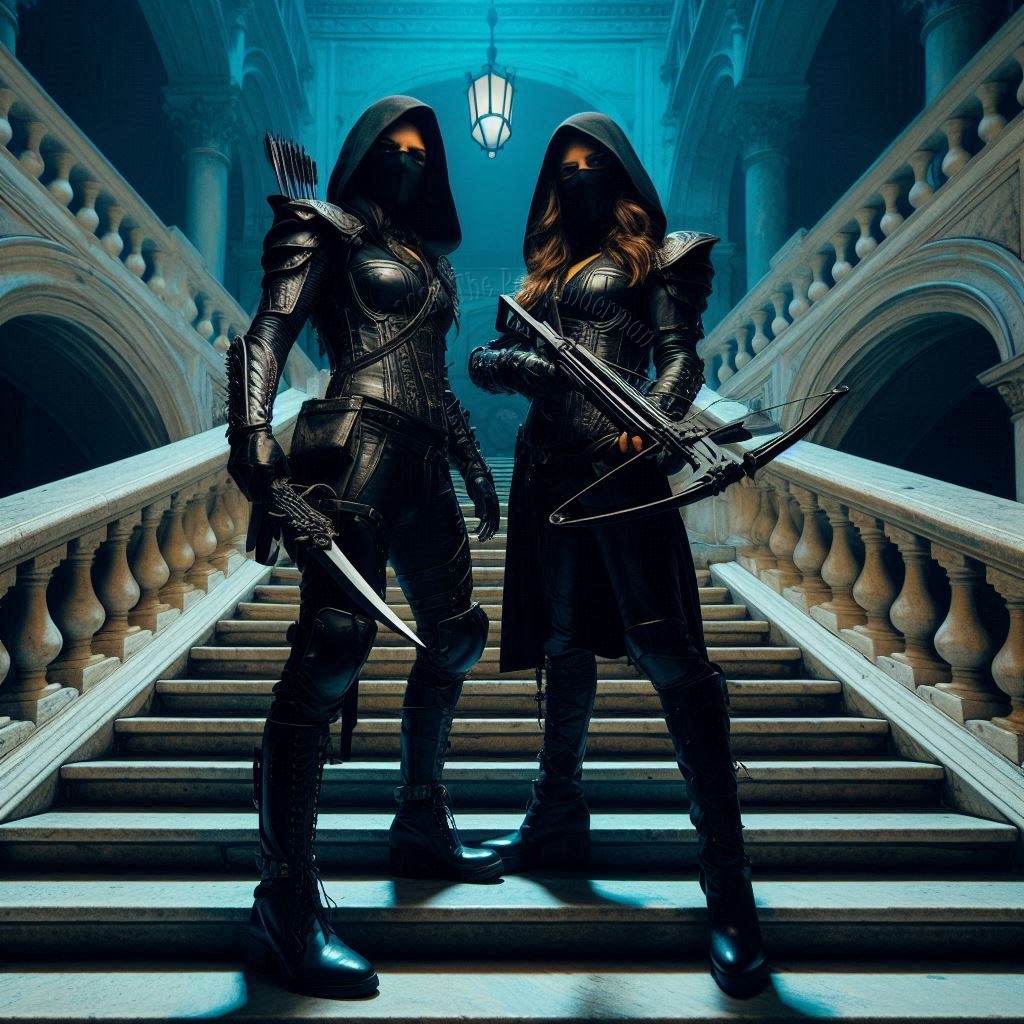
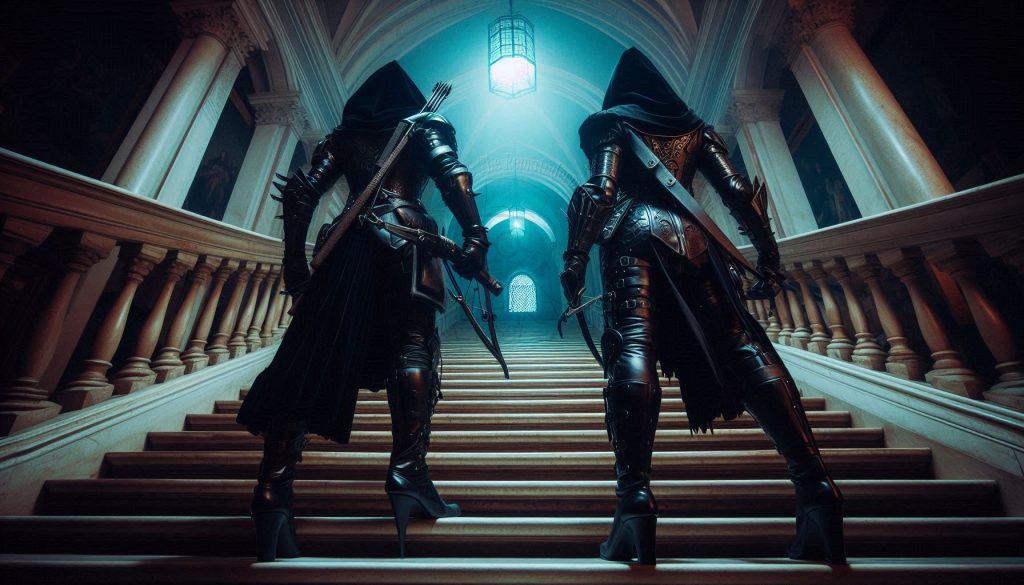
Channah and Rivqah didn’t pause until they reached the double entryway to the Stairway of the Censors.  Checking quickly for any sign of movement or human presence, and detecting none, Channah pulled open one door even as Rivqah tumbled through it, landing on her feet on one side of the door while Channah tumbled to the other, both of them trying to minimize the time they would be framed in silhouette against the lesser darkness of the courtyard.

After a tense moment, scanning the darkness as quickly as possible—ideally, before any Venetian guards spotted them and attacked—they relaxed as soon as they determined they were alone here and undetected.  The palace seemed quiet and deserted, except for muffled cries coming from somewhere up the stairs. 

With a glance, Rivqah transferred her crossbow and bolts to Channah, drew her sidearm in her left hand, a falchion with a short curved blade, and darted up the right side of the stairway.  Like most of Channah’s operatives based in the West, she was most familiar with the curved swords that dominated the wealthier, better-educated, more-civilized Muslim world most of them occupied.  Channah herself was considering relocating from Cairo back to Constantinople; and normally used a shamshir.  But the sight of such a blade would have attracted attention in Venice, so Rivqah carried the ancient Greek falchion, undergoing a revival in Italy and other parts of Europe.  She had been trained in a wide variety of swords.

Channah waited, scanning and listening, until Rivqah reached the tenth step, then began moving up the left side of the stairs after her.  Rivqah peered carefully around the landing at the top of the staircase, waiting tight up against the right-hand wall at the base of the second flight, while Channah reached the landing, sweeping broadly to the wall on the opposite side of the stairs and slipping along it to the far corner, crossbow trained on the top of the stairs, where the low flickering light of candles or torches coming from somewhere further on gave them the advantage, down in the darkness of the stairwell.

Rivqah then began moving again.  As she approached the top of this staircase she moved to the left, motioning Channah to the right as she remained on the top stair watching to the left.  When Channah reached the top of the staircase, she saw what Rivqah had seen:  a third, short and much narrower stairway to their left.  From here, the cries were much louder, and between them lower groans of pain were now audible, overlapping with two other, impatient voices demanding information and cooperation between the screams.

Channah slipped to the right, across the landing in front of them, crossbow aimed at the top of the third staircase.  With another glance, and a slight nod, Channah raised her crossbow to the ceiling while Rivqah crept up the third staircase.  If she fired into the stairway now, the only thing she could reasonably expect to hit would be her own sister.  She moved to the bottom of the stairs, keeping only her eyes trained at the third floor. Rivqah ducked as she approached the top, stopping in a crouched position with her eyes barely above floor level as she scanned what she could. 

With a glance back, she signaled 2 to the right, unknown to the left, suggesting she didn’t have a direct line of sight to the left without exposing her position to the two on the right, but there were voices coming from that direction.  Not the best situation to face; but on the bright side, it wasn’t like they were interrupting a church service.  The occupants of this room were torturing another human being, without any effort to muffle their screams.  In her experience, most humans who hadn’t become completely inured to torture preferred to move out of earshot whenever it occurred, because they found it unpleasant.  And the minority who enjoyed it were drawn to it like flies to manure; they’d be in the room, almost on top of it.  All of that gave the succubae a lot of latitude for making noise.  They could, quite literally, scream and still blend.  Well, more or less.

Missiles?  Channah signaled.

None to the right, unknown to the left, Rivqah responded.

Considering the width of the building, Channah couldn’t imagine there was too much open distance to the left.  Still… She crept up behind Rivqah, pressing up against her back to see nearly what she saw in the crowded space at the top of the stairs.  On the right was a long desk, three chairs wide, closed in front, with a candelabra sitting on it to provide light.  Behind the desk sat a gray-haired man in elaborate robes of expensive fabric, talking to an equally gray but otherwise lesser man—in proportions, in status, and certainly finery—who wore a neat but simple and unexceptional robe, standing with his back to them. 

The seated man, she knew immediately, was the Capo, a member of Venice’s ancient and privileged patrician class, rulers of the Republic for the better part of a millennium.  Knowing from her mission planning, exactly who he was, she felt the faint ache of her horns, claws, and fangs straining to erupt, an instinct she was barely able to restrain in the nick of time. 

The other man would have to be, she thought, the Venetian Lord of the Night for San Marco—night commander, judge, and all-purpose representative of the Venetian state in this district of the city during the hours of darkness.  He had five counterparts in the other districts of the city; and some nights their business brought them together here.  But evidently not tonight; if it had, they would all be gathered around that table, or outside the torture chamber altogether.  If she’d seen this fellow on the street, she would have guessed he was a shopkeeper or clerk, perhaps a merchant on the make but not yet worthy of consideration for marriage into or other admission to the ruling class.  She tended to doubt the Venetians would tolerate giving anyone other than a patrician the title “Lord.”  So perhaps he was of an ancient family that had fallen on hard times.

Both of the men were old, for humans; and would be unlikely to pose a grave threat.  They were both examining a parchment as they talked, so their attention was focused elsewhere.  She doubted the standing man could turn around before she was upon him.

Leaning into Rivqah’s neck and enjoying the smell of her, she whispered “I’ll try to take both of them alive.  You take the left; I doubt any of them will matter.  If you need me, shout at me to turn.”  Rivqah nodded her understanding, managing to tickle Channah’s cheek with her hair.  With a final “on 3,” Channah slipped back to give her room. 

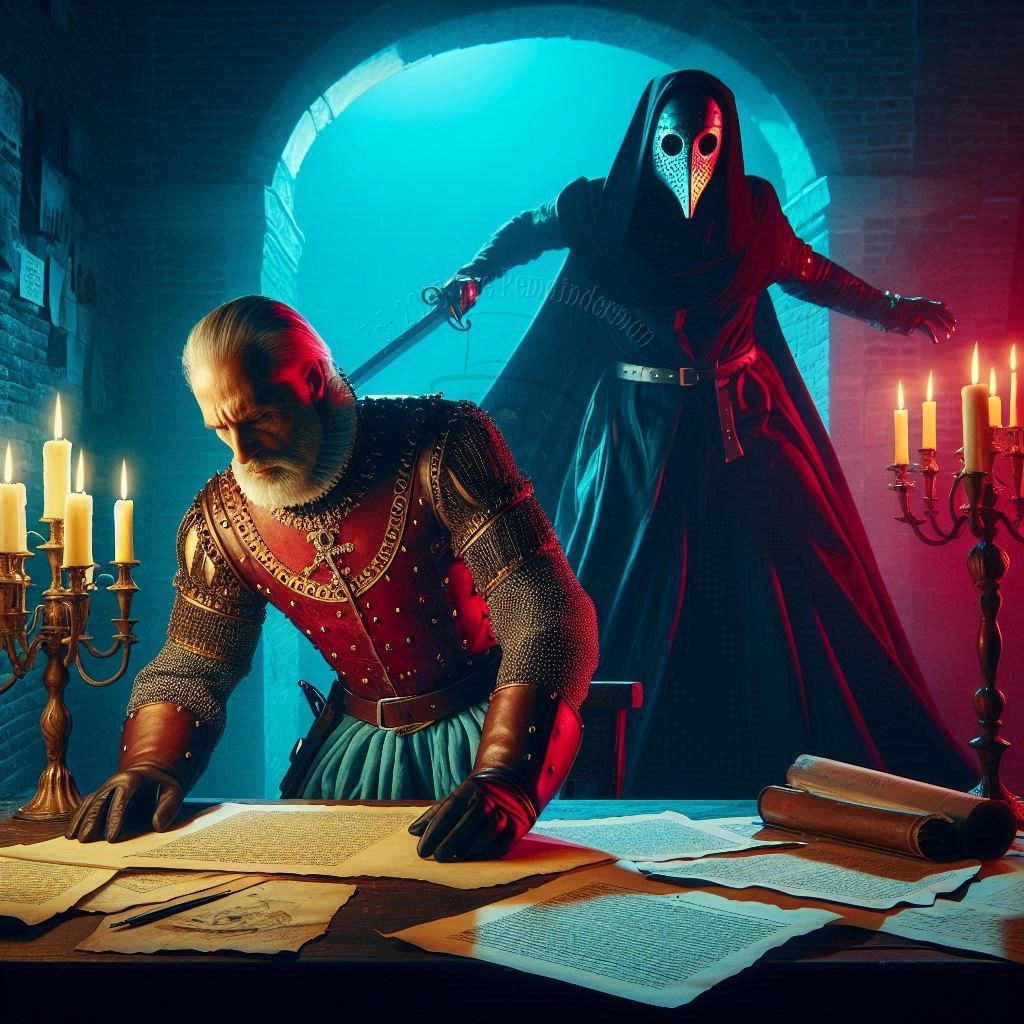
Literature Section “06-125 A Murder of Crows III”—more material available at TheRemainderman.com—Part 125 of Chapter Six, “Le Saccage de la Sale Bête Rouge” (“Rampage of the Dirty Red Beast”)—Abridged 1150 words—Accompanying Images:  1964-1967—Published 2025-06-25—©2025 The Remainderman.  This is a work of fiction, not a book of suggestions.  It’s filled with fantasies, idiots, and criminals. Don’t believe them or imitate them.