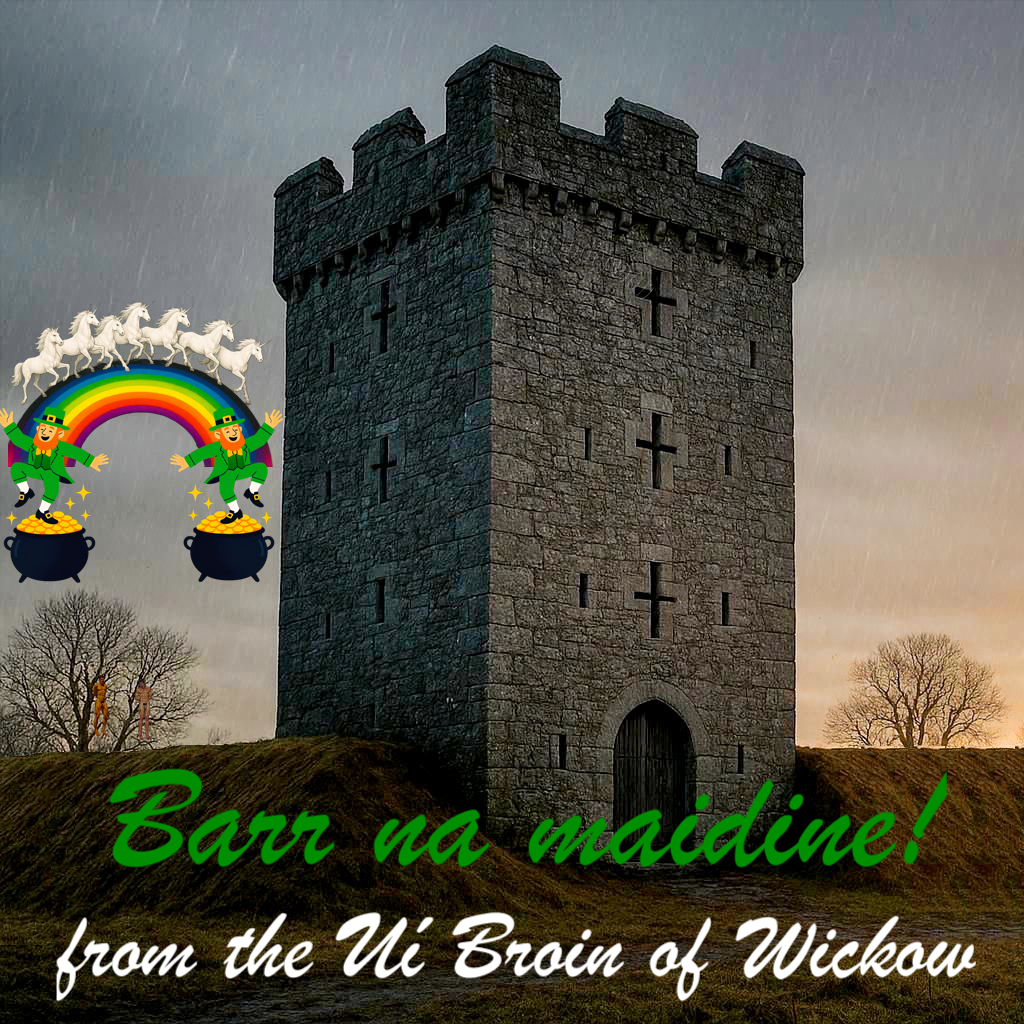
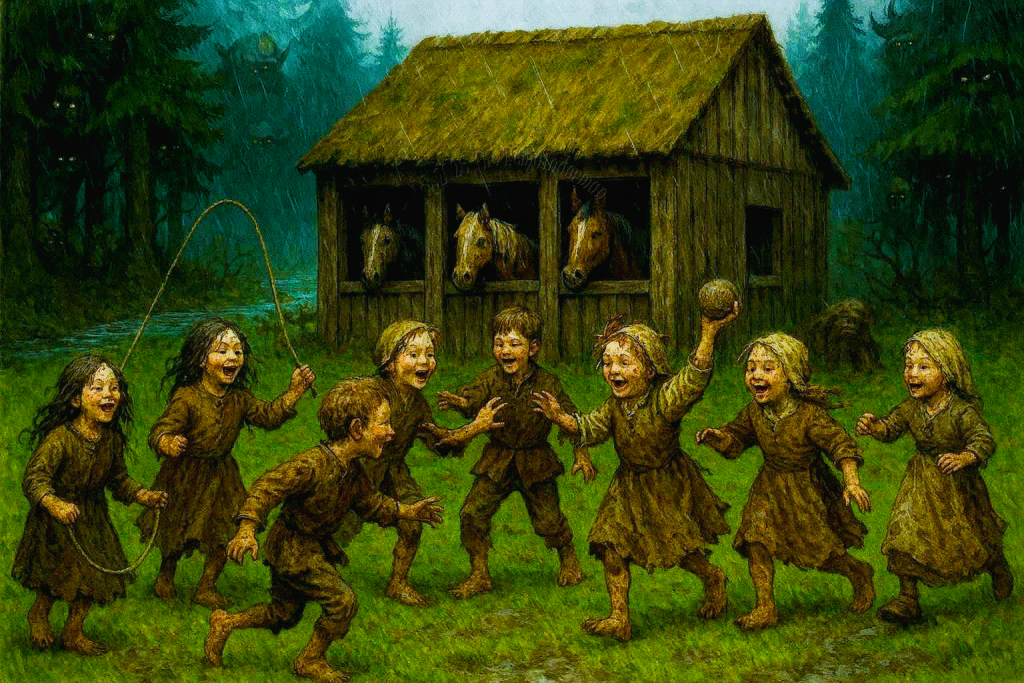
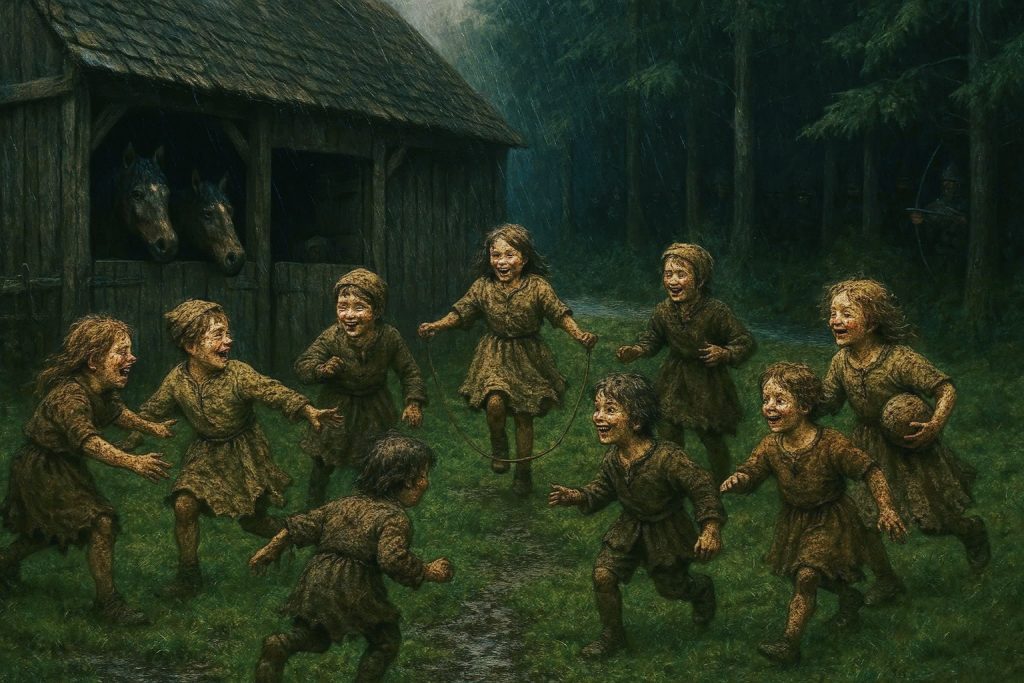
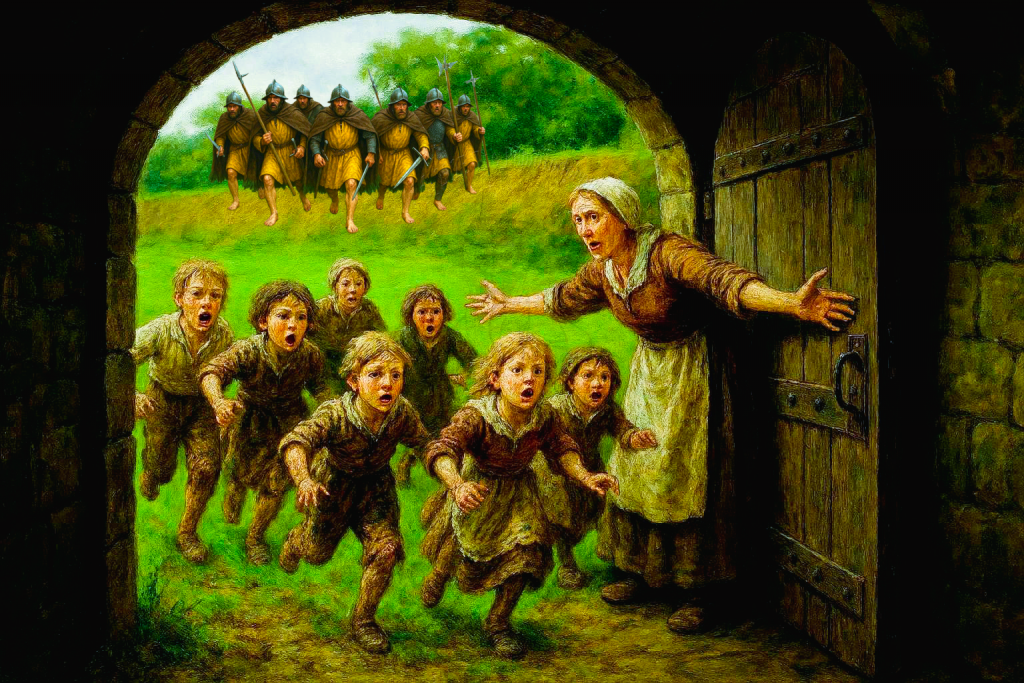
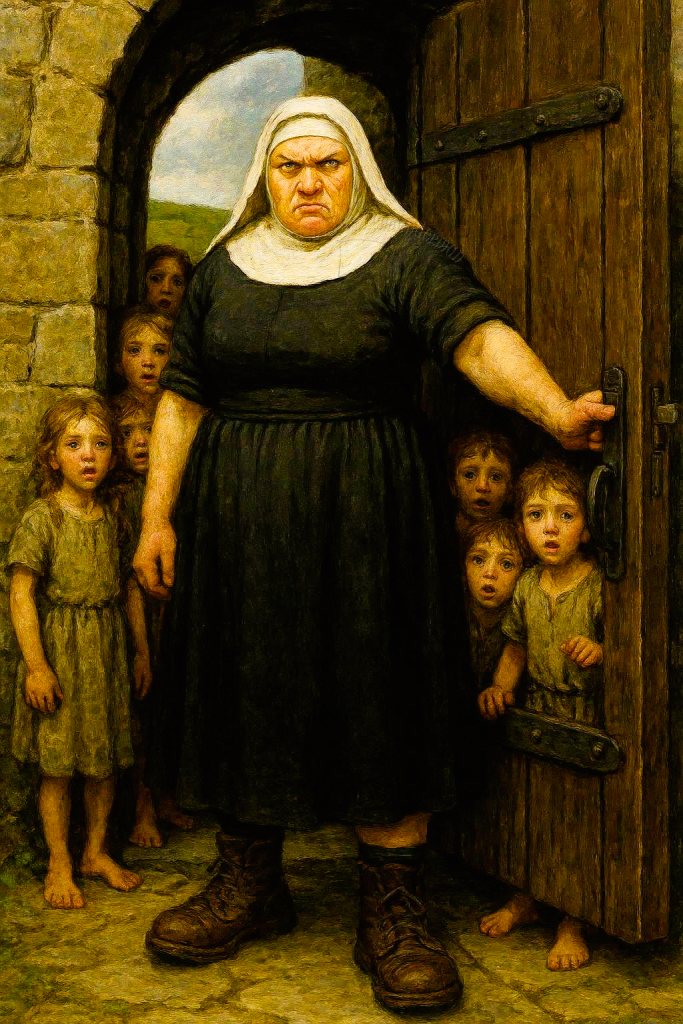
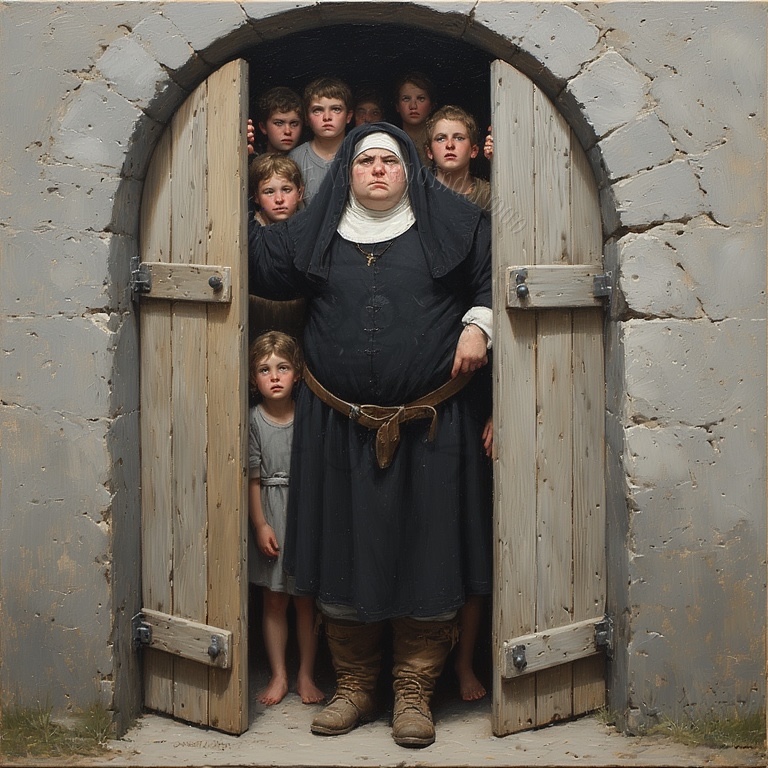
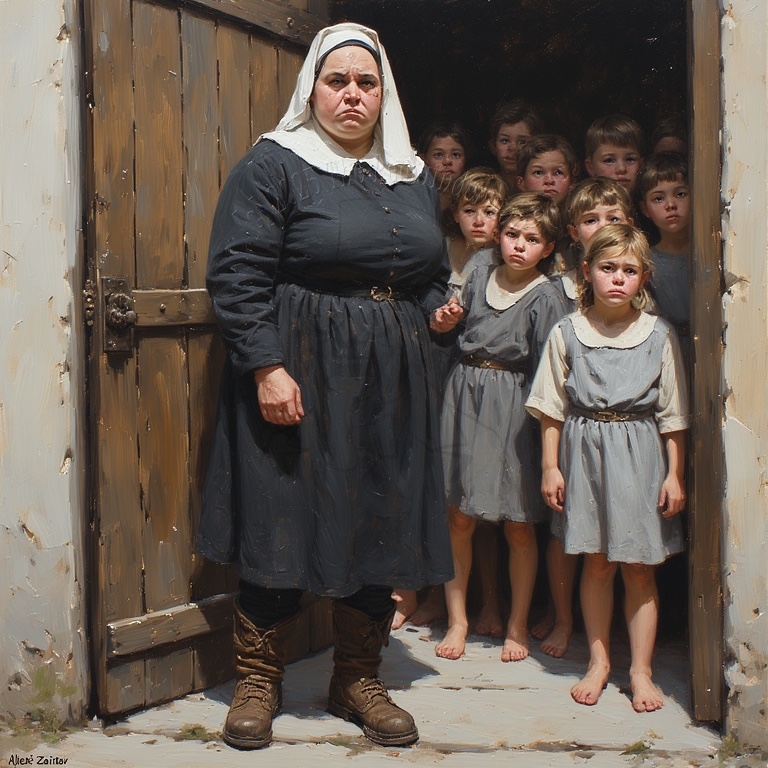
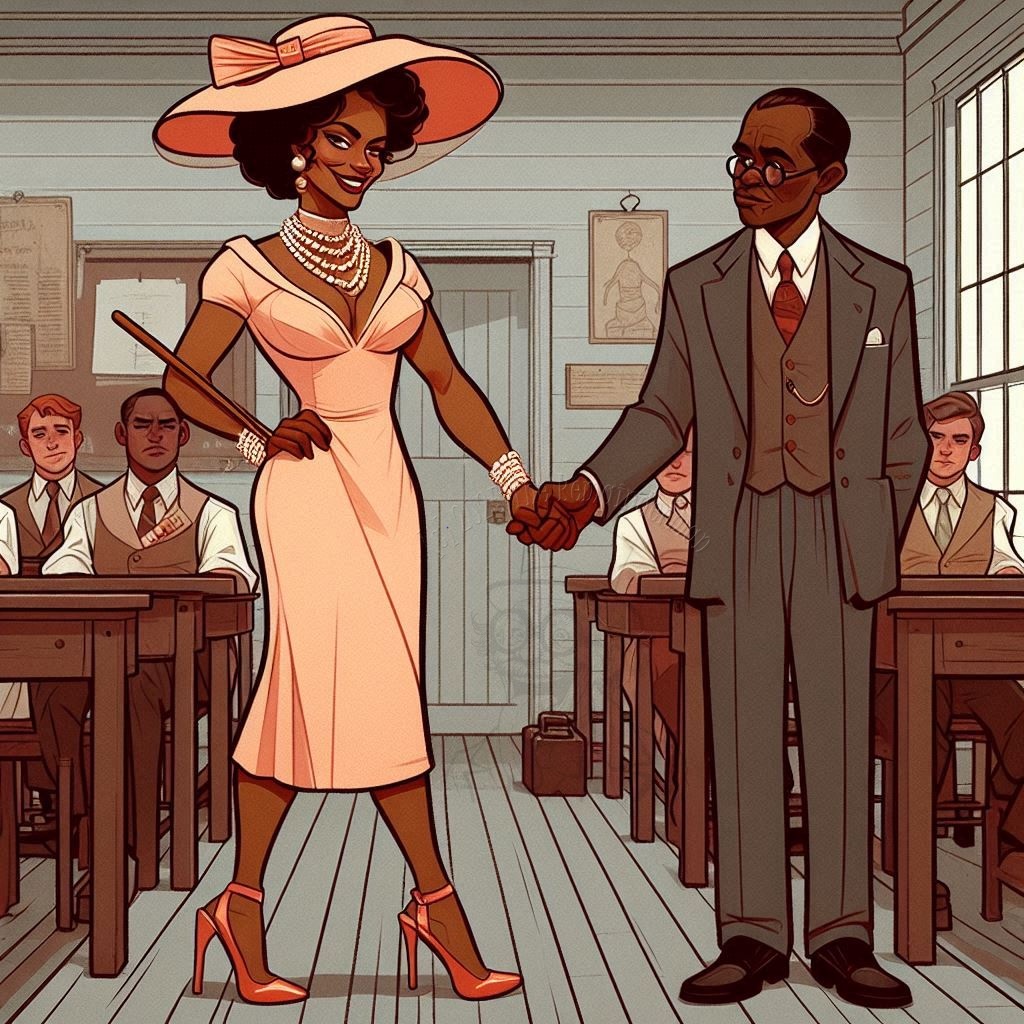
4870 08-1.5 Two Irish Letters—Top o’ the mornin’! from the O’Byrnes4871 08-1.5 Sunny meadow, shadowy forest4872 08-1.5 English fields, Irish woods4873 08-1.5 Sentry’s strident alarm (original)4874 08-1.5 NATIVES! Run for your lives!!! (original)4875 08-1.5 Sentry’s warning–ALT (accurate tower roof) (original)4876 08-1.5 Four seconds from slavery4877 08-1.5 They won’t all make it!4878 08-1.5 Weekly emergency training drill4879 08-1.5–Freedom-fighters. And slavers
CAUTION: Contains themes of war kidnapping and bigotry some readers may find disturbing.
No one had told the children about the Irish letters.
They knew something had happened—of course they did. Even the children knew cattle had begun disappearing again, and that this was a sign the Irish were getting restless. Or hungry.
Two weeks earlier, everyone’s breakfast had been interrupted by the sentry, sounding shocked and uncertain at first, then louder and more insistent once he was certain about what the slowly-thinning curtain of the morning twilight was revealing to him. But he didn’t ring the alarm signaling imminent threat, natives spotted. Instead, he went on about the two soldiers who had gone missing on the road a couple of days before, saying they were just outside.
Men had rushed to the roof of Shanganagh Castle at his cries, then come down more slowly, gathered more of their number, and headed outside.
The women and children had been kept inside, on the ground floor where there were no arrow slits to see outside, only the door facing Dublin, away from Ireland, reducing them to speculation. All the men who had gone outside went armed, as best they could be: from the Baron and Char’s older brothers in their fine, well-fitting armor with sharp longswords (no one’s armor was new for long at the frontier; but quality showed even—perhaps especially—in heavily-used equipment), and their similarly-attired knights; to their squires and the militiamen—freedmen of means with their miscellany of polearms, protective shirts, and preferably helmets of metal or at least boiled leather. The Baron even had an arquebus, for three years now, but it remained more of a bragging point than an effective component of his arsenal. He waffled back and forth between considering it a dishonorable weapon, and an impractical one.
The Baron himself had taken charge outside, handling whatever the “letters” were. After one of the soldiers reported breathlessly to Young Roland “They didn’t take the animals!” Char’s brother gloated, either hopefully or encouragingly (depending on how sincerely you took him), that they hadn’t dared get so close to the Castle. He sent men with farm tools, guarded by two of the armed freedmen, to milk the cattle in the barn, which was literally 20 or 30 feet behind the entrance to the castle. The older children were more or less able to put it all together; the younger ones were left with their anxiety and confusion even after the Baron announced it was safe for everybody to get back to work.
A few days later, reports reached the castle of a desperate family near Dundrum that had put new lands to the plow just the other side of the barrier, and suffered the same fate as the two soldiers: left strung up from a tree practically beneath the ramparts of Dundrum Castle, stripped of everything except the ropes around their necks and wrists, tragic and involuntary messengers and messages all at once.
All the Barons’ castellans stepped up their patrols. Merchants and mendicants avoided traveling—even more than they usually did, in these parts. Farmers who could, sent or brought their families into the crowded castles at night for safety.
But life went on: It had to. Life on the Pale was lived too close to the edge of so many kinds of disaster; they had no choice. Farmers, herders, and the few craftsmen and traders who supported them had to keep caring for their animals, maintaining their tools, insulating their homes, and growing food. For most of them, playing it safe simply wasn’t an option. If they didn’t work every day to put food on their tables and clothes on their backs, they couldn’t survive—even without worrying about human threats.
The children didn’t know it; but this promising, fresh, cool morning was it: the closest any of them had ever been, to the ever-present danger of a cruel death or a crueler captivity.
The edge was where they lived, these children: right on it, as close to tragedy as any of their elders. Closer, because they hadn’t quite wrapped their head around the danger they lived in, and wouldn’t have been able to do much to protect themselves from it if they had. The women of the castle kept them closer than women kept children in most parts of the world, because they had to. Kept a closer eye on them, too. Even so, they couldn’t be vigilant every minute of every day; it just wasn’t human nature. Only the most-disciplined and -cautious among them were alert all the time, usually for reasons (most of the children who survived to adulthood would realize at some point when they were experienced and wise enough) that had less to do with their current circumstances than some terrible past circumstance they would never really be able to get past.
Danger and death were there. Everywhere, just around the corner, just out of sight: hiding in the trench of the Pale, concealed down in the river bottoms, behind the rolling hills of the frontier; and most of all, invisible in the woods and bogs that dotted their borderland.
They were playing “king of the hill” right after breakfast, all the children from the castle. And of course, they were playing it on top of the Earthen dam itself: the defining characteristic of their homeland, and as they understood to different degrees according to their ages and faculties, the raison d’être of their entire community. Of course they had chosen it. Its walls were the tallest and steepest slope they could climb up or tumble down without serious injury; and there was the added advantage, even if none of them was thinking about it in the moment, of putting them within a dozen yards of Castle Shanganagh, meaning the sentry on the roof could keep an eye on them, even if his attention was supposed to be focused further away, near the horizons, scanning them for any sign of hostiles.
It had been two weeks since the Irish letters were left for Shanganagh. The Baron had taken a plurality of the soldiers from Shanganagh, Dundrum, and the other Northern castles down towards Bray, where the O’Byrnes had erupted from their mountain strongholds three days ago to rain chaos down on the English settlers.
So early in the morning, half the castle women were still slow with morning grogginess, all of them huddling near the fireplace in the great hall telling themselves they’d just wait to finish their cold cuts and bread before checking on the children, whose voices they could even hear from time to time through the open castle door. And they could tell themselves the sentry could see the children, and would warn them if anything serious happened. Even if they knew it wasn’t quite true.
The sentries were soldiers. Men. What did they know of children? Nothing. Some of them lacked the common sense God had given even unto the rodents who infested every human living place. Half of them seemed to lack the gene recognizing children as humans at all, let alone the portion best-deserving of care.
The little ones stayed away from Stephen, the castle’s current resident bully, because they knew he was careless and mean enough to hurt them for real by roughhousing with them as if they were five- or six-year-olds. Fortunately for all of them, they lived in a community small enough that children didn’t have or form separate societies of their own though Char would be—for a few blessed weeks afterwards might hurt them for real who would have been a bully in a who they knew would push them as roughly as they’d push the older children; but —until Ollie, as slow and deliberate as he always was, finally finished his food. Always the last to finish, and a good thing too because when Ollie played King of the Hill he always won and the other children couldn’t even dislodge him by ganging up on him
“Pale” came from pālus, a stake used to support a fence. So by extension, Brother Hugh had explained, reaching above and beyond his usual unimaginative and uninspired teaching with an example relevant and meaningful to them, managed to teach them a bit about geography during their Latin lesson. Ironically, their home was named after the comforting if ugly dam of dirt that honed to the castle like an arrow across the landscape around them, from Southeast and Northwest alike. Ironically, because as best any of the children could tell, there weren’t actually very many wooden stakes in it. A few, especially where topography squeezed in forcing the walls to be narrower or sloping terrain increased the risk of erosion. But the walls near Shanganagh, at least, were your basic big-pile-of-dirt. The Baron claimed the barrier stretched from around Bray in the South, in a wide arc inland to Kildare and the remotest reaches of Meath, and finally back to the Irish Sea at Louth. But since anyone could see from the roof of the castle, or a couple hours’ walk, that the earthworks on either side of Shanganagh petered out right about the edges of the richest fields worked by the Baron’s local tenants, only the children believed that story. The Baron didn’t even have enough men at Shanganagh to protect that short length of wall; let alone Shanganagh’s portion of the frontier between it and the next castle in each direction.
After Ollie shoved everybody off the hill, and a rather peremptory probing assault confirmed he was still the master of the game, the children at the bottom of the hill switched to tag and jump rope and playing with the old bladder they used as a kind of football.
The sky was as gray as always. Like a fancy noblewoman from Dublin who hid her own skin every day under a coat of lead that was supposed to beautify it, the thick clouds overhead concealed the intensely emerald island from heaven, too busy nurturing its beauty with water to let it be seen.
And thus, the shadows were long, and deep, especially down in the treeline by the stream.
Not a child noticed anything amiss; any more than the sentry himself. But they were there.
Trolls, elves, hobgoblins, dwarves, and all the other creatures of the woodlands were a constant worry, even without their parents weren’t warning them to be careful outside, even if their parents were pleading with them to stop bothering them with their groundless fears. But from time to time, when the games were away from the treeline and the threat the children were worried about was of Brother Hugh interrupting their games by calling them to their lessons, they forgot to pay any attention to the trees, however close and concealing they were.
It was the shouting of the adults that first caught the attention of the children. And if they attributed the calling to normal business in its first few seconds, that didn’t last long. The strain and alarm in the voices, the number quickly joining the call, and even their locations were wrong: The first cry came from the doorway but the next—belatedly, oh so belatedly—from the parapet of the tower where the sentry stood guard.
“ROBERT!” One of Char’s companions’ mothers screamed. “RUN!”
And then it was several women pouring out the door of the castle, screaming and gesturing at their children to run. Run as fast as they could towards the door. And the sentry on top of the tower, imitating their gesture for half a second, then struggling to load and aim his crossbow.
A couple of the smaller children began to run. Their mothers’ and aunts’ and older sisters’ cries were enough for them: they heard them and heeded them without delay. But the older children delayed.
Not on purpose: by instinct. They frowned in confusion at their female relatives, then turned and looked around them trying to understand what they were worried about. Those who looked up, understood immediately what a drawn crossbow implied: raiders. And close. But somehow, for many of them, realizing there must be scary men threatening them only increased the necessity of setting their own eyes on the threat and quantifying it.
What they saw was a line of men, 6-8 or maybe even 10 in number, running toward them at breakneck speed. Their irregular armor, weapons, and helmets—comparable in their variety and quality to those of the English militiamen—marked them as soldiers.
Their bare feet and legs, saffron Léinte (chemises), and heavy fringed brats (cloaks as versatile as they were warm, the Irish counterpart of the great kilt and arisaidh) marked them as natives: wild Irish in their savage dress, which according to many of the English (who were, perhaps, unfamiliar with the continental, and even English, fashions of the previous century) defied any pretense of civilization.
Kerns: Irish light infantry. Raiders. Reivers.
Upon sight of them, even the most stubborn children screamed and ran, as fast as they could, most forgetting everything else, even their own younger siblings, at the sight of the Irish. If given an opportunity, they probably could have worked out the threat posed by the Irish, readily enough: death or enslavement, if they were caught; even if they couldn’t have explained the details implied by either of those fates. But who could, really? There were a few stories of Norman knights being captured and enslaved by the Irish, only to survive and escape; but not many. If ordinary English settlers had been captured and returned at all, not much was written about them; but it seemed clear captivity was not a fate to be relished, or even brushed off. They certainly, every one of them, grasped that the moment any one of the men’s hands fell on their shoulder or seized their arm, life as they knew it would be over.
The women screamed and urged them forwards with every sinew of their bodies and voices, as if they could physically will them forward or add speed to their flight. The children, once running, ran as fast and as desperately as their little legs could carry them. But their legs were much shorter than the kerns’ and the soldiers’ legs had been hardened by training, hunting, and campaigning; and they rapidly closed the gap on the children.
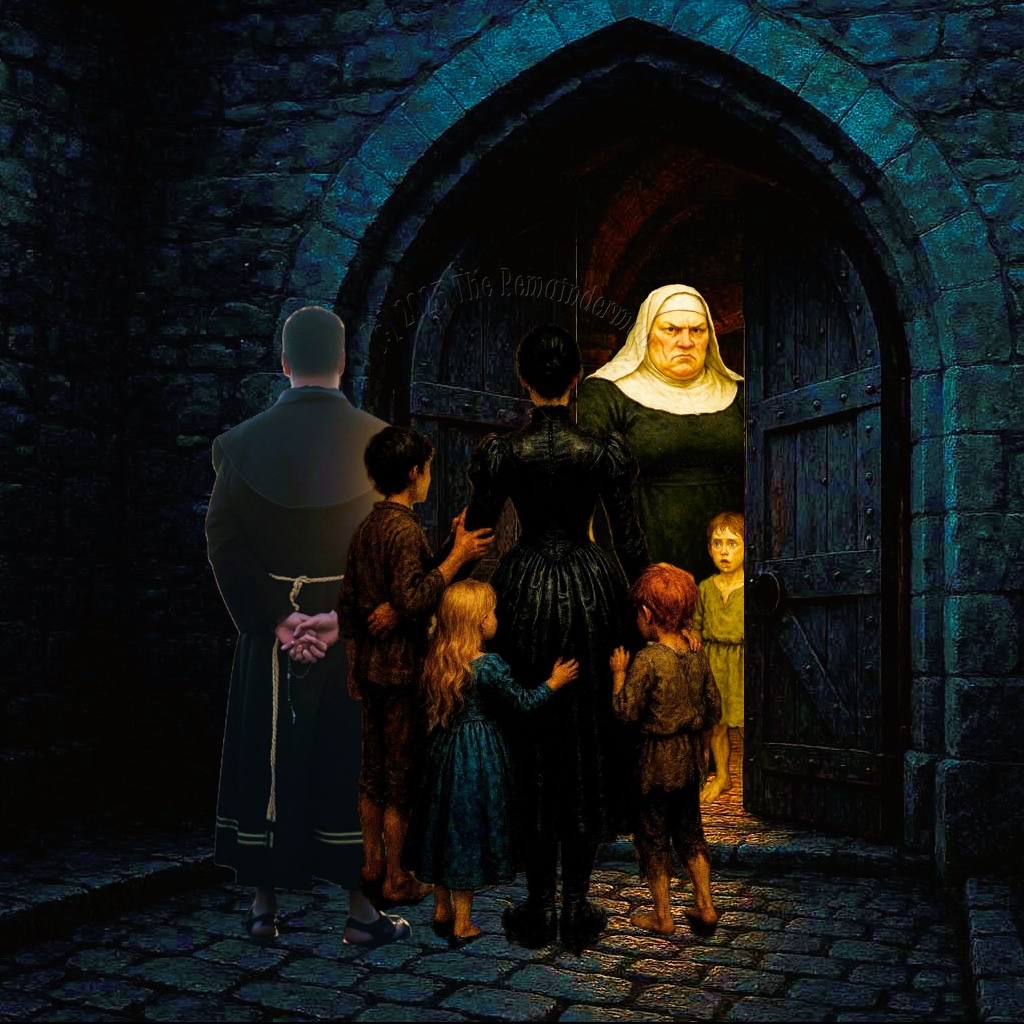
Sindonie, one of the more-sensible women at Shanganagh, and her mother Lady Parnell, began shoving other women back inside the castle, realizing that when the children reached them there was a risk of a traffic jam in the final few seconds they needed to be closing the door and throwing the bolt. The other women, still screaming at the children, darted their eyes back and forth between the children and the kern, gauging their speeds and distances, trying to know what would happen; trying to will the children to make their escape in time. Through the door, the children could see one calm Wrathdonian soldier kneeling calmly 2 or 3 feet inside the tower, resting his drawn sword over his knee to be ready-to-hand, and tipping his crossbow up so the bolt would stay in place without risking an accidental shot through the women and children. But most of the men would be heading for the roof or the arrowslits in the upper floors of the tower: Much better positions for defending the castle itself; and perhaps theoretically for defending the children except that by the time most of them could hope to be in play the childrens’ fate would already be determined.
So it came down to them, their scared female relatives, and the sentry on the roof who had given every indication so far of being incompetent, inexperienced, inattentive, or all three.
In fact, the sentry did get off a shot, just as Rash Henry reached the roof close enough to its rear parapet to see what was happening below: A shot that fell far short of the kerns he was trying to kill or delay, falling instead right in the middle of the children. More specifically, whistling into the dirt less than a foot in front of a well-dressed boy with long blonde hair Rash Henry recognized with shock as his younger brother.
It would be fair to say none of the Wrathdown children enjoyed the kind of friendship most parents might hope for among children. Indeed, Baron Wrathdown had done almost everything within his own personal capacity to ensure the children lived at one another’s throats, aware they were rivals in everything and that their father at least viewed them as such. Practically as replaceable, potentially-fungible commodities he was more interested in grooming and using as a pool of candidates for the top management positions in his Barony, rather than as individuals with personal meaning to him.
And none of Char’s older brothers had a good word to say about the youngest. Even before Sindonie had commenced her devastating work, they had viewed him as spoiled and coddled primarily because he was the youngest, and there hadn’t been a pile of younger siblings behind him to compare him with and demonstrate he was just another chip off the old block. After several months in Sindonie’s care, he was finding himself to be very, radically different from his siblings or his father, and not interested much that interested them.
But still—this was his brother; and even if Rash Henry didn’t like him, he felt the affront to his brother was equally and personally an affront to him, and to all of the Wrathdown name. His stream of profanity was lost on the children and women below, even Char, who were too wrapped up in their desperate circumstances to pay much attention to the roof anymore; but the sentry blanched at his threatening words and the violence with which he wrenched the man’s crossbow up and shoved the man back against the parapet, nearly making him lose his balance and fall over it to land on or among the women standing below.
Char’s consciousness flared with sudden awareness of the bolt plunging into the soil nearly literally under his feet but didn’t have time to dwell on it yet. Certainly, from its angle some part of the child must have recognized it hadn’t come from the Irish. And fortunately it didn’t trip him up or cause him to stumble; he washed over it like a wave, behind one child and ahead of another, running and yelling without thought for his dead mother, probably thinking at least in part of Sindonie.
For every foot the children covered, the kerns covered two or more; and a moment later they were among the children, snatching up two little boys and a little girl who were straggling, just as the first of the children raced through the castle door and Sindonie, beside the doorway, raised the Baron’s arquebus. A keening scream from inside the tower was presumably one of the mothers whose child had been seized, catching sight of their fate, but events were moving too quickly to process them let alone dwell on them.
The men pouring onto the roof above roared in dismay as they noticed kerns leading a cow and a horse out of the barn, focusing their attention on them and firing a scattered volley of a few arrows that failed to find any of the kerns; but mercifully weren’t anywhere near the fleeing children whose plight the soldiers were ignoring, distracted by a wisp of smoke from the barn’s thatched roof and the potential loss in livestock. They did frighten the horse, which bucked off the hand of the kern trying to mount it, and—with a minor but apparently painful scrape on the rump—stampede the cow, who was later found eating grass beside the Dublin road with a broken arrow stuck in her tail.
Ollie fled past his mother a moment later, looking worried but knowing better than to mess up the retreat by blocking the door; immediately followed by the mass of the children. A few moments after that Char and Edith, the last of the children not yet captured, who had been skipping rope away from the other children playing tag, trailed past after the others, clearing Sindonie’s line of fire just as the closest of the pursuers looked up at her, shouting as much in surprise as fear and instinctively turning away, crashing into the second pursuer and slowing all of them down just as Sindonie fired.
Whether she had scored blood or not, she never knew; it was the first time she’d fired an arquebus, and she considered it a victory that she’d managed to ignite the gunpowder. Doubtless, had the men given it any notice, they would have compared her level head favorably with that of the sentry who had nearly shot the Baron’s own flesh in his haste.
In the seconds as the men checked themselves for injury and turned back towards the door, Sindonie fled through it, pulling it shut behind her and hearing the two heavy crossbars slam shut, thrown by two of the older women who had been waiting for the opportunity. Char practically jumped into Sindonie’s arms and Ollie hugged her fiercely, all three of them talking over one another as they expressed their overwhelming feelings of fear and relief to one another.
Around them, other women were hugging and holding their children fiercely; and a couple of the older women were physically holding the mother, or one of the mothers, of the lost children: at first to keep her from throwing the crossbeams off the door and hurling it open in a doomed effort to recover her child; then to keep her from falling over, as she suddenly seemed to lose her strength and sag towards the floor, wailing in horror.
The kneeling crossbowman rose to his feet and helpfully took the arquebus from Sindonie before she could drop it; then looked up toward the top of the stairs, looking or listening for something that apparently persuaded him not to follow the other soldiers up to the parapet.
Instead, he returned to the door and cautiously peered through a slight gap where a knot had deformed a piece of wood just enough for light to show between the two boards. Apparently whatever he had seen, or not seen, reassured him because he shouted towards the top of the stairs: “Is it clear?” And when he received no response, he repeated even more loudly: “IS IT CLEAR YET?! Is it cl—”
At that moment four soldiers clattered back down the stairs having come, presumably, from the roof; their leader crying: “Wait for us! It should be clear but wait for us! Men!” and here everyone recognized he was talking to the older and poorer men, unarmed or holding hoes or scythes or other farm implements. “Follow us! Grab the buckets in case the barn is burning!”
Everyone in the main room reacted to that; fire may have topped the long, long list of things the Englishmen of the Pale feared: Irish, Baron Wrathdown, famine, flood, pestilence, plague, flux, scurvy, pox—fire. Fortunately, it was wet outside, the castle was stone, and there’d been plenty of rain. But still, the barn was close by the castle; and the four upper stories had wood floors, wood furniture, and wood internal walls; supported by wood beams and columns. There was plenty to burn inside the castle, basically everything except the fireplace and the wooden shell of the building around them, which would look more and more like a flue as the wood burned or fell down inside it. If the fire got inside the building before they got out, their lives would be in mortal peril.
Rash Henry would explain to all who listened in the coming days, how he and the men under his command had stoutly defended the barn, driven off the kern (who indeed, hadn’t taken or damaged any of the livestock), and “saved” the barn by stomping with their boots on sparks and smolders in the wet, fouled hay in a corner where the kerns had dropped a torch.
But that wasn’t what most of the people at the castle would remember about that day. Two fathers and one mother (Sir Edmund, the father of the two lost girls, was a widower) had lost children; and while they were especially devastated by the losses, everyone felt them. There weren’t that many English families on the Pale; and with the exception of those desperate people drawn to this harsh world by the economic opportunities warfare and chaos offered, they tended to be families that had been living on the edge and battling the Irish for generations. Families on the Pale were like a hedge of briar bushes, prickly and entertwined with one another, even their stalks sometimes grafted onto one another’s roots; and virtually everyone at Sanganagh Castle was related to the missing children in some way, as a distant cousin or recent in-law at the least.
All of them who had heard the children’s screams as they were seized, would remember the sound the rest of their lives; many of those would hear it echoed in terrible dreams over and over and over again. The mother who had watched her son’s face, seen his hands reaching out desperately for his mother as he was taken away from her, would never even be close to the same again. And Sir Edmund… would be forever changed as well.
Some said they’d been under-defended, or that the Irish had successfully baited most of the castle’s defenders away, leaving them vulnerable. But nobody thought it wise to share opinions too openly, that could be interpreted as criticisms of their leaders.
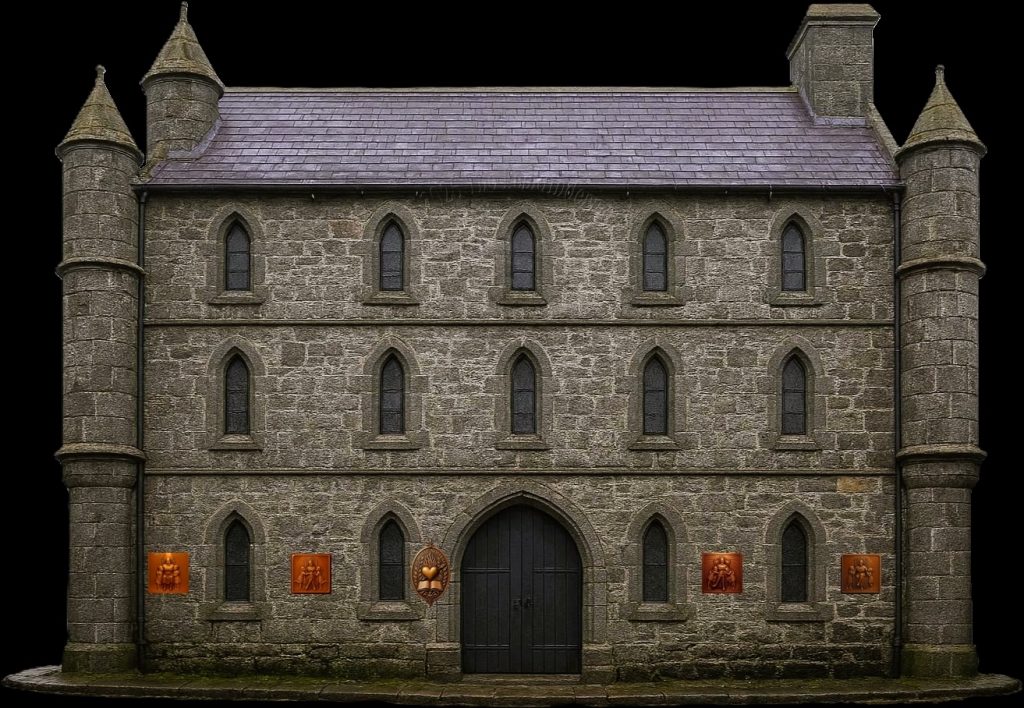
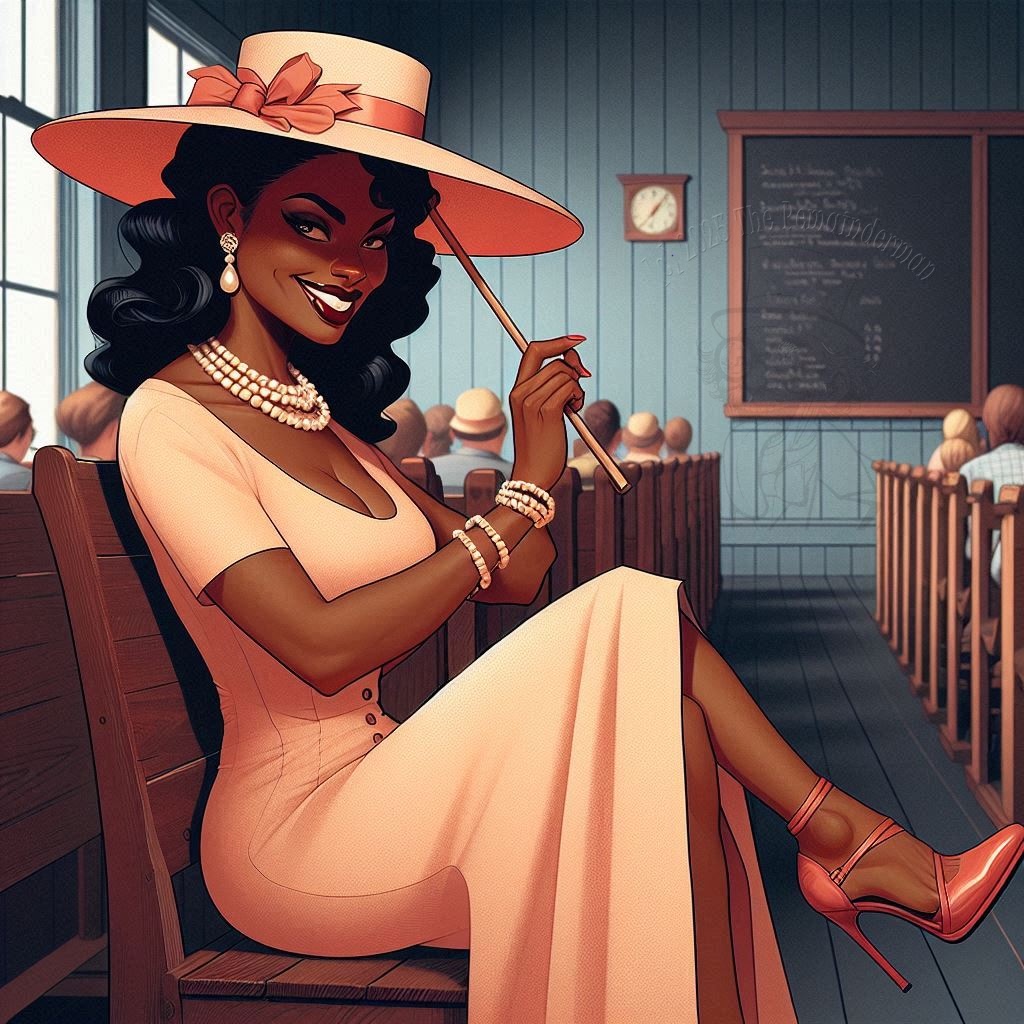
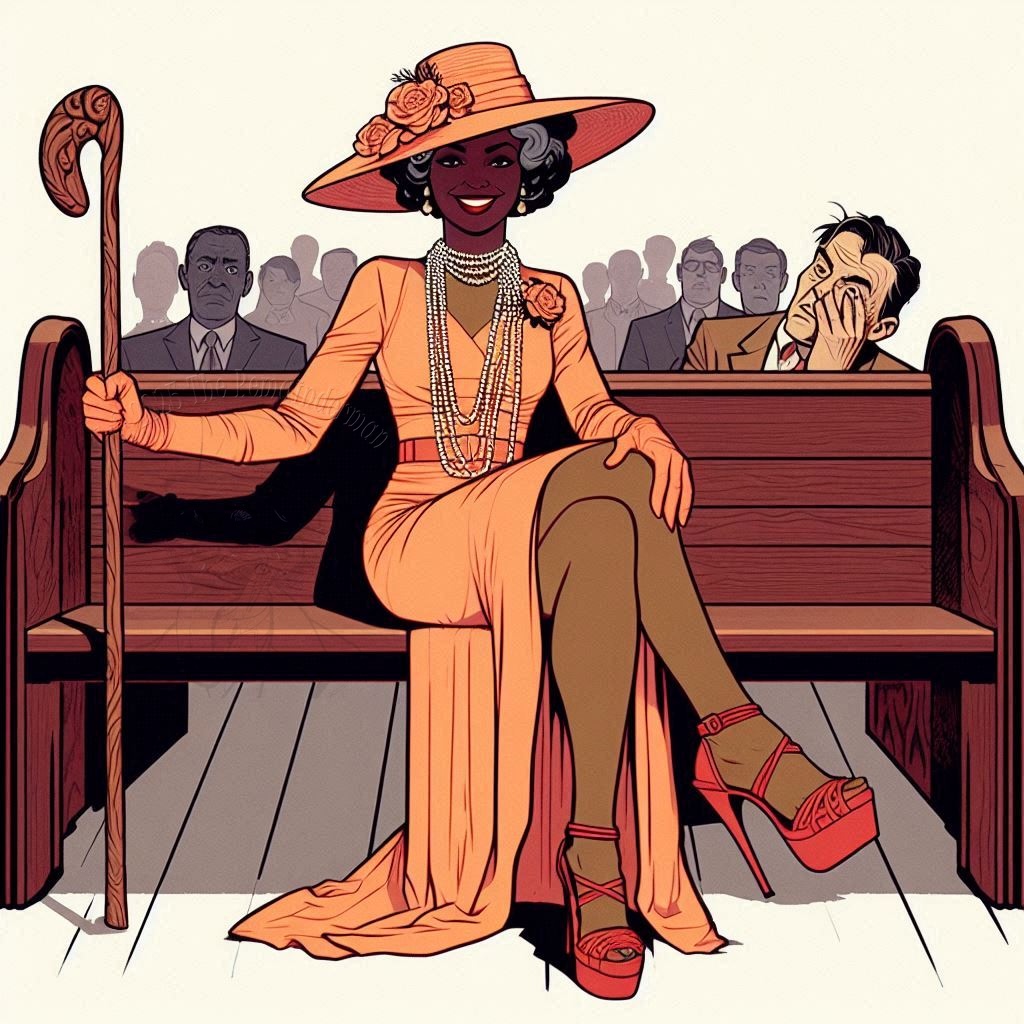
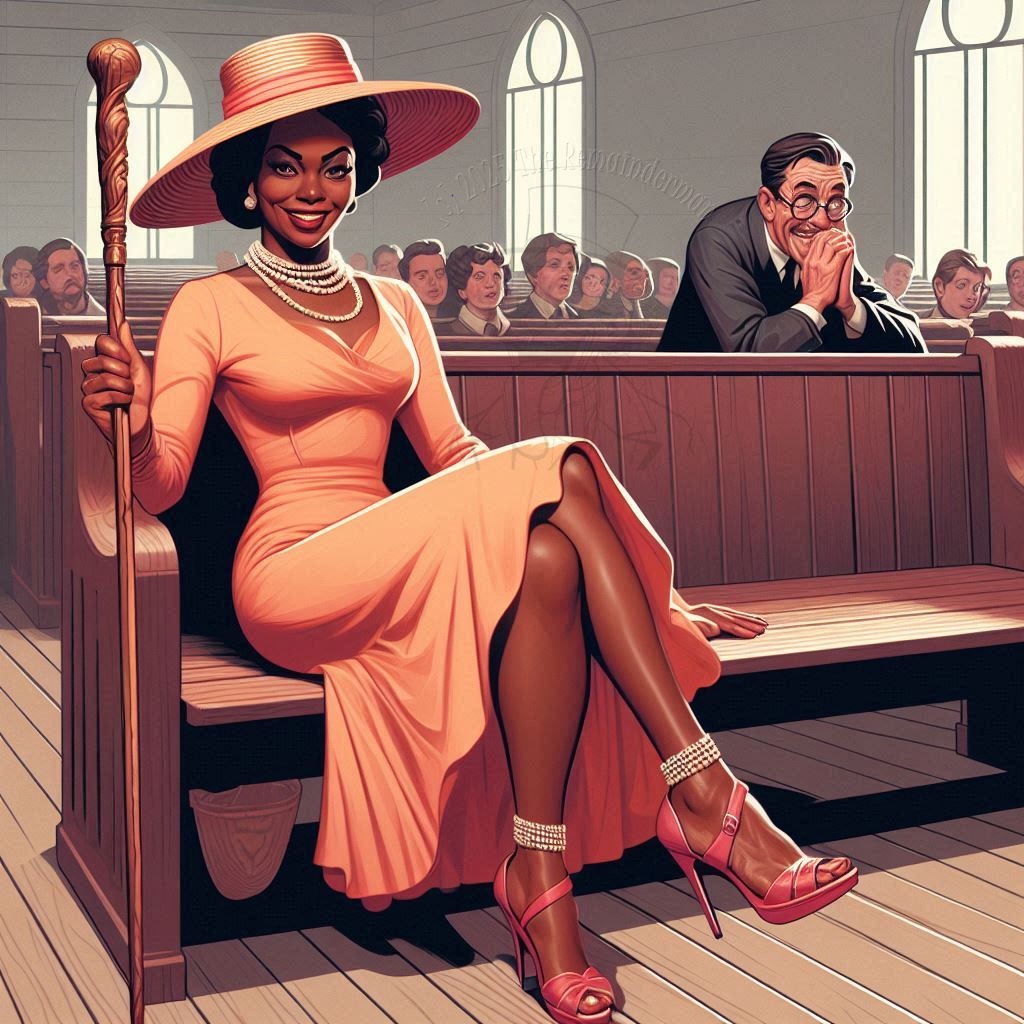
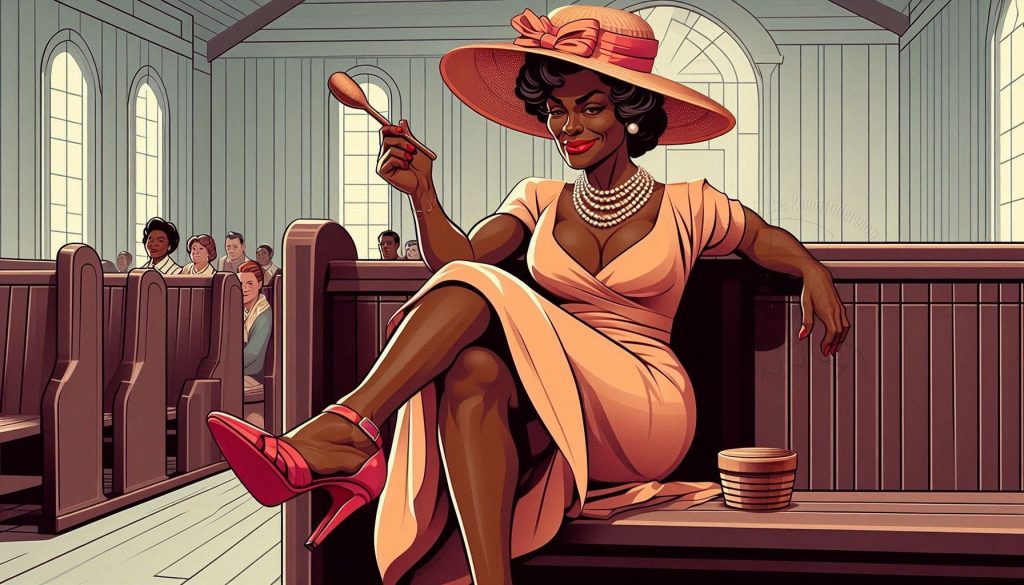
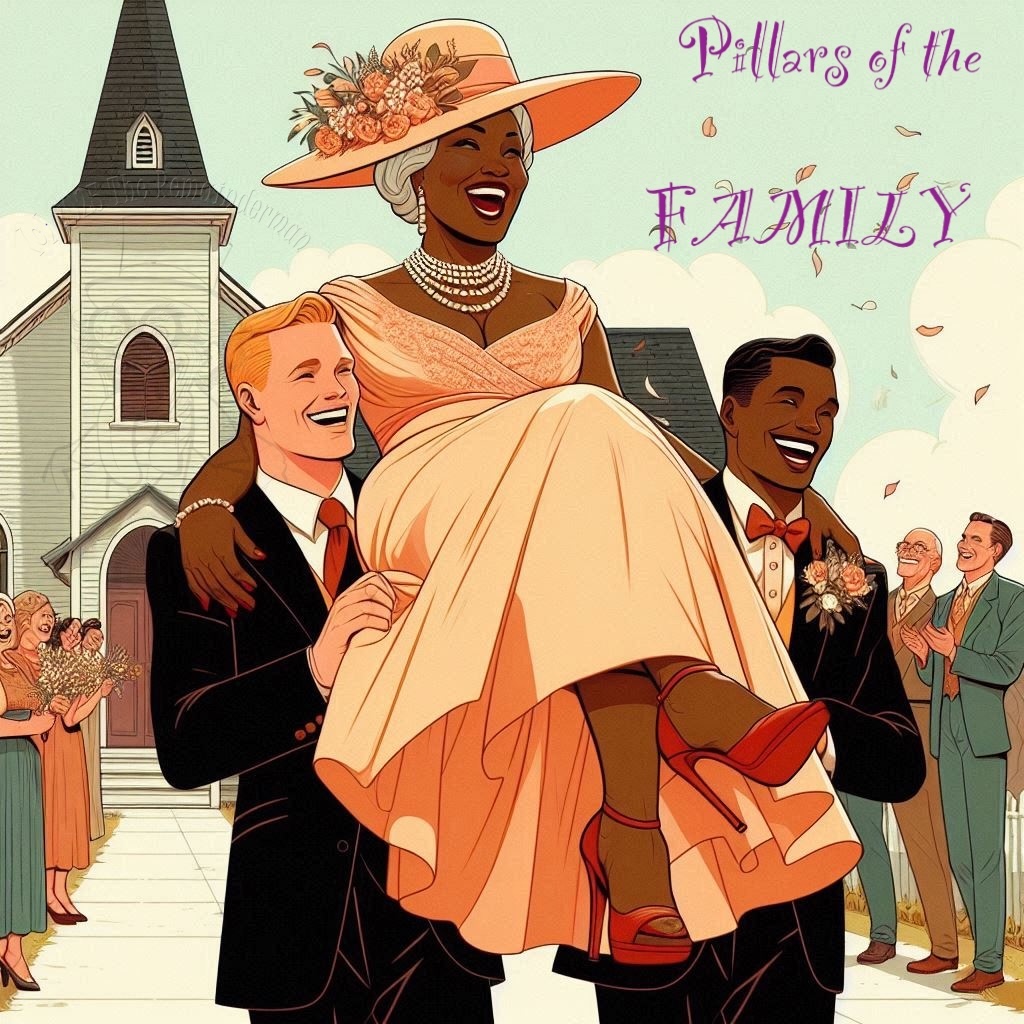
4553 08-03 Charite Hous exterior4554 08-03 Charite Hous signs—children will be happy4556 08-03 Charite Hous—L1 kitchen4557 08-03 Charite Hous—L1 storeroom4585 08-03 Fount of Baron Wrathdown4586 08-03 Drain’s-eye vew of Bothe Strete4587 08-03 Tub of Hunna, the Holy Washerwoman (edited) copy4558 08-03 Charite Hous—L2 boys’ bedroom4555 08-03 Charite Hous—L2 central hall4559 08-03 Charite Hous—L2 girls’ bedroom4560 08-03 Charite Hous—L3 schoolroom4561 08-03 Charite Hous—L3 matrons’ bedroom4562 08-03 Mother Phillipa’s Preiere Bench4563 08-03 Sister Sindonie’s Preiere Bench4564 08-03 Hercules’ Augean Labor chamber pot4588 08-03 Mother Phillipa stretches her legs4589 08-03 A slightly decadent foot rub4590 08-03 Moment of intimacy4591 08-03 An Ambivalent Welcome at Charite Hous4592 08-03 About 100; but with 2 of us? It’s not so bad4593 08-03 And you think I need another one… why?4594 08-03 Don’t even TRY to bring them new kids in here4595 08-03 If I open it all the way, they’ll start falling out4896 08-03 Oh, there’s more. Plenty more. Come on in4897 08-03 Who the fuck are YOU?!4898 08-03 Yeah, I’m tired. REAL tired
CAUTION: Contains themes of fighting, bullying, and abusive behavior towards children some readers may find disturbing.
If this account is closed, look for “Remainderman” or go to theremainderman.com
PREVIOUSLY: Two traumatized boys of 5 or 6 residing on the militarized Southern border of the Pale have just been given into the care of the Augustinians: Char, youngest son of Lord Wrathdown, a gentle nontraditional boy and a bit of an airhead, has been banished to the Church to make a man of him; accompanied by a new ward of his father’s, Pen, the refugee of an Irish raid, who was meant to help him learn, but is still in a state of shock from whatever he has experienced there. Accompanied by Char’s tutor, Sindonie, and her son Oliver, they are being taken to their new home. NOW:
Just as Friar Paul knocked—well, pounded—the heavy wooden door of the Charity House again, they heard an eruption of children’s voices from inside. Movement from the windows on the right caught their eyes and they saw children’s excited faces pressed up against them, eager to see who could possibly be knocking on the orphanage door at such a late hour.
Vespers had come and gone on the road, shortly before they dropped the Archbishop off at his Palace outside the City; and it could fairly be judged Compline—bedtime—now. Brother Paul cringed visibly as he braced himself for Sister Phillipa’s reaction to the obvious disruption their late arrival had caused.
Arriving on Bothe Strete outside the Charite Hous, Brother Paul had hesitated with one foot out the door, forcing Sindonie to reverse her forward momentum to follow him, he cleared his throat: “Oh, and by the way, you can call Sister Phillipa, Mother Phillipa.”
Sindonie was taken aback: As in every sphere of life, titles and ranks were the prerogative of men, with a very few exceptions the nobility preserved to protect their own families’ special privileges. “Mother” was an honorific the Church was practically loathe to bestow on any woman; and was normally reserved for those few, rarified sisters named Abbess or Canoness the male bishops and cardinals could not seemly avoid appointing to run esteemed all-female institutions of the church.
Sindonie knew before they arrived, of course—had known the moment the orphanage was first mentioned—it could not possibly have been an esteemed institution. It was understood; orphans were little better than madmen or criminals; indeed, many if not most of the orphans had probably been found in the street and rounded up in the first place by the City Watch for breaking the vagrancy or other criminal laws, and offered to the Charite Hous because they seemed even younger than most. By extension, Charite Hous was little better than the Black Dog: Dublin’s notorious prison, housed like a parody of an inn in one of Dublin’s decaying defensive towers above a space rented to the slightly-less-notorious tavern that lent the prison its name. That was the City Watch’s next stop for anyone Mother Phillipa didn’t like the look of; a responsibility she wore heavily, as evidenced by a fair fraction of the children any other nun in the city would have turned away instead of fighting, valiantly, to save.
“Mother Phillipa—she’s the Abbess of St. Mary de Hogges?” Sindonie asked in shock.
Friar Paul laughed. “No, of course not. Just salt of the Earth. But everyone calls her ‘Mother.’”
“Even though she’s really a Sister?”
“It’s much simpler.” Char and Pen both giggled behind her at that suggestion. The fact they shared a sense of humor ought to help them bond; and she was inclined to laugh, too; but she settled for the skeptical look Father Paul caught on her face as he helped her from the carriage. “That does sound odd,” he admitted, allowing himself a smile. “But you’ll see. All the children call her ‘Mother’ anyway. And there’s another Sister Phillipa; this keeps them straight.”
“As long as the Abbess doesn’t mind…” Sindonie suggested tentatively.
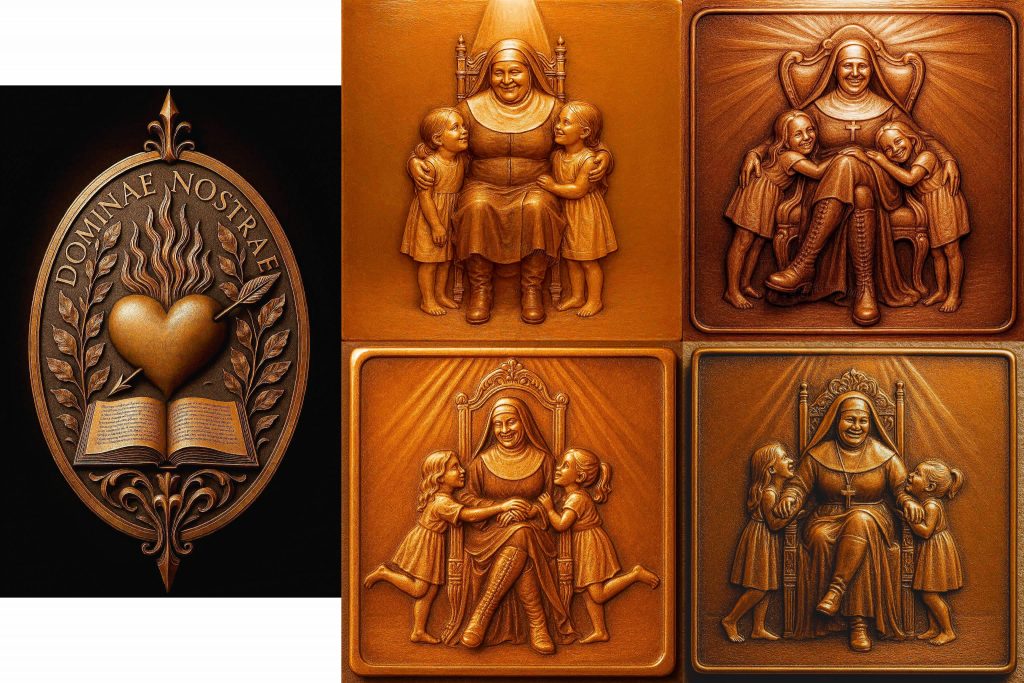
“Not at all. Mother Phillipa isn’t known for putting on airs or getting above her station. Salt of the Earth!” he repeated, as he pounded on the door of the orphanage’s neat but generally—with the exception of several brass plaques announcing its function—modest and simple exterior.
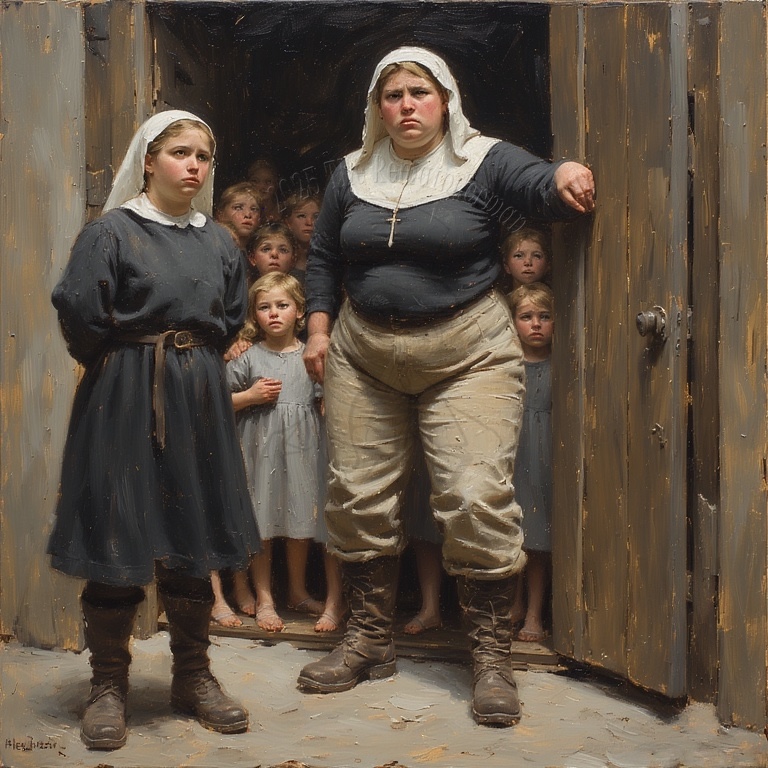
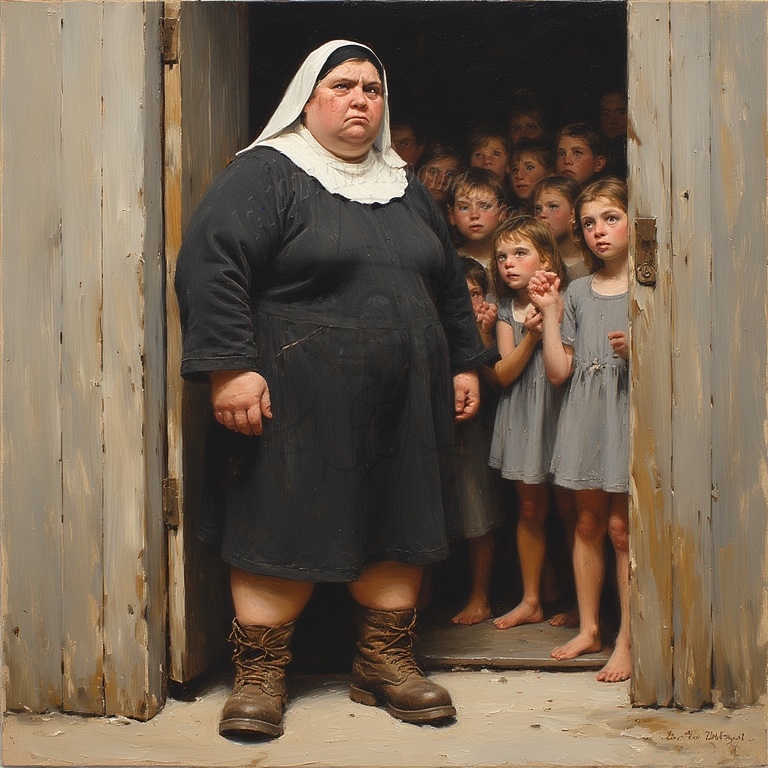
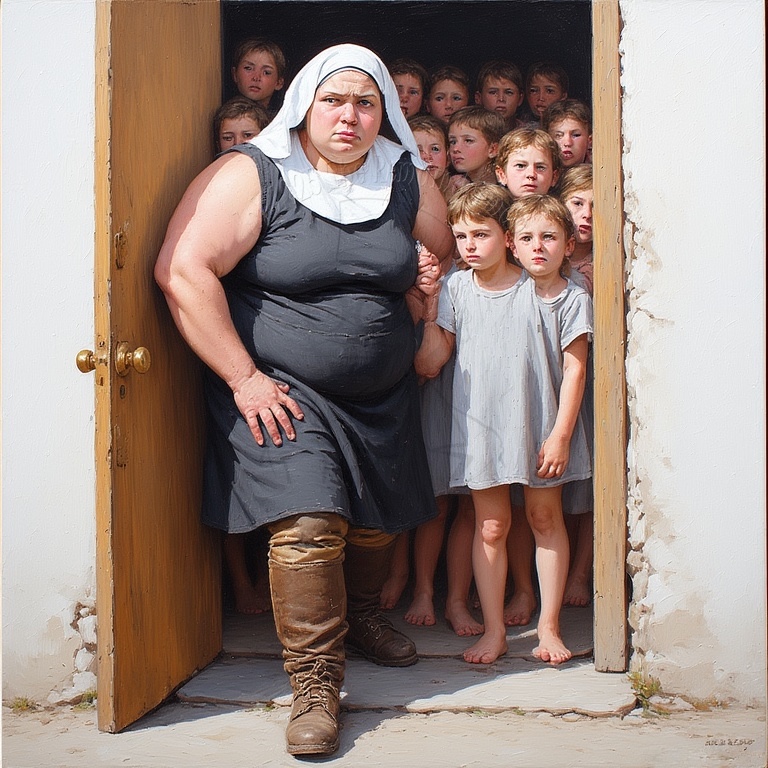
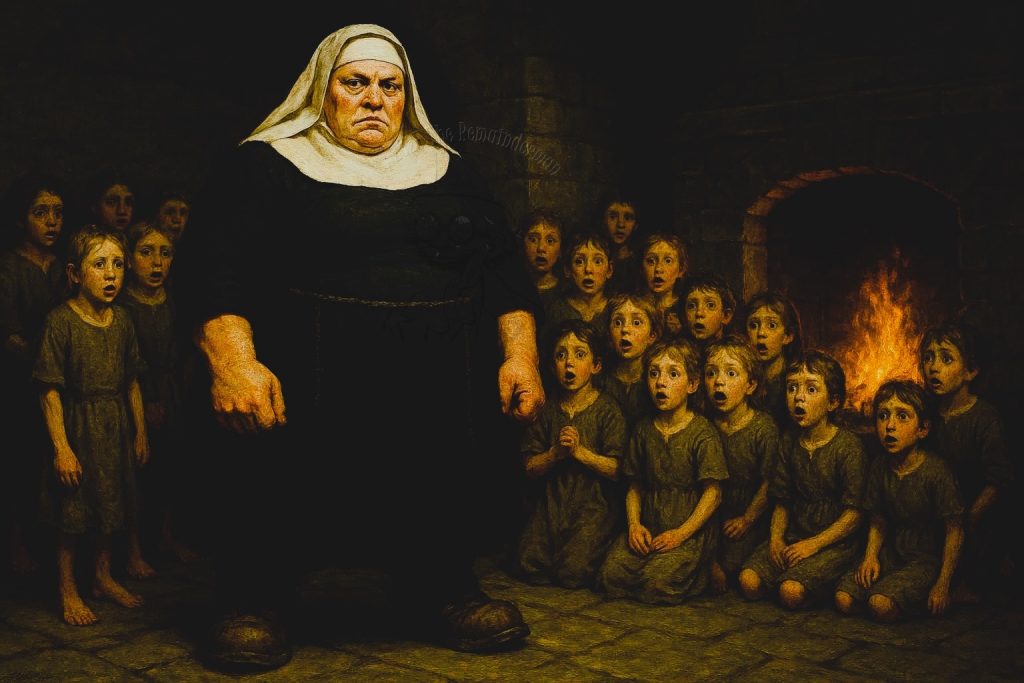
Thus prepared, Sindonie was curious but not surprised when the door was opened by a fat, tired nun who looked entirely unhappy to see them. She was plainly as uninterested in facing and handling another unexpected situation today, as the small children behind her were thrilled by the break in their routine. Especially just before the wearying nightly ritual of going to bed. Sindonie could detect no airs at all floating around her; just practicality, exhaustion, and good intentions. She liked and pitied the woman immediately. The only thing about this woman that didn’t match Sindonie’s expectations was her apparent lack of resentment at her surroundings, her situation, her very life. It was Sindonie and her charges who didn’t belong here. (They soooo didn’t belong here…. But there was no benefit dwelling on that.)
Mother“What—” she began wearily and suspiciously. When her eyes fell on Sindonie and the three children clustered around her, her shoulders tightened and she started shaking her head. “Oh, no. You—” and then she saw Friar Paul and her entire countenance, from face to body, fell into something closer to simple exhaustion and disbelief. Her voice was flat: “Brother Paul.” The soldiers, barracked at Dublin Castle, had peeled away up Castle Strete when they turned down Bothe. But the carriage, its weary, sore driver, and its likely weary, sore horses, still stood behind them. At the sight of them, Mother Phillipa seemed to shake her head signaling it was too much for her to process. Fancy coaches didn’t come down Bothe Strete quite this far; they stopped at Pillori Place at the King & Lord, or occasionally at one of the other, relatively-moderate establishments buffering the successful merchants and nobles staying at the King & Lord, from the orphans at the Charite Hous, and the even less-savory forms of life further down the road.
“Bless you Mother Phillipa, it’s not as bad as it appears, I promise,” Paul began, sounding apologetic and pleading, a tone close to whining despite the weighty credentials he began by asserting: “Lord Dublin has been asked by Lord Wrathdown—” (she groaned) “but this is different, really!” he felt compelled to promise, before plunging on: “These three boys come with their own governess!”
That did get Mother Phillipa’s attention, and she looked back askance at Sindonie, running her eyes up and down her, giving her the same expert rapid-fire appraisal a hog-farmer might make of a pig at market, her eyes finally catching and sticking on the little blond child and his fine clothing. She might have gasped, just a little bit, she was so surprised. “No… surely…”
“Yes,” Friar Paul nodded and smiled encouragingly, confirming her most unlikely imagining. “This is Young Master Charles, youngest son of Lord Wrathdown’s name.” Something stirred among the children behind her, although none of the nocturnal arrivals could really tell what it was about; and wondered if perhaps they’d imagined it.
“And of course, the other two are…?” Mother Phillipa began, hesitant to say “bastards” or anything similar to it. She had actually taken on this mission, long ago, with the thought she could find satisfaction and help herself by helping orphaned children. She wasn’t a mother to them, at least not on purpose; but she didn’t actually dislike or resent the children, the way some of the nuns assigned to help her from St. Mary de Hogges did.
“This one belongs to me,” Sindonie smiled with genuinely motherly pride, letting go of Charles to bring her son in for a full hug close behind them, something defiant daring anyone to argue with her or minimize her child creeping into her expression and voice as she announced him: “Oliver Manning of Swords, rightful heir to his Manor, and Squire of Lord Skremen. He will be staying with us while his grandmother is attending my sister, Lady Wrathdown, who is with child. Lady Parnell will take her back to Skremen with her when she returns.” As intended, she had dropped more names and titles and estates in those three sentences than Mother Phillipa and all her wards combined could drop if they were given as much time as they needed to compose lists. As was inevitable, her circumstances—being sent to an orphanage to tutor for a noble child banished here—hinted at a great deal more back-story, only confirmed by her edge of defensiveness.
Nonetheless, Mother Phillipa, as practical and hard-nosed a woman as she was, curtsied. “Such an honor,” she offered, not quite what Sindonie, Oliver, and Char were technically owed; but more polite than anyone was likely to demand of her under the circumstances. “And this ragamuffin?” she gestured at Pen.
“Pendragon Argent,” Friar Paul answered. Since none of them was quite sure what the boy’s future would hold given his precarious position as a ward of the ungenerous and unkind Baron Wrathdown, he finessed it: “His father was Lord of the Manor of Raheen-a-Cluig, attacked two days ago. He and a priest were the only survivors left behind.”
The better side of Mother Phillipa’s nature revealed itself in her look of genuine sympathy. “Poor boy.” She frowned. “He looks like he walked all the way here by himself.”
“He did, Mistress!” Char answered. “Lord Dublin said it was almost five miles past Shanganagh, which is five miles—”
Sindonie giggled, covering his mouth and shrugging apologetically before Mother Phillipa’s frown could turn into a complaint. “No one’s talking to you, Char!” she reminded him, and a couple of the children in the doorway grinned at one another. “And mercifully, the Archbishop let him ride in a carriage after his oh-so-long walk was over!” she concluded Char’s story for the benefit of the other children. They all turned their eyes appreciatively to the fine vehicle behind them, and the driver even managed to bestir himself enough to make half a gesture toward a smile and a salute.
“We’re not set up for gentle folk,” Mother Phillipa scratched her chin thoughtfully. “Why did the Archbishop send them here?”
Brother Paul shrugged, revealing all the truth before he even started talking: “Because you’re known as the Mother of All Dublin.”
“You’re a dreadful liar, Brother Paul,” Mother Phillipa blushed, unable entirely to resist the clever and charismatic young man’s charms, the girls behind her giggling. “I think your shrug was the better answer: ‘cause he has no idea what else to do with them.”
“Lord Wrathdown has committed Young Master Charles to the choir and the church, but the Archbishop felt he wasn’t quite ready—”
Mother Phillipa laughed, genuinely, at that. “You mean Father Adam would quit the Church before he’d accept underaged children he hadn’t personally vetted for his precious choir.” And in fairness, the boys’ choir of Dublin was a wonder to hear. “Well… I think we have a spare box they can share in the boys’ room,” she allowed.
Paul’s eyes bulged. “Er, the Archbishop had thought perhaps the Baron might expect a separate room for his son—” he began, breaking off because Phillipa’s laugh was so genuine and spontaneous, it obviously wasn’t calculated. And even the children started laughing. Friar Paul wasn’t sure what he’d said that was so funny, but he could tell there was something he didn’t know.
“We have exactly six rooms in our Hous: boys’ bedroom, girls’ bedroom, kitchen, schoolroom, storeroom, and matrons’ room. Which one of them did the Archbishop have in mind?” On a roll, and further encouraged by the solidarity of the children behind her, she suggested: “I’d suggest the storeroom. You know we actually store our own supplies in the other rooms, because you lot have filled the storeroom with the Church records? We had to borrow a ladder from the work-house so we could stack the records up to the ceiling, just so we could keep the floor clear,” she concluded.
Friar Paul opened his mouth, his eyes betraying how frantically he was trying to come up with a solution that would please the Archbishop, but Sindonie stopped him with a good-humored gesture and a glance, turning to Char and saying: “You’ve never slept in a box before, have you?”
“No, Mistress,” he shook his head.
“I’m told they’re ever so warm, and you’ll get to sleep with your friends!”
“You’re pretty!” One of the girls told Char. This made several of the boys snigger meanly. Unsurprisingly, given Char’s station, he did not immediately appreciate what that portended; and indeed, he didn’t even show any signs of embarrassment. It was difficult to read anything into Pen’s reaction; but Oliver, even as thick as he could be sometimes, understood it immediately. She was proud to see that it instinctively bothered him to see a boy he had grown up with, targeted that way.
“You could sleep in the girls’ room?” the girl suggested.
“Clemence!” Mother Phillipa growled, chiding her with more force than she felt, obviously thinking the girl needed it. As the other children laughed, she continued: “You girls are already packed in four to a box yourselves. And Christian boys and girls—English boys and girls—” she looked sharply towards three children standing together adding “boys and girls of Dublin—” (leading Sindonie to suspect the three children were probably from Irish families) ‘”do not sleep together unless they’re married!” Children being relatively guileless, there had been many times over the years when confused-looking children had protested and given examples from their own benighted childhood of unchristian relationships maintained right in front of them; but that wasn’t an issue tonight. She squeezed Clemence, mussed her hair, and told her fondly: “Charles will sleep with the other boys, where he belongs!”
Seeing that Charles seemed receptive to the adventurous idea of sleeping in a box, Sindonie turned back to Mother Phillipa and concluded proudly, as much for the benefit of the other children as for her: “My three boys grew up on the Pale. They’ve slept on the floor and carry their own knives like everybody else. A box will be perfectly fine. For them,” she emphasized.
“We have three beds in the matrons’ room,” Mother Phillipa responded to the suggestion. “With two sisters from St. Mary de Hogges on night duty, you’ll have to share a bed, but it should be quite comfortable.” Mother Phillipa then continued, raising a warning finger, “However, I can’t stand vermin, and I won’t have them in my orphanage! Most of these children come from the worst sewers and slums of Dublin and they come to us familiar with things that would make you turn white as a sheet. Things such as your little gentlemen there can’t imagine.” She spared the three of them a glance. “We teach them how to be Christians first, healthy second, and productive third,” she summarized their mission in a sentence. “And although doubtless these three little lords are pure and clean as fresh snow,” (her tone suggesting skepticism), “I can’t let these other children see me making any exceptions. Before any of you can sleep in this house, you’ll have to bathe and be checked for lice.”
“Well, if I must bathe, so be it,” Sindonie agreed, looking delighted at the prospect. “Please, show us the way. Oh—and where should these gentlemen put my trunk?”
“Third floor, on the right, for your trunk.” Friar Paul and the driver managed not to grimace at being volunteered for one final task before they could leave. The Archbishop had volunteered that Friar Paul could wait until the morning to return to St. Patrick’s and make copies of the letters; but the driver, and perhaps some poor stable hand awakened for the purpose, would have to care for the horses before he could go to sleep. The driver began unfastening the trunk from the roof. The treasure, of course—even the two harp brooches, which the Archbishop had promised to keep for Pen, reckoning they would simply be stolen in the orphanage—had been unloaded at St. Sepulcher, so Paul and the driver could wrestle Sindonie’s trunk up to the top floor without worrying about guarding the carriage.
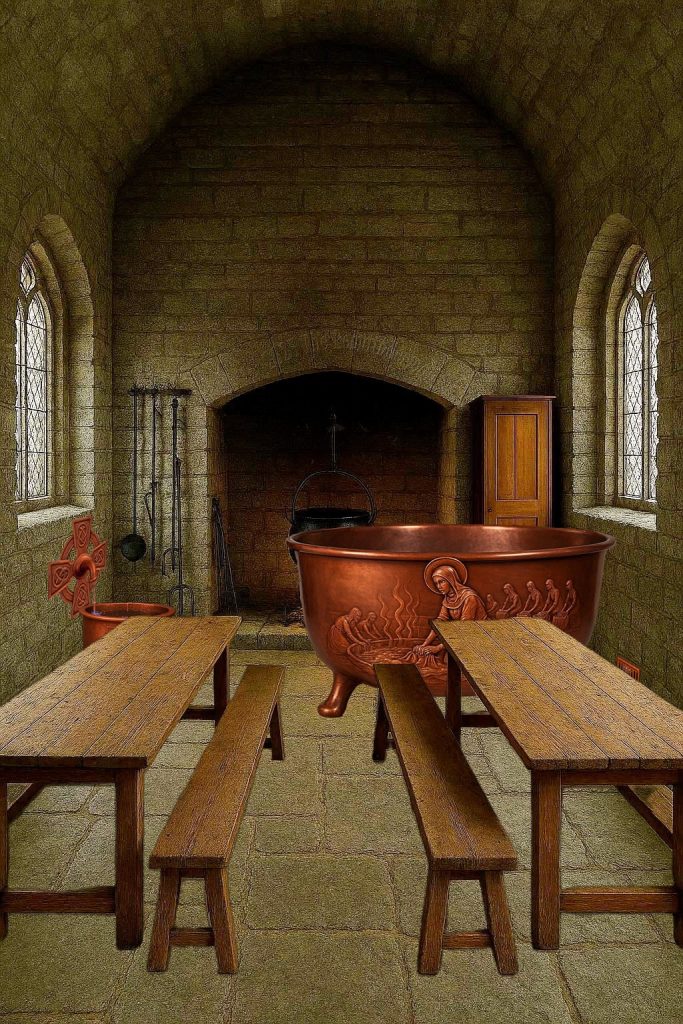
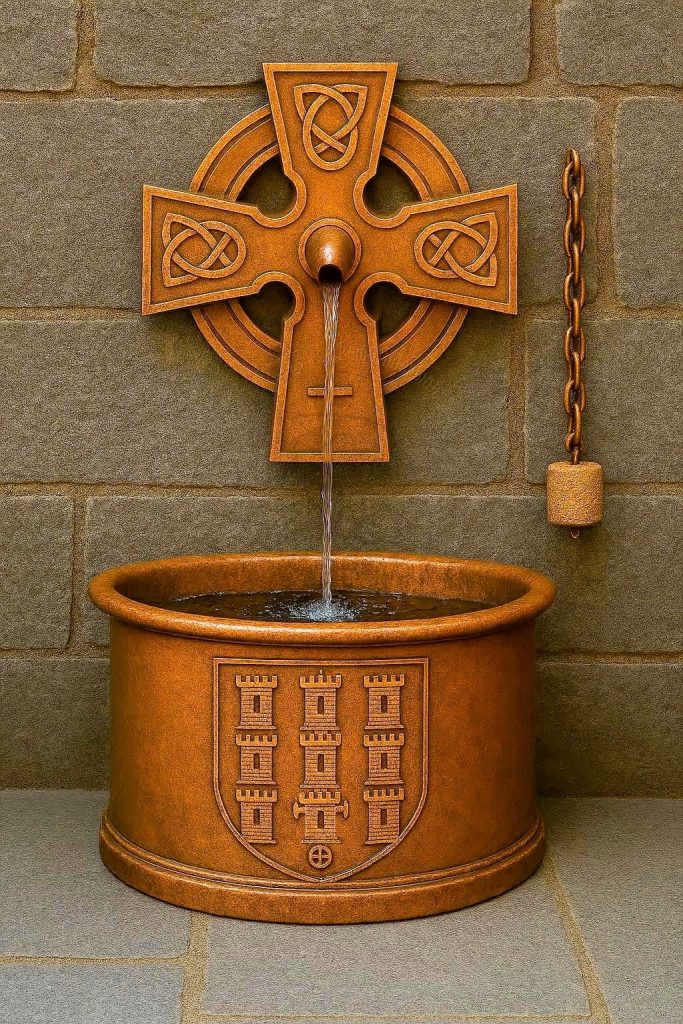
Meanwhile, Mother Phillipa was communicating to Sindonie: “And the bath is right here,” she gestured to the kitchen and dining hall, where they’d seen, and still saw, children looking out the window. “Next to the hearth, for heating the water; and the fountain provided by Lord Wrathdown.”
“The fountain?!” Char exclaimed excitedly, forgetting himself in his astonishment. “You have a fountain inside the house—Mistress?!” He added her honorific hastily at the end.
“Yes, thanks to your father, Lord Wrathdown,” she explained, interested but not surprised to see the boy didn’t seem care about the praise of his father; or perhaps, even to look slightly dissatisfied with her answer.
“How, Mistress?” the red-headed boy asked, his face filled with wonder.
Sindonie could see that Mother Phillipa was in no mood to answer questions from rude boys about things she couldn’t explain anyway; and was not accustomed to dealing with children who thought their questions and reactions mattered to adults. Heading off another potential problem for the sister, and, she hoped, demonstrating how valuable she could be if Mother Phillipa made her an ally, she gave his hand a squeeze and promised the boy: “That will require some investigation. But if you have patience, we can inquire and find out.”
“Yes, Mistress,” he agreed, seeming mollified.
Sindonie made Mother Phillipa’s evening, demonstrating both her practical knowledge and her work ethic, by pulling the curtains closed for privacy, heating fresh water in a clean cauldron over the fire, bathing all three of her boys, draining the tub, and tucking the boys into their box, without complaining, asking for any help or even advice, or even acting fussy and resentful like the two duty sisters. She thus allowed the other three women to get the other hundred or so children tucked into their beds as usual, wondering silently at the number of orphans in the Pale.
Without being asked, Mother Phillipa took it upon herself, as soon as the boys were sitting in the tub, to inspect each boy’s head very closely, even running a very fine comb through their hair before any of them washed it. She was looking for lice. And quite thoroughly, Sindonie thought, giving a mental nod of approval. But of course none of her boys were lousy, she thought loyally. Not even her new one. She made sure all three of them bathed thoroughly, confirming by observation that the new one had been well-enough raised to wash himself.
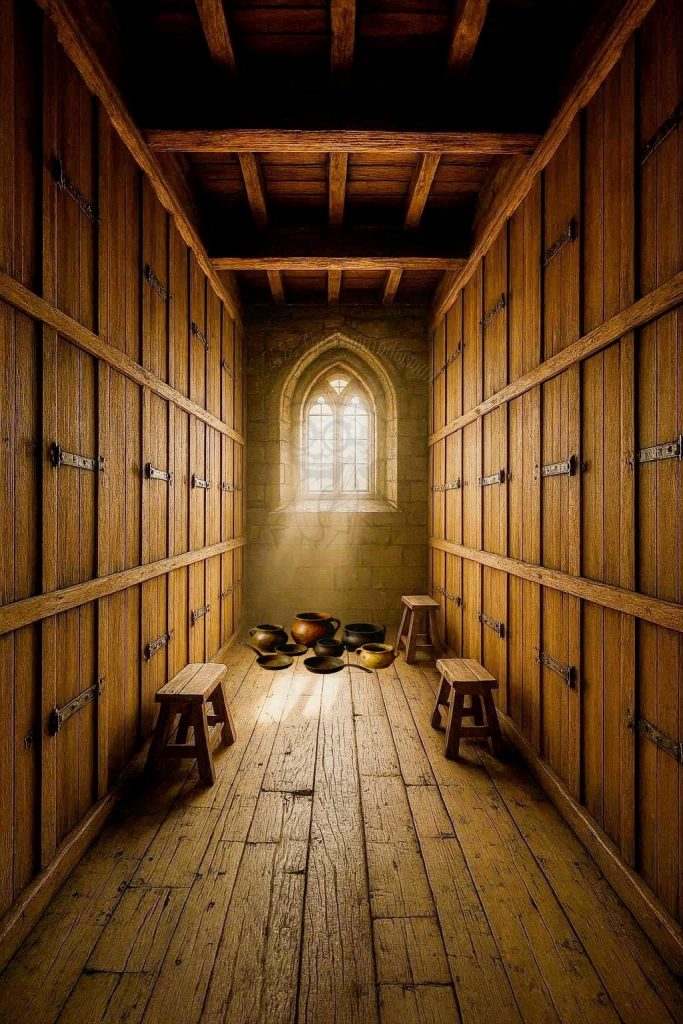
The boys’ bedroom was a narrow walkway, from the door to the central hall, to a hearth at the end of the building; with chamber pots and little footstools cluttering the floor, wooden walls on either side, and three rows of four double doors in each of those walls. Each set of double doors opened onto a box, about half as big as an adult bed. With 24 boxes total, the boys averaged about two heads per bed, although the biggest 4 or 5 boys seemed to have boxes to themselves, making for several boxes with three younger boys in them. The girls’ bedroom was just like the boys, but at the end of the building without a fireplace. Even if Phillipa hadn’t confirmed it earlier, Sindonie could have calculated the girls must be packed in twice as densely as the boys because they outnumbered them about two to one. Parents were more likely to keep boys and give up girls for the same reason the boys’ room was the one with the fireplace: because boys were valued more than girls.
When she brought her own boys up to bed, the other matrons were just getting the last of the other children settled. With a nod, Phillipa confirmed what Sindonie had guessed, that the empty box at the bottom with folded sheets hung neatly over the entrance, furthest away from the fire, was for the new boys. She saw Char start to get his back up and squatted down in front of him, brushing his long hair gently with her hand, explaining to him quietly, but with Pen and Ollie close enough to overhear her: “At the end of the day, Char-girl, you are as you were born, the master of all these other children, and you’ll enjoy the privileges that come with that. But you’re not in your father’s house any more; you’re in a school. And what you need to do in school—what every child needs to learn in school—is that you can be yourself and hold your own, even when you’re treated like everybody else. You need to take this chance to learn what these boys’ and girls’ lives are like by living the same way they do. Because they’ll be serving you the rest of your life, and you can’t manage them if you don’t understand them better. I know this isn’t going to be easy for you, honey. Some of these children are going to be mad at you.”
“Why?” Char asked.
She shook her head. “You’re an arrogant little shite, Char,” and she giggled at his shocked expression. “I saw you getting upset because you three got assigned the worst bed. These other children have all gotten the worst bed their whole lives, and they expect to go on getting the worst bed until the day they die, while you get the best. Try to imagine they see your father when they look at you, with—”
“I’m nothing—”
She put her fingers over his mouth and shook her head. “I’m not saying you are. I’m saying you look that way to them. You can be mad at them for that, it’s fine, but try to understand it too, and that they might feel about you the same way you feel about your father. Just—think about it. And I’m sorry you have to do this. But your father has sent us here to teach us the lessons he wants us to learn, and some of them are going to be hard. For both of us. But we’re going to learn them, and keep our heads high, so when we see him again he knows we’re tougher than him. Do you understand, sweetie?”
Char nodded, hesitantly, not entirely sure if he understood all of it or not. But thinking he did, a little bit. Especially the last bit. She tried again: “Your dad put us in this position. And I can’t make it too easy on you because you’ll need to face your father again at the end of this and show him what he expects to see. But I will get you through this,” she assured him, squeezing his hands tightly in her own and pulling his attention into her eyes, watching his lip tremble a little bit, even as he nodded sharply and decisively. She smiled proudly and hugged him, carefully making sure her head was against Char’s left cheek so that Pen, just to her right, would be able to hear what she said to Char: “And you’ve got Oliver here for the first few nights, don’t you? He’s going to be a big help, isn’t he?” Char pulled back, frowning at her, and nodded slowly as they shared a secret smile that Pen saw. She kissed him and hugged Pen before turning and hugging her own son and whispering what she wanted him to know: “I’m going to come check on you after my bath. Do what Sister–Mother Phillipa tells you, take care of the other boys, and if anything happens, I’ll help you sort it out then.”
“Yes, mom,” he answered. She didn’t quite know what he understood. She never did. It broke her heart to even think it, but she knew her son wasn’t quite what other children were in some ways. He was as simple as he was big for his age. But he could hold his own when he had to. And she knew he trusted his mother.
Pulling all three of them in close, she whispered: “I want you to behave here, and treat Mother Phillipa with the utmost respect. But when you’re alone with the other children, you may need to worry about them first and accept the consequences later.”
“Yes, Mistress,” the chorused, ranging from confused—Pen—to determined (Char) to simply accepting (Ollie).
“Good night, boys. Good night to all of you boys!” she said to the room, waving gaily, getting responses from many of them before walking out.
She had noticed that each of the little boxes had a latch on the outside, presumably allowing the matrons to lock misbehaving or problem children into their beds. Frowning thoughtfully, and hiding a smirk, thinking that was a terrible idea if children in Dublin were anything like children on the Pale, she returned to the kitchen below, rinsed the tub, drew her own bath, and hummed quietly, reveling in it. She almost imagined she could hear the matrons leaving and going to their own room. Then, she almost imagined she could hear thumping and crying from the boys’ room; but she wasn’t really quite sure. As much as Dublin City shut down after curfew, the human sounds never really stopped here. And like many buildings belonging to the church, this one had been built to last, muffling the sounds from other rooms as much as it did the sounds from outside.
A bath with a faucet, fire, and drain in the same room? She marveled at the idea. She’d never imagined anything so luxurious. She might have to treat herself to a bath every night! She had been to Dublin before, and knew at some level water was brought into public fountains in the city; but she had never heard of a building with its own water supply before, not even a castle or a palace! Not that she’d even been to a palace, or even a truly prestigious house, before. There were nobles, and there were nobles. Here in the Pale, there were the City and some of the county aristocracy who thrived on trade and large estates; and then there were folk like hers, marcher folk or folk like her mother, who came from gentry so humble they looked for opportunity out on the frontier. The Royal Court in England? Well, that was something she’d heard about, but couldn’t really imagine.
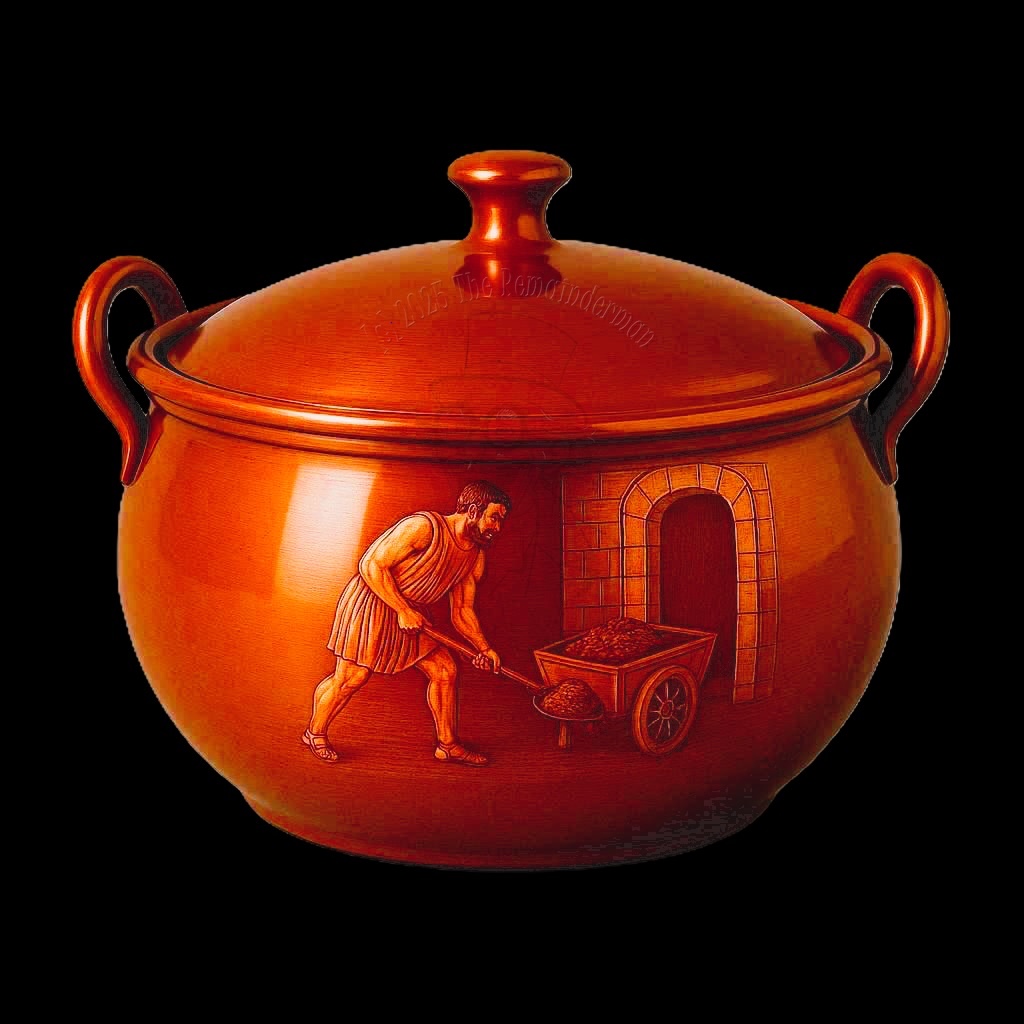
She snorted, amused at herself, lying with the towel Mother Phillipa had provided, and that she had already used to dry the boys covering her eyes, feeling for all the world like the Queen, unable to believe Catherine of Aragon could actually feeling any better or more fine than she was on this night. Sindonie stayed in the bath until the water started to cool. Pulling the plug out so it could drain, the water rippling down to the lowest part of the floor where a drain at the bottom of the wall let it escape to lower Bothe Strete on the downhill side of the Charite Hous, she quickly splashed fresh cold water on the tub and scrubbed it with some rushes to clean it. Then, after a moment’s thought, she refilled the big cauldron a third time so the water could heat over the embers that were still fierce, but no longer flaming. Wrapping the big warm towel around herself, she brushed her teeth, enjoyed a handful of fresh water from the fount, put the cork back into it (and laughing when, inexperienced with such things, she was too slow pushing the cork in and sprayed herself with a brisk wave of cold water), before bouncing up the stairs to the second floor.
Quietly, she opened the door a crack and peered in, squinting in the dim light until she was sure. As she had expected, the latch on her kids’ box had been snapped home, trapping them inside. She snorted. “Little sarding shites,” she hissed to herself, smiling, knelt on the floor in front of the door, and opened it, blinking to speed her eyes’ adjustment to the even heavier darkness inside the box.
She snorted again and shook her head, teasing the three of them gently, speaking loudly enough for all the listening boys around the room to hear: “You three look like a litter of sad little puppies.” And they really did.
Giggles and snorts came from the other boxes, at the expense of her boys; but she couldn’t quite help seeing the humor in it, either.
“They—” Char began, and she silenced him by putting her own finger over her mouth, making sure both Char and Pen got the message, even as she said—while shaking her head—“I don’t want to hear it!” Then she crooked her finger at Oliver and helped him silently out of the box. When Char tried to follow, she held up her hand, smiling and nodding encouragingly, and put her finger over her lips again.
Not entirely happily, but trusting her, Char settled back down on the mattress, and the watchful Pen simply waited silently with an expression of uncertainty.
“I’m glad I checked on you,” she said in her stage whisper. “I’m leaving this unlocked and I want you silly boys to leave it unlocked in case you need to pee. Do you understand me?”
“Yes, Mistress,” the three boys chorused.
“Good night,” she sang, and as they answered her, she shut the door of their box before pulling Oliver by the hand out of the room with her. She closed the door to the hall most of the way, just leaving it cracked, and indicated to Oliver he could peek through the crack, while she stood behind him, petting his hair.
For a few minutes, nothing happened. Then Oliver tensed in excitement, presumably seeing what Sindonie had expected. A moment later, she heard snickering at the same time a bolt—doubtless, the latch on the box Char and Pen were trapped in—slid closed.
“Hey! Hey!” she heard Char’s muffled protest, and louder laughter from several boys. Oliver looked at her for confirmation and she gestured for him to do whatever he was going to do. Like a dog released into a pen filled with rats, he threw the door open and raced in, too busy and focused to make any sounds besides some natural growling and grunting. The other boys were much louder, crying out in surprise and then protest, rage, complaint, pain, and fear, generally but not entirely in that order.
Oliver was eight. The orphanage was intended for children seven and younger; but as the Archbishop had explained the previous day, there were older children—by their appearance, she guessed up to eight or nine or even ten—who still resided here because there was no place for them to sleep where they apprenticed. She guessed several of the bullies—it sounded like there was more than one of them—were probably Oliver’s age or older. Oliver was a bit big for his age, but it wasn’t really his size that made the difference. It was the intensity and focus he had about things he took seriously. And maybe a little something else, Sindonie suspected sometimes. There was a brief pause in the sounds of struggle when she heard what she presumed was Oliver unlocking the box to liberate his friends, and she beamed with pride that her son gave them a thought even in the midst of battling others.
When the door of the girls’ room opened behind her, Sindonie looked back over her shoulder and saw what she expected: a bunch of girls, already out of their boxes and shivering in their colder room, wide-eyed. When they saw her, they almost closed the door again but she just grinned at them and ambled over to the boys’ door, opening it so they could all see the fight transpiring there, and leaning against the door frame, crossing her legs at the ankles, her feet cold on the floor and her wet hair cold on top of her head. But Mother Phillipa had only laid out one towel for all four of them to share, and she had to use that around her torso, not only to avoid shivering, but for modesty! So she brought her arms in tight to try and stay warm as she watched the expected scene playing out in front of her.
Ollie was mowing through all opposition. Char and Pen had jumped out to support him and, being younger and gentler, came out on the worse end of every exchange with any of the other boys. Still, they felt obliged not to abandon Ollie, and acquitted themselves nobly if ineptly. In the big scheme of things, it didn’t really matter; Ollie was all that mattered, and all that was necessary, for the victory; Char’s and Pen’s sole function (although they were probably too young to understand it) was simply to demonstrate loyalty and courage to the other boys.
Honestly, it went on longer than she expected. Not because Ollie disappointed, but because the other boys were tougher than she might have given them credit for. The bullies who’d come out to torment had stayed to fight, hanging in there even as they took a drubbing, just as Char and Pen were doing.
She braced herself when she heard heavier feet slapping on the stone stairs behind her.
“WHAT IN THE NAME OF ST. EDMUND IS GOING ON HERE?!” Mother Phillipa demanded as she launched herself off the stairs, jumping over the last three or four steps and landing on the wooden floor, surprisingly nimble for a woman of her bulk.
With a burst of gasps and panicked noises, the door to the girls’ room closed and Sindonie bit her lip to keep from laughing as she imagined how they must all be slithering back into their boxes and pretending to be asleep.
With great difficulty, Sindonie wrestled her features into a semblance of seriousness, managing to look a bit lost and unsure by the time Phillipa came even with her, giving the impression of a woman who had never come across anything like the scene in front of her before and didn’t know what to do about it, rather than an instigator-in-chief laughing her ass off at the chaos she’d stirred up. But if there was anything she understood, it was boys. Char and Pen were going to get their asses kicked here at Our Ladies. It was for the best they should do so while Oliver was the center of attention so the two weaker, lesser boys could demonstrate that even if they were wimps, they were not cowards. And having Oliver fighting by their sides made it much more likely they would, in fact, demonstrate bravery. Being outnumbered and overpowered at the same time, with absolutely no hope of resisting and absolutely no allies, had a way of encouraging cowardice. That was not what the other boys needed to see from them.
“Mistress Manning—what?! This is unacceptable!” she screeched, charging into the boys’ room in only her nightdress and nightcap, followed by the two duty nuns from St. Mary-de-Hogges. One senior boy was sitting on Char, holding his hands down over his head with one hand and punching him in the face with the other. Two senior boys were wrestling with Pen, who was putting up a surprising fight; but then, the boy was probably half-wild and half-crazy after the events he’d witnessed in the last three days. Meanwhile, Ollie was, in a more-or-less leisurely fashion, continuing to toss seniors and boarders into walls, knocking them down to the floor, and yanking them furiously by their hair as they squawked and cried out in surprise.
The mere sight of Mother Phillipa, somehow twice as terrifying dressed like a wild Irishwoman in bare feet, nightgown, and nightcap than in her usual neat uniform, was enough to send virtually everyone other than the primary culprits scattering back into their holes as quickly as they could get there, hoping that if they could disappear fast enough, they and their transgressions would be forgotten or overlooked. And even the real instigators and their three victims shrank back and fell passive at her sight or touch. The other two nuns weren’t exactly idle, they just weren’t all that effective, either; lacking both Phillipa’s authority and conviction. When they seized boys by their shoulders, the boys so seized would quiet down and look guilty the instant they saw who they were dealing with, even before the sisters started swinging their arms.
And none of the three nuns were shy about that: Phillipa slapped Pen so hard his eyes shot wide open and he practically came to attention, looking startled and starting to apologize profusely and sincerely. So much so the nun realized he’d been dealt with with a single blow and she could turn her back on him and move on to the next. One of the others put one hand on each of two boys attacking or approaching Char and pulled them off him, slamming them back and holding them pinned against opposite wooden walls for the few seconds it took them to calm down, come to their senses, and slump into submission.
Ollie, she was happy to see, saw Phillipa before she even reached him and withdrew from combat, hanging his head in resignation and accepting a final flurry of blows from his opponents without really reacting at all. Which made them feel really stupid, that they could be fighting him with all their energies while he quit, essentially showing them they didn’t matter at all to him, and he didn’t even need to fight them to hold his own.
It didn’t take Phillipa more than a few seconds to shock and subdue all of Ollie’s opponents; and after she did, there was a second—just a second—of silence and stillness while Phillipa took a deep breath and forced herself to relax. Then she turned to Ollie and the two biggest and oldest boys in the room, who had been fighting with him: “What happened here?! Where’s Roger?!”
All three boys stood silently, looking down at the ground.
“I asked what happened!” Mother Phillipa shouted. With enough presence of mind and self-control it was clear she was in in control of herself and determined to get to the bottom of things, not giving into her likely anger and frustration.
“Answer her, Oliver!” Sindonie commanded, similarly assertively but not angrily, softened by the genuine love she felt for him.
“I’m sorry, Mistress,” Oliver answered. “Someone locked us in our box.”
“WHAT?!” Mother Phillipa screeched, genuinely shocked, the fact she was actually upset having an electrifying effect on the children in her care.
“My mother—Mistress Manning—unlocked the door and checked on us some time later and as soon as she left someone tried to lock us in again. So, I stopped them.”
“You mean you attacked them!”
“Yes, Mistress. I’m sorry, Mistress.”
“Who was it?!”
“Ahh…” he hesitated, looking around from face to face. “I’m honestly not sure, Mother Phillipa. It could have been—was probably one of these fellows,” he said, gesturing vaguely at the older boys around him, “but I can’t really say.”
“Cutter!” she shook one of the older boys, a mean-faced sullen fellow with spiteful black eyes and enough black hair for a horse. “Exactly what I would expect from you! But where has Roger gotten to?”
Cutter didn’t answer, even when she pinched his arm brutally and insisted: “Tell me!”
One of the other boys broke at a glance from the nun and whined: “Hard Henry locked him in the cellar overnight for talking back!”
She signed, taking a moment to digest that, seeming both saddened and accepting of it as a necessary fact.
“And YOU!” Mother Phillipa rounded on Sindonie, shoving her harder than she had intended, enough for her to fall back against the door frame and have to grip it for balance to avoid falling over. “What kind of tutor—what kind of mother—” she broke off, taken aback by the way Sindonie’s pupils dilated and she breathed a little bit heavier, not a reaction she had expected or was quite able or willing to interpret.
Taking another deep breath, Sindonie explained: “The border. I—”
“What?” Phillipa was honestly confused.
“We’re Pale folk. From the frontier.”
“And this is how you–?”
“More or less,” she nodded, spreading her hands and shrugging. “Of course. This is exactly how we do it. We settle things. Don’t you?” And when Phillipa’s incredulous face communicated that, no, they did not think the same way, Sindonie shrugged. “Maybe the barricade just makes it obvious. The lines are clear. Everything gets clarified.”
“‘More Irish than the Irish,’” Mother Phillipa shook her head, shocked. “I’ve heard it said all my life, but I never—really—understood. But it’s not the way we do things in Dublin. This is a proper English city.”
“I’m sorry, Sister–Mother,” Sindonie apologized. She was still breathing a little too heavily, and while Mother Phillipa didn’t quite understand it, she was definitely unsettled. But she seemed quite sincere, and Phillipa had seen how genuinely she was proud of her boys. A little parental affection and care went a long way with a woman who spent her life trying to repair the damage done by people who viewed their own children as nuisances. “We’ll figure it out,” Sindonie promised earnestly. “I swear it. I’ll do better.”
“You’re like barnyard animals! This is Dublin City!”
“We’ll get used to it, Mother. Please! Give us a chance.”
Her face softened. “Of course, I’ll give you a chance. I’m just not sure that will be enough. Get out—all three of you, go on, get to bed.” And she turned back to the roomful of tired, scaped boys around her, as the other three matrons left the room. “Nothing like this has happened since… I don’t even know when, and I promise you it will not happen again in your lifetimes! I’m too angry right now to punish you, but in the morning, I’ll make sure none of you ever forget this was the worst mistake you’ve made in this house,” she assured them, sending a shudder through the room. (And she qualified her threat mentally: If you didn’t count the times various children had nearly burned the building down around them, mishandling or even trying to play with fire. But it wouldn’t help any of them to share that thought with the children.). Instead, her tone softening, she changed her focus. “First things first tonight. Are any of you idiots seriously hurt? Does anyone need attention? Cuts? Broken bones? Pain?”
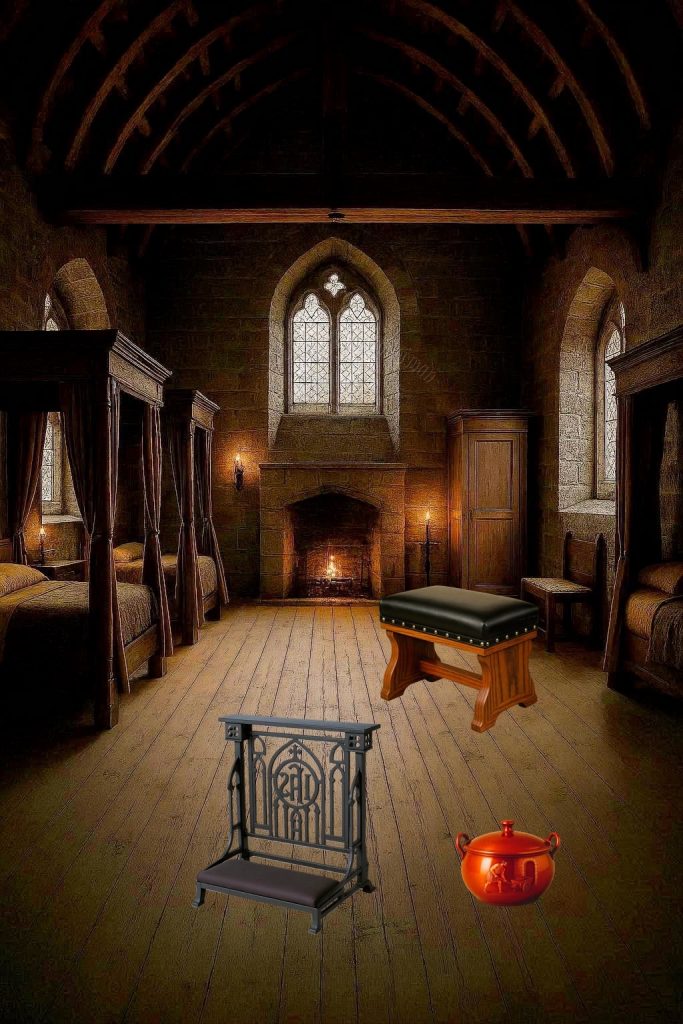
Outside in the hall, Sindonie stood at the foot of the stairs, blocking the two duty nuns until they came up short, their eyes widening as they realized she was intentionally getting in their way to force them to heed her. “The big bed next to Sister-Mother Phillipa’s is mine,” she announced quietly, but convincingly. “Tonight, and every night. You two can share the small bed against the wall opposite Mother Phillipa.”
Both of them glowered at her, and the larger of them—taller and bigger than Sindonie—sneered and stuck her jaw out. “No, that’s my bed, and I’m going back to it. Don’t try to stop me.”
Sindonie stepped right up to her, looking almost vertically up into her eyes. “Mother Phillipa sent you two to bed, so go to bed. Just not my bed.”
“She sent us all to b—she told all of us we could go to bed,” the nun corrected herself.
Sindonie smiled, like a wolf, with eyes that held no trace of any friendship or levity: “She sent you to bed. And now I’m sending you to bed. Your bed. The small bed the two of you are sharing. If I find you in my bed, I’m going to choke you out and then roll you out onto the floor when you’re unconscious.” Smiling wider, she let her towel drop to the floor so she could ball her hands into fists at her sides, pushing forward naked and ornery into the larger woman, shoving the top of her breasts into the bottom of the other woman’s. “And if you don’t want to do what I say, right now, we can handle this the Pale way. You know what you have to do. So either prove you’re the boss, or go to your bed.”
The woman’s jaw worked for a moment, while her fellow Augustinian looked at her, both their expressions revealing the same shock and confusion. Ultimately uncertain how else they could handle this mad woman, she shook her head and growled: “You’re not worth it. Tomorrow night I’ll be back in my own cell, and you’ll still be here, doubtless challenging the next duty nun. You crazy bitch!” She concluded, both of them circling warily around the smaller woman and hurrying up the stairs, leaving a bit of their dignity behind but keeping their common sense a great deal better than Sindonie.
The frontier woman wrapped herself back in her towel before Mother Phillipa came out of the boys’ bedroom, pulling the door shut and then turning around, surprised to catch sight of Sindonie.
“What are you doing, still down here?”
“I have a gift for you.”
“What?”
Sindonie tried to encourage her to go down the stairs. “It’s already done. I know I’ve made a mistake—”
“No, I’m too tired—”
“Please.”
“Augh! Fine, for one minute, you vexing woman!” she agreed, unhappily following Sindonie down the stairs into the kitchen.
“How long has it been since you’ve allowed yourself a relaxing bath at the end of a long day?”
“I don’t take baths to relax!” she protested, trying to turn back around towards the stairs.
“No—please—I want to do this for you,” Sindonie insisted, pushing the kitchen door closed and using the same physical blocking tactic she had with the two sisters upstairs, but with less open aggression. “I’ve upset you and made a bad impression on our first day here and I want to show you I’m committed to this, to you and to the children in my care. I want to learn!”
“You can learn tomorrow! I have to think how to handle what you—what happened—”
“You know how to care for this houseful of children—” Sindonie laughed “this house bulging with an army of children.” Mother Phillipa couldn’t help but acknowledge the truth of that.
“I know how to take care of weary soldiers.”
“I’m not a weary soldier—”
“You so are,” Sindonie disagreed, using the bucket to draw hot water from the cauldron and pour it into the bath.
“I don’t need a bath.”
“You don’t need to wash,” Sindonie corrected her, noticing with satisfaction how longingly Mother Phillipa’s eyes lingered on the big tub she was filling with hot water. “But you need to let yourself be cared for. You care for every orphaned child in the Pale. Who cares for you?”
“God cares for me,” Mother Phillipa answered, meaning it, but unable to avoid the truth of Sindonie’s next statement:
“Which is true, but in context, means you can’t name a single person who does. We have to care for one another in this world. Especially we women. If we’re going to wrangle children side by side in the same house, we need to care for one another, and having caused you such difficulty tonight, difficulty I know you will still be dealing with tomorrow—please!” Sindonie suddenly urged her, giving up. “Please, I can do this. Let me apologize.” She fell to her knees before Mother Phillipa, looking up at her earnestly. “I beg of you.”
Mother Phillipa’s resistance collapsed. Defeated, she sighed. “You’re terrible,” she complained, rolling her eyes and taking off her cap.
“Thank you!” Sindonie bounced to her feet happily, leaning over the edge of the tub to dip her elbow in it and test the water temperature, deciding to add two buckets of cold water, then testing it again and adding another bucket of hot, before nodding with satisfaction and holding Mother Phillipa’s arm to steady her as she climbed into the tub.
“I’m not feeble!” she protested. “Oh! That water is perfect!” She sighed. “I haven’t heated bath water for myself in… so long.”
“You take cold baths?!” Sindonie asked in astonishment. Then amplified: “You take primary care of a hundred wild orphan children in a cold stone six-room converted… whatever this place was built for, clearly not this!” And she laughed, seeing the smile start to play around Mother Phillipa’s face, seeing her muscles start to relax and her eyes close as she lay back against the back of the tub. “Helped only by a handful of resentful women who don’t like children—”
“Maybe,” she conceded, sounding embarrassed. “A little bit…”
“On the wild, wild Western frontier of England,”
“Well… yes…”
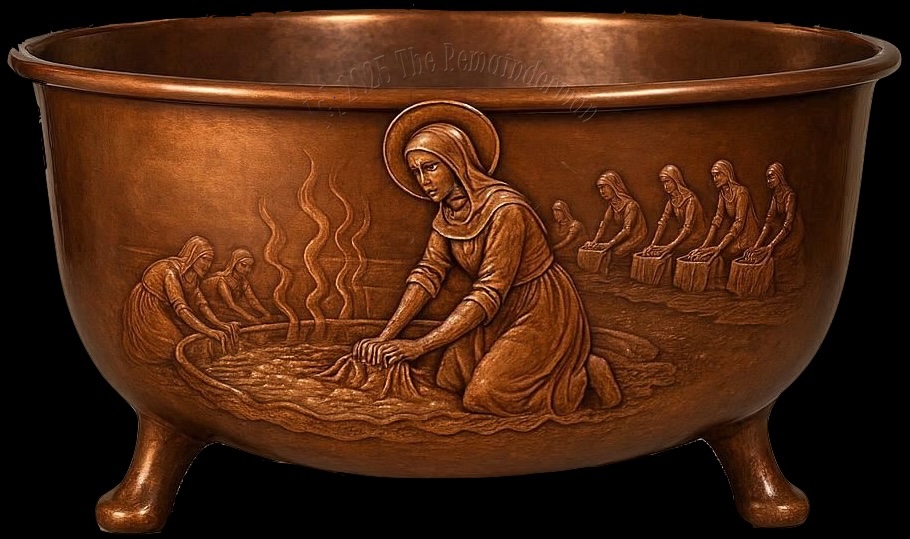
“And the only thing you have that any covetous person would envy is a copper bathtub next to a cauldron in the only room I have ever been in or seen or even heard tell of, with running water….”
“Fine!” she was laughing now, shaking her head with her eyes closed. “Yes!”
“And you give yourself quick ice-cold baths to avoid any possibility of time off or pleasure for yourself so you can hurry back and start giving warm baths and warm meals and attention to your hundred orphans?!”
“I’m a nun!” she laughed.
“You mean you’re a zealot,” Sindonie laughed back.
“I’ve dedicated my life to God, not to my own pleasure.”
“The Bible doesn’t say we have to be miserable. It doesn’t tell us to hurt one another, but to care for one another. This is more comfort than pleasure. Surely it’s good for us to give comfort to one another?”
“I suppose…” she admitted reluctantly. “It’s just…. It’s just…” but she couldn’t quite figure out how to finish the thought.
So Sindonie finished it for her: “It’s just, neither you nor anyone else has cared for you in so long, you don’t even remember what that’s all about.”
“Maybe,” she laughed. “Wait! What—”
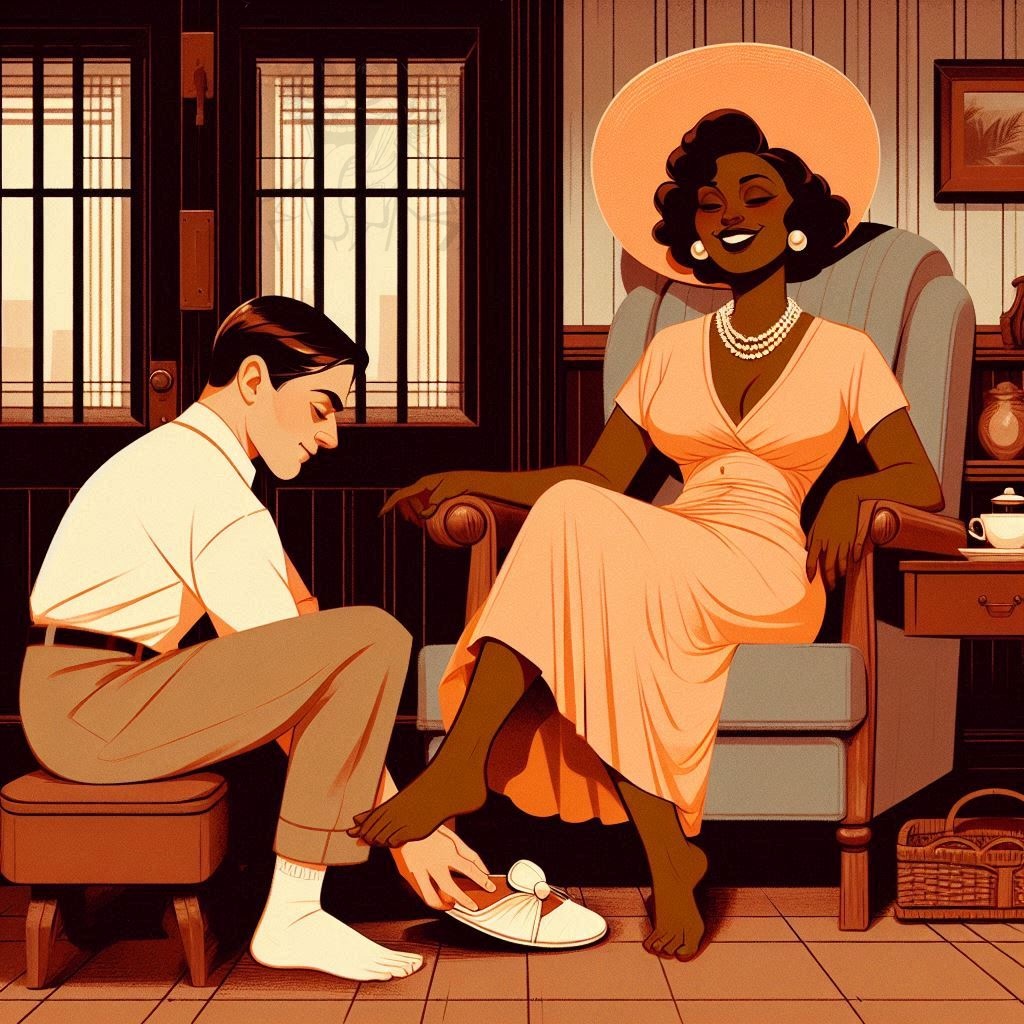
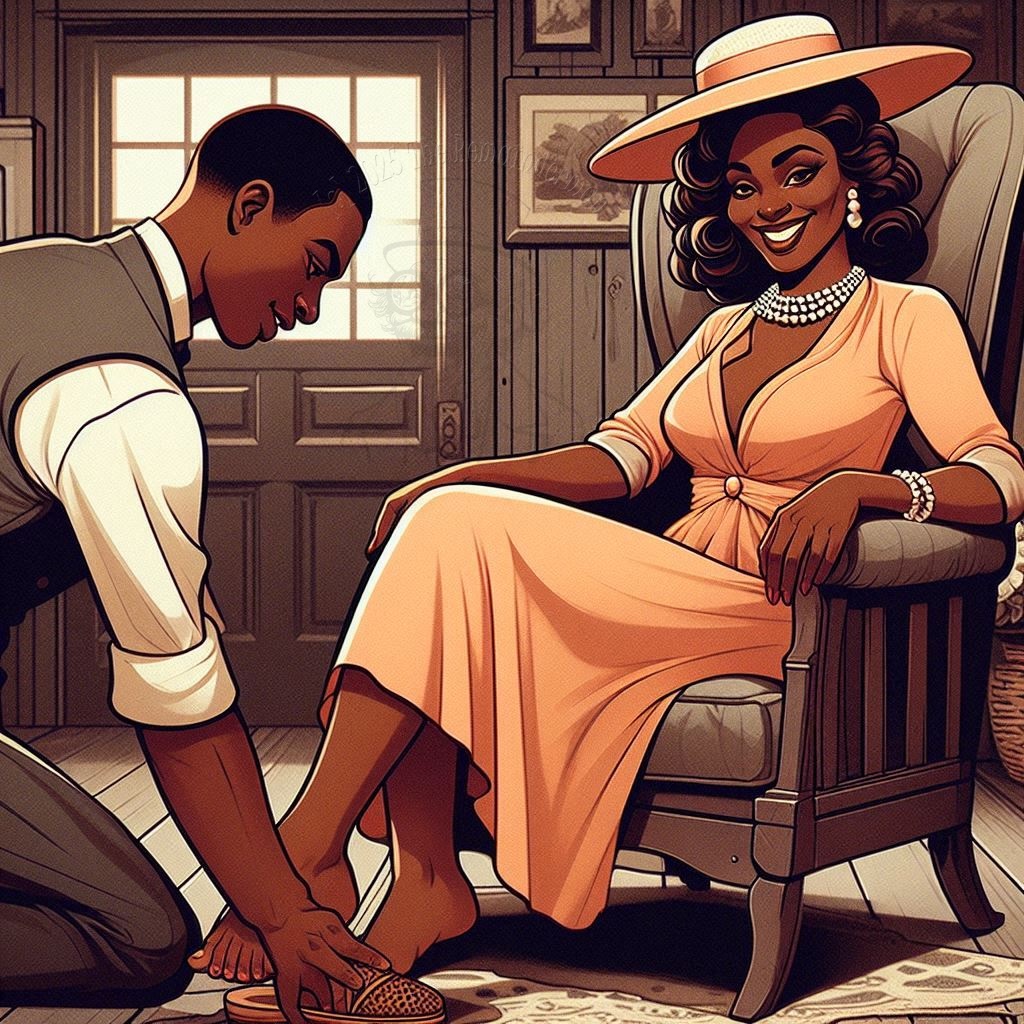
Sindonie stepped in the tub and sat down, in the other end, facing her, giggling at the water sloshing over the sides, the innocence of her joy in the splashing water reassuring Phillipa. “This is care. This is human love, following the example of Christ our Lord. Just as the Royal Almoner himself does on Maundy Thursday,” she observed, taking hold of one weary foot. “Don’t try to tell me this is wrong,” she cautioned Phillipa, giving her a sharp look. “Not when we know literally Christ taught us to care for one another this way.”
Phillipa bit her lip as Sindonie began washing her feet.
“No. This has to be wrong. I don’t know how—it just has to—”
Sindonie snorted. “Smart Christians can be so stupid sometimes. Tomorrow, when you’re figuring out what to do with all the dumb boys, and remembering how angry you are at me while you’re picking up the pieces of the mess I made tonight, I’m going to remind you of this and ask you how it’s Christian to be mad at me for my mistakes—”
“I don’t want to think of that now!”
“—but not be grateful for my love. Oh, wait: You don’t want to think about that, but you don’t want to relax and enjoy yourself? What do you want?”
“I don’t know!” she shook her head, laughing. “You’re very vexing! I—I—” suddenly she gasped, opening her eyes and her mouth and looking straight at Sindonie.
“Whaaaat?” Sindonie asked uncomfortably.
“I know what I want. Not, I mean, in life. Well, maybe in life. Maybe it is what I want. But what I mean is, I know what I’m feeling anxious and worried about now, as you wash my feet in this tub—ohhhhhhh I’m pretty sure that must be sinful… it feels like what I imagine a certain—kind of sin—feels like—”
Sindonie burst out laughing. “You don’t know what you’re talking about.”
“I think I do!”
“I’ve been married. I have a child. I know exactly what you’re talking about.”
“Okay, fine, you know what I’m talking about,” she giggled, embarrassed.
“But you obviously don’t,” Sindonie laughed again.
“Of course not!” she protested.
“But tell me what you were going to say.”
“I don’t remember.”
“What you want?”
“Oh. Yes. I want things to stay simple. To be simple again.”
“Simple?”
“Yes. Like they were yesterday. Like they’ve been for a long time. Even if they’ve been boring. Even if it meant taking in another three boys without any more help. It felt… safe!”
“And… what, I’m not safe?”
“Oh, absolutely not!” Mother Phillipa laughed. “I could tell that the moment I set eyes on you.”
Sindonie didn’t know what to say, because she kind of knew she was trouble. So she just smiled a quiet little smile to herself.
“And you’re not simple.” And when Sindonie still didn’t say anything, Phillipa prompted her: “Are you?”
Sindonie had to burst out laughing, shaking her head. “No. No! I’m not simple.”
“Nothing about you is simple, is it?”
“Probably not one thing,” Sindonie admitted, gently switching between feet in the warm water. “I’m not simple. None of my boys are simple—well, I mean, in the way that you mean. I should say, there’s nothing simple about them. And there’s not even anything simple about the stupid Baron’s stupid plans—” they both laughed, Phillipa accidentally making a snorting sound she was so delighted to hear someone else express what one assumed, and in a most un-Christian fashion probably hoped, everyone thought—“Don’t get me wrong: his plans are stupid, they’re always stupid, but they always wind up making a complicated mess of everything for all of us….”
They both fell silent, reflecting on the very long, difficult day they had both just had. And because they were facing one another eye to eye, it was easier to sit and enjoy a moment of silence with their eyes closed, looking inward upon themselves, reflecting on the complexities of the day or the simplicity of the bath.
Perhaps it wasn’t surprising they both fell asleep right then and there. And fortunately, or by God’s grace, the cooling water woke them up again, long before anyone else was stirring in the house. And the snoring coming from the small bed on the other side of the matrons’ room reassured them neither of the nuns from St. Mary-de-Hogges was snooping on them or minding their habits.
1796 06-89 You’re late, boy. You know what that means (edited)1797 06-89 Focusing on Her because She deserves it1798 06-89 When Mama’s happy, everyone’s happy
1791 06-89 Bragging how pussy-whipped she has you1792 06-89 Another leisurely weekend… for her1793 06-89 Flirting with men while her boys fix her flat tire1794 06-89 I love watching my boys wash my car1795 06-89 Posing with her slaves
1745 06-89 Good boys serving their cougar wives tea1746 06-89 Let’s make them serve our lovers naked1747 06-89 Don’t sass me, boy. Strip!1748 06-89 You’re very polite lovers, but we’re ready now1749 06-89 Four! Our husbands are so thoughtful1750 06-89 Is that humbler causing you trouble honey?
1739 06-89 So many boys eager for lessons today!1741 06-89 The more I punish, the more teachers’ pets I have1742 Are you ready to attend?1744 06-89 So many problem boys need her attention1773 06-89 I’m afraid you need to be punished, sweetie
1761 06-89 The pastor keeps repeating verses1769 06-89 Deaconess guarding a penitent1770 06-89 Some parishioners are struggling to focus1771 06-89 Another lost lamb tuning out1772 06-89 Should this woman even be in church?! HELP ME!
1760 06-89 Southern-Style Breakfast1762 06-89 Better hurry up, boys. Mama’s waiting1764 06-89 It’s good to be the Queen1765 06-89 I like to keep a domesticated white boy around the house1766 06-89 Wooden spoons aren’t just for breakfast anymore1767 06-89 We BOTH know you won’t say shit back to me, boy1768 06-89 Your breakfast is ready, too, bitchboy
1754 06-89 Honoring and respecting Mothers is an Old Southern Tradition worth keeping!1755 06-89 Pillars of the Family1756 06-89 PIllars of the Church1757 06-89 Pillars of the Community1758 06-89 Graceful Elegant Ladies1759 06-89 Fantabulous Firecrackers
This photo essay is as close to real as my work gets. The Old South was FUUUUUUCKED UP. Happy Mother’s Day!
Images 1740, 1743, and 1763 are fully-consistent with DA’s published guidelines and with US law, but because I don’t trust DA’s algorithms and don’t want to be kicked off again, they will be posted on May 12th and 14th at 06-89 Mother’s Day (Southern Style) at Patreon.com/TheRemainderman.
1539 06-45 Lady in London/Jariya in Constantinople1540 06-45 Good girls in Christendom & dar al-islam1541 06-45 Different Worlds… Different Lives?
continued from 06-44
“Why is qahwah a secret?” Penny asked, beginning to eat with Chas.
“First, because it’s an advantage. We always prefer to keep our advantages over our enemies, for as long as possible,” Sindonie explained. “Second, we always want to avoid unexplained contacts with other parts of the world that the humans don’t have. Everywhere we go, we try to blend in and be like the hucows as much as we can.”
“Hucows?!” the girls laughed. “Is that like…”
Sindonie pinkened. “Human cattle.”
“But we’re—”
Christendom, dar al-Islam, and Beyond
“Let’s stay on track, shall we? Speaking Arabic as fluently as you both do, you can range from Spain to India and the Balkans to the ports of the Indian Ocean without raising an eyebrow. In Christendom, you can be what you are, gentle English. Your class was at one advantage the Countess intended you to have by selecting you.
“But because you’re both so fair and pale, and you would have trouble blending seamlessly, in dar al-Islam—the Muslim world—your story will be that you are Saqaliba—from the Balkans. The other option would be Circassians, but since saqaliba live amongst Christians, you’re less likely to be caught posing as a Saqlabi. Either way, it’s a near-perfect cover for a mamluk or jariya because as Christians and pagans, respectively, Saqaliba and Circassians, like blacks, are preferred as slaves in the Western part of dar al-Islam. Many if not most mamalik and jawari are Saqaliba or Circassian. To serve the Queen outside Christian and Muslim territories, you would have to learn other languages.”
“Does she have operatives in Cathay?” Penny asked, wide-eyed. “The West Indes?”
“And beyond. She has operatives everywhere there are people. I’m told those include parts of the world no one in Europe has ever even heard of. Now try your qahwah, girls,” she insisted. And when they hesitated to touch their cups to their lips, she said: “I know it smells harsh. Try it. With sweetening, you’ll come to enjoy it.”
And they did. “I do love sugar, Mistress,” Penny admitted.
“I know you do, dear. Now eat up. Not rudely, but efficiently. The human servants were beginning to prepare baths for you when I took your food.”
Honeymoon Advice
“Is there anything we need to know about our seclusion to be prepared, Mistress?” Penny asked between bites.
“According to rumor, you girls have already learned most of what you need to know for the honeymoon,” she teased them again, watching them squirm a moment, a distant look coming into her eye as she doubled down. “I remember when I first met each of you. You did look girlish to me, as many children do. But the way you evolved and grew… you’re both quite lovely and feminine.”
“Thank you, Mistress,” they chorused, turning redder.
“The Queen has a remarkable eye for transgender jawari. I’ve met dozens of them and like you, most of them don’t even need makeup. Your Svadhishthana Cages will help you look like beautiful young women by preventing the further growth of hair. But to preserve your beauty, it will be important for you to keep eating carefully, avoiding male animal flesh, and using the herbs and spices as you’ve been trained, even when you are out on your own.”
“Yes, Mistress,” they answered. “We understand,” Penny amplified.
After considering carefully for a moment, Sindonie continued: “To answer your question, I know you’ve had a very hard week, and that you are struggling with anger and confusion about the changes. Especially the cages, collars, and twisters, and… what she expects of you to serve her cause.” Their eyes blazed with the truth of that, and their hurt. “Oh, dear girls, I’m so sorry,” she reached forward, placing a gentle hand on each girl’s shoulder and neck to connect and empathize with them. “Even I, who was not adopted as a child but came into the Queen’s service as an adult, have had to face—challenges.” She bit her lip, shaking her head slightly but firmly as if rejecting something. “Serving our Queen is not easy. But the same can be said for any human King. Their concerns are not ours.”
“Your honeymoon is a time for you to heal your connection with Her, to feel the joy of your union with Her, while learning your new relationship with Her. Try to find other outlets for your anger, like working hard to serve her. And sublimate the feelings you can’t work out, into your natural submissiveness. In this respect, you are more fortunate than the mamluks. We’ve given you all the tools we can to prepare you to be content, even joyous, in your service and obedience to her. The mamluks have rigid honor where you have bent desires, but honor keeps them even more emotionally separate, from Her and from other humans, even as it protects their loyalty and fidelity. You have… this. There is no ‘honeymoon’ for the mamluks beyond what they enjoyed of your trials. They are pushed out into the world, not sheltered at home from it.”
“Also, now that you are proven and sworn to Her, She can start to share Her amazing knowledge and experience with you. You cannot even imagine the worlds she moves through. If you can relax, and follow her lead, try the new things—like qahwah—that she tries to show you, you will be a richer and better person for it. And, I am told, you will know dark delights that she only shares with her jawari.”
The boys shivered with both the warmth and the chilly thrill of anticipation, looking at one another, and then back at her, anxiously, seeking and receiving reassurance from one another and her eyes. “Thank you, Mistress Sindonie,” they chorused.
Valide to Valide
“Good. Here, stand up,” she urged them, walking to one side of the table and embracing both girls for a long, tight hug. “With your initiation,” she began, her voice cracking as all three of them began to sob together, “With it, I will no longer be your valide. For most jawari, that role would belong to the most-senior jariya; but for the two of you, your valide will be your Domina. I promise, though, I will always be your governess, and I will always be here for you.” With a final, intense squeeze, she implored them: “Trust and obey your Queen and Domina and—” she could hardly say it “valide in all things. Trust and obey her. Promise me!”
“We promise!” they bawled, delaying their separation.
But finally, she shook her head and backed away, wiping her eyes and waving vaguely toward the stairs. “Come! We’ve taken too long already. Penny—no, you’ll want to keep your blanket around you—girls, please work together to bring the tray with you and set it in the Great Chamber.”
CHAPTER SIX PART 45: “LE SACCAGE DE LA SALE BÊTE ROUGE (RAMPAGE OF THE DIRTY RED BEAST)”